The Science Behind the Stare: Why Do Dogs Look at Humans?
When a dog fixes its gaze on you, it is rarely a random act. Canine eye contact is a complex form of non-verbal communication rooted in thousands of years of co-evolution with humans. Understanding why dogs stare requires looking at behavioral psychology, biological instincts, and the unique social bond formed between Canis lupus familiaris and their owners.
1. The Biological Mechanism: The Oxytocin Loop
The most profound reason for canine eye contact is the "oxytocin loop." Research published in the journal Science has demonstrated that when dogs and their owners gaze into each other’s eyes, both parties experience a significant surge in oxytocin—the "love hormone" associated with bonding and maternal care. This is the same chemical process that occurs between a human parent and their infant. For dogs, staring is a way to seek connection, reassurance, and social validation from their primary caregiver.
2. Information Seeking and Communication
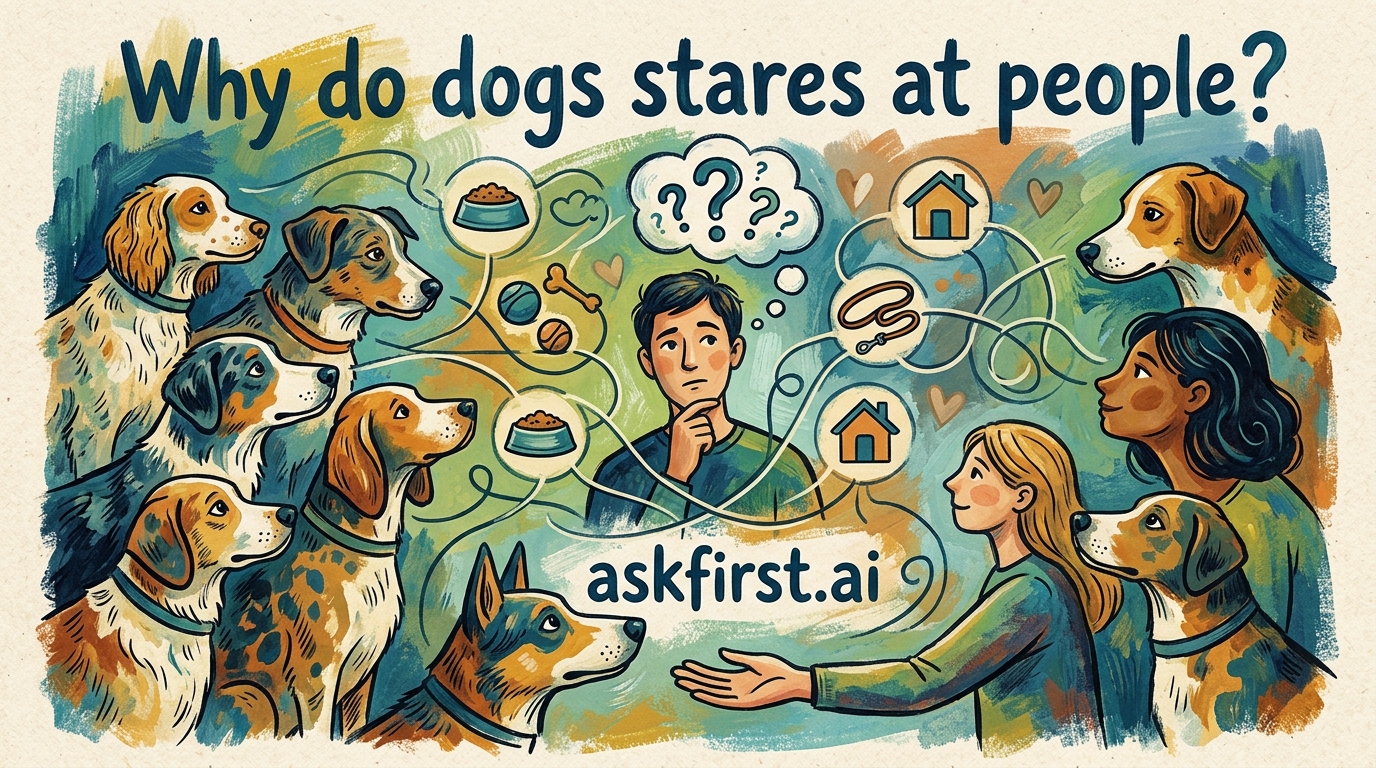
Dogs are master observers. Because they lack the ability to speak, they use their eyes to gather information and express needs. Common reasons for this behavior include:
- The "Request" Stare: If a dog stares at you while you are eating, it is a learned behavior. Through positive reinforcement, the dog has likely discovered that staring leads to table scraps or treats.
- The "Command" Stare: Dogs often stare at their owners when they need something, such as a walk, a bathroom break, or a toy retrieval. They are effectively "pointing" with their eyes to indicate their desires.
- Situational Confusion: If a dog is unsure of what you want them to do, they will fixate on your face to read your micro-expressions and body language. They are looking for cues to determine the next social expectation.
3. Interpreting the "Hard" vs. "Soft" Gaze
Context is vital when interpreting a dog's stare. Not all eye contact is friendly:
- The Soft Gaze: Characterized by relaxed facial muscles, occasional blinking, and a "wiggling" body. This is a sign of affection, trust, and deep attachment.
- The Hard Stare: Characterized by a rigid body, unblinking eyes, and perhaps a low growl or stiff tail. This is a sign of resource guarding, fear, or territorial aggression. Never stare back at a dog exhibiting a "hard" gaze, as they may perceive this as a direct challenge or threat.
4. History and Evolutionary Adaptation
Unlike wolves, who view prolonged eye contact as an act of aggression or dominance, domestic dogs have evolved to see eye contact as a collaborative tool. This adaptation occurred over approximately 15,000 to 30,000 years of domestication. Dogs that were better at reading human facial cues were more likely to be fed and protected by humans, creating a selection pressure that favored the "staring" trait.
5. Practical Tips for Owners
- Encourage Connection: If your dog gives you a soft gaze, take the opportunity to pet them or offer verbal praise. This reinforces the bond.
- Respect Boundaries: If a dog is staring intensely at a toy or food, do not reach for it. They are communicating that they value the item and may react defensively.
- Read the Whole Body: Never look at the eyes in isolation. Always observe the ears, tail, and posture to understand the full emotional state of the animal.