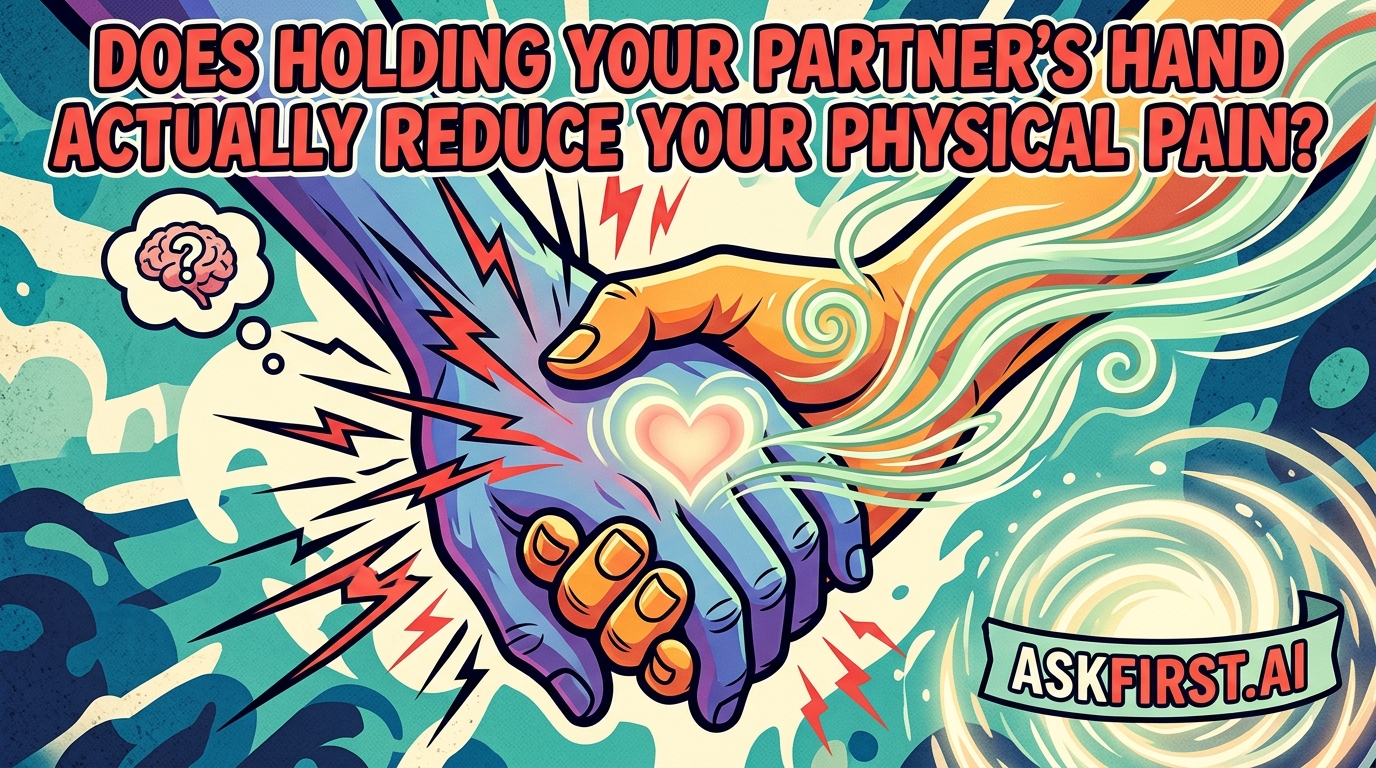
The Science of Touch: Can Holding Hands Really Stop Pain?
Scientific research has increasingly demonstrated that human connection serves as a profound biological regulator. When an individual experiences physical pain, the simple act of holding hands with a loved one can indeed modulate the body's pain response. This phenomenon is rooted in complex neurological processes, primarily involving physiological synchronization and the inhibition of pain signaling pathways in the brain.
The Mechanism of Interpersonal Synchrony
Studies, such as those conducted at the University of Colorado Boulder, have highlighted the concept of "interpersonal synchronization." When a partner offers physical support, the brains of both individuals begin to exhibit similar rhythmic patterns in electromagnetic activity. This alignment, particularly in the alpha-mu frequency band, appears to facilitate a reduction in the perceived intensity of discomfort. By sharing the same temporal state, the brain experiences a form of social buffering that lowers the activation of regions associated with pain processing, such as the anterior cingulate cortex.
Physiological Regulation and Hormonal Benefits
Beyond brainwave alignment, the act of holding hands triggers a cascade of hormonal responses that counteract stress. Physical touch is a potent stimulator for the release of oxytocin, often referred to as the "bonding hormone." Oxytocin exerts an inhibitory effect on the hypothalamic-pituitary-adrenal (HPA) axis, which is responsible for the body's stress response. By dampening the release of cortisol, the body’s primary stress hormone, physical affection lowers systemic arousal, allowing the nervous system to shift from a high-alert fight-or-flight state to a parasympathetic, restorative state. This physiological calming directly interferes with the sensory perception of pain.
The Role of Expectation and Empathy
The efficacy of hand-holding is also deeply influenced by psychological factors. The perceived empathy of the partner is a crucial mediator; when the recipient believes their partner is truly attuned to their suffering, the pain-relieving effect is magnified. This is an example of top-down modulation, where the emotional context overrides raw sensory input. It is not merely the physical touch that matters, but the cognitive appraisal of the situation as one of safety and companionship. Consequently, the brain reinterprets the nociceptive signals—the electrical impulses from the nervous system—as less threatening, effectively turning down the volume on the pain.
Practical Implications for Daily Life
While hand-holding is not a substitute for medical intervention in severe cases, it remains a powerful, non-invasive analgesic tool. Whether during a difficult medical procedure, recovering from minor injuries, or coping with daily stresses, the presence of a supportive hand acts as a natural buffer. This reinforces the biological necessity of human connection for overall well-being. By fostering deep social bonds and utilizing physical touch, humans can effectively leverage their biology to promote comfort, resilience, and emotional equilibrium in an often unpredictable world.