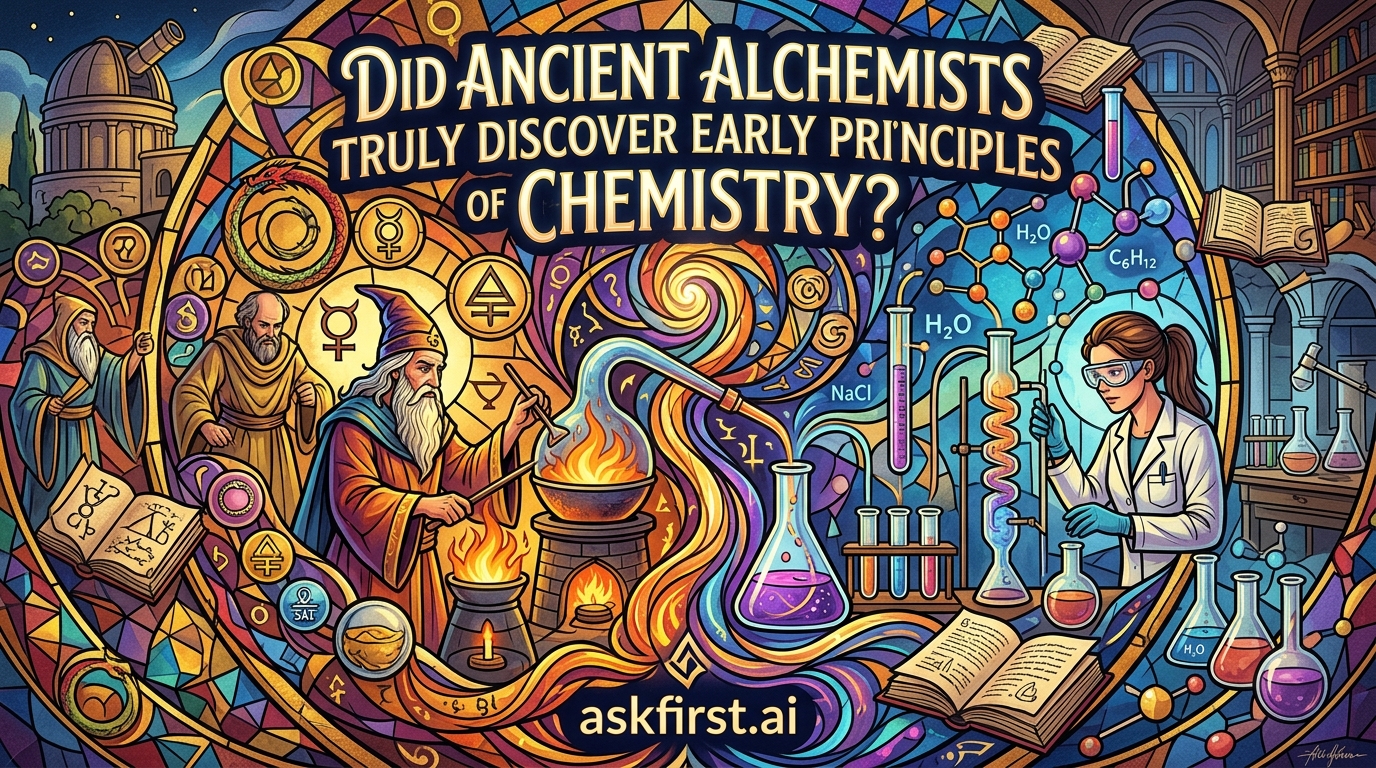
The Alchemical Foundation: How Medieval Mystery Built Modern Science
While popular culture often paints alchemy as nothing more than a pseudo-scientific quest for magical gold and the elixir of life, the historical reality is far more significant. Ancient and medieval alchemists were, in many respects, the original experimental scientists. By obsessively documenting the transmutation of materials, they unwittingly laid the fundamental groundwork for modern chemistry.
Empirical Observations and Lab Apparatus
Alchemists moved beyond the abstract philosophical debates of the ancient Greeks by introducing a hands-on, laboratory-based approach. They developed essential apparatus that remains in use in modern chemical laboratories today. Specifically, the following tools were standardized by alchemical practitioners:
- Distillation Units (Alembics): Used to isolate volatile substances, this technique is still the backbone of pharmaceutical and petrochemical processes.
- Crucibles and Furnaces: The quest to purify metals required rigorous thermal control, leading to advancements in metallurgy.
- Sublimation and Filtration: Early chemists meticulously separated compounds by their states of matter, refining the art of pure substance extraction.
The Discovery of Chemical Substances
Beyond tools, alchemists were prolific discoverers of chemical entities. Because they spent centuries attempting to manipulate the properties of matter, they discovered how to synthesize and isolate powerful chemical agents. Key contributions include:
- Mineral Acids: Alchemists were the first to produce sulfuric acid, nitric acid, and hydrochloric acid. These substances became the "universal solvents" of later chemical research.
- Gunpowder and Phosphorus: The accidental discovery of phosphorus by Hennig Brand in 1669 is a prime example of alchemical curiosity leading to breakthrough chemistry.
- Metal Alloys: By attempting to mimic the properties of gold, alchemists inadvertently mastered the creation of complex alloys, furthering our understanding of atomic bonding and crystalline structures.
From Transmutation to Atomic Theory
Perhaps the most important, albeit indirect, contribution of alchemy was the conceptual shift toward understanding that substances have inherent, measurable properties. When the elusive goal of transmuting lead into gold failed, the focus shifted from mystical alchemy to the rigorous study of atomic weight and chemical composition. Figures like Robert Boyle bridged the gap by applying the experimental rigor of the alchemical tradition to the emerging study of corpuscular theory, effectively birthing the scientific method in chemistry.
Ultimately, while the alchemical goal of immortality and unlimited wealth was fundamentally flawed, the path taken to reach those goals was littered with scientific milestones. The discipline of chemistry did not arise from a vacuum; it evolved from the smoky, glassware-filled workshops of alchemists who cataloged the reactions of the material world. Their legacy is embedded in every modern chemical reaction, proving that the pursuit of a myth can occasionally lead to the discovery of truth.