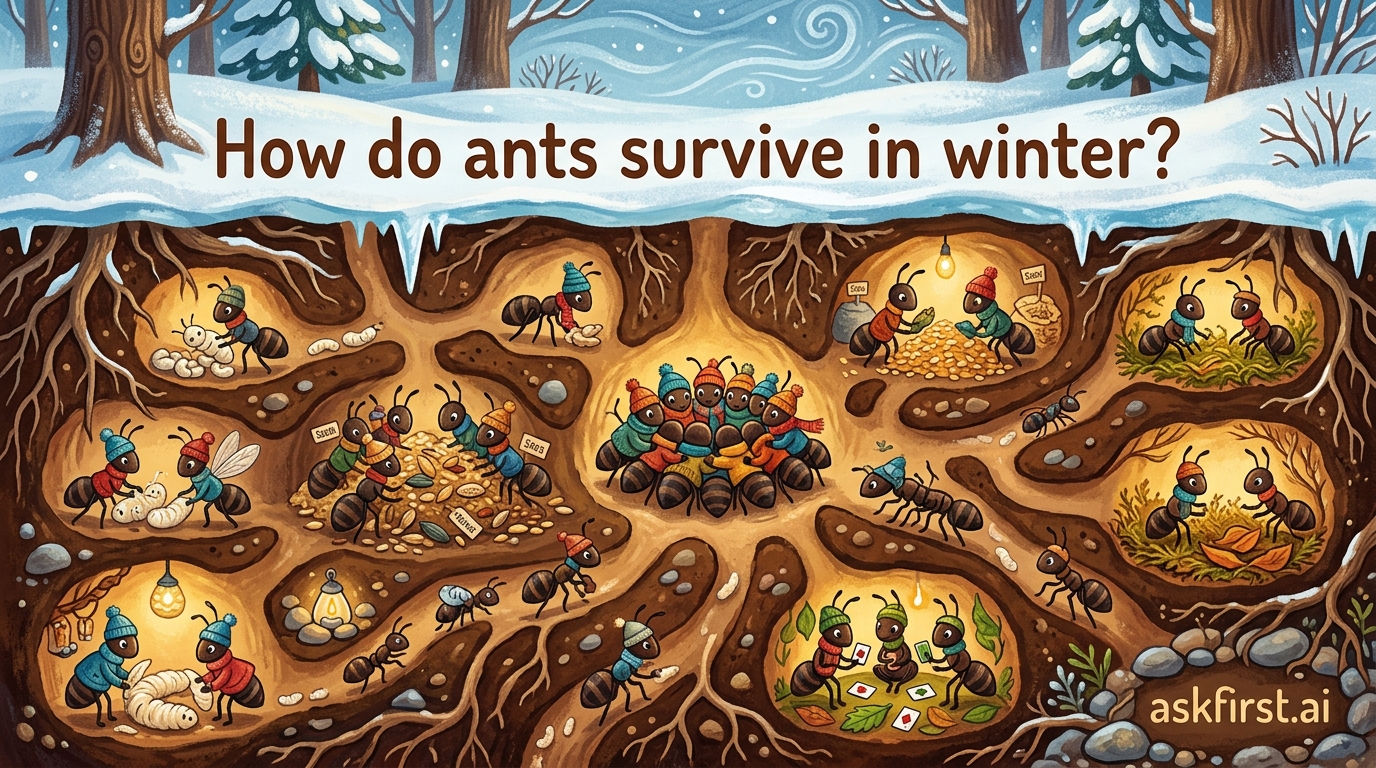
The Secret Life of Ants: How They Survive the Winter Chill
Ants are marvels of biological engineering, possessing highly specialized survival strategies that allow them to endure the harsh conditions of winter. Unlike many insects that perish when temperatures drop, ants rely on a combination of subterranean architecture, physiological adaptation, and social cooperation to thrive until spring.
1. Subterranean Insulation: The Deep Freeze Defense
The primary method of winter survival for most ant colonies is diapause, a state of suspended animation. As soil temperatures decrease, ants migrate deep into their nests, well below the frost line.
- Depth Advantage: By nesting several feet underground, ants benefit from the earth’s natural thermal insulation. Soil temperatures at these depths remain significantly more stable than surface temperatures.
- The Cluster Strategy: During the coldest months, workers huddle together in a tight mass around the queen. This collective behavior minimizes surface area exposure and conserves body heat, effectively turning the colony into a living, breathing heat-generating unit.
2. Physiological Adaptations: Cryoprotectants
Ants do not simply "hibernate"; they undergo metabolic changes. As the season turns, they consume extra food to build up fat stores, which serve as their primary energy source during winter.
- Antifreeze Proteins: Many ant species produce glycerol, a type of natural antifreeze, in their hemolymph (blood). This compound prevents the formation of lethal ice crystals within their cells, allowing them to survive sub-zero temperatures that would otherwise rupture their tissues.
- Metabolic Slowdown: Their metabolic rate drops drastically, requiring minimal oxygen and energy. This allows the colony to survive for months without foraging for food.
3. The Lifecycle: Timing the Brood
Ant colonies are masters of seasonal scheduling. In late summer and early autumn, the queen stops laying eggs. By the time winter arrives, the colony has no "vulnerable" larvae or pupae that require active care. This ensures that the entire population is in a hardy, adult stage, which is far more resistant to environmental stress.
4. Pros and Cons of Winter Dormancy
- Pros:
- Energy Conservation: By ceasing activity, ants preserve resources that would otherwise be depleted by foraging.
- Predator Avoidance: Winter dormancy protects the colony from surface predators that are also inactive.
- Cons:
- Starvation Risk: If a colony fails to store enough fat reserves before the first frost, the entire population risks perishing.
- Flooding: Rapid spring thaws can lead to nest flooding, which is one of the most common causes of colony collapse.
5. Future Trends and Ecological Impact
Climate change is altering the winter survival patterns of ants. Warmer winters are leading to shorter periods of diapause, causing ants to emerge earlier than their food sources. This creates a "phenological mismatch," where ants are active but lack necessary resources. Conversely, some invasive species, like the Argentine ant, are expanding their ranges because winters are no longer cold enough to keep their populations in check.
In summary, the survival of ants in winter is a testament to the efficiency of the eusocial structure. By retreating into the earth, slowing their metabolism, and utilizing internal chemical defenses, they ensure that the colony remains a persistent force in the ecosystem, ready to emerge the moment the first spring thaw arrives.