The Hidden Blueprint: How Office Architecture Shapes Intuitive Decision-Making
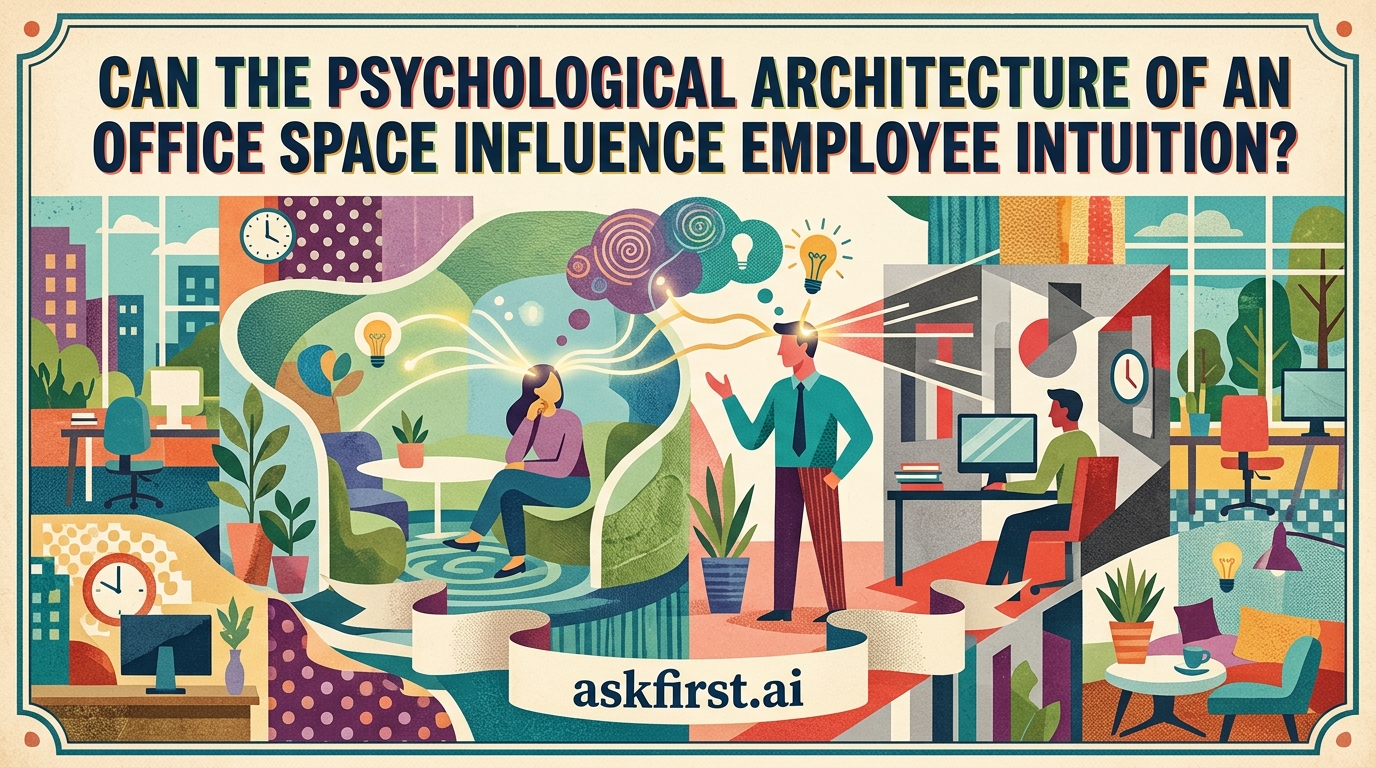
Modern work environments are often designed for efficiency, yet architects and cognitive psychologists are discovering that the physical structure of a workspace profoundly impacts the intuitive capacity of employees. Intuition, often described as the brain's ability to synthesize vast amounts of subconscious data, relies on cognitive flow states that are either inhibited or enhanced by the surrounding architectural layout.
The Geometry of Cognitive Flow
Spatial geometry plays a critical role in priming the mind for nonlinear thought. Research indicates that high ceilings and expansive, open-concept spaces tend to encourage abstract thinking and creativity. Conversely, restricted environments with lower ceilings often trigger a focus on detail-oriented, analytical tasks. When an office lacks architectural variety, the mind settles into a rigid cognitive pattern, stifling the 'aha!' moments that constitute effective intuition. By incorporating diverse zones—such as quiet, low-stimulus reading areas and communal, high-ceiling collaborative hubs—organizations can facilitate an environment where the brain shifts effortlessly between focused analysis and creative synthesis.
Natural Light and the Circadian Connection
Biophilic design is not merely an aesthetic preference; it is a neurological necessity for intuitive processing. Exposure to natural light and views of organic shapes regulate the circadian rhythm, which is fundamentally linked to neurotransmitter health. A study published in the Journal of Environmental Psychology highlighted that employees working in spaces with high levels of daylight and greenery showed a significant increase in cognitive clarity. When the body is in harmony with its environmental cues, the brain is better equipped to recognize patterns and subtle anomalies—the primary inputs for expert intuition.
The Role of 'Third Spaces' in Intuitive Synthesis
Beyond individual workstations, the placement of 'third spaces'—areas designed for spontaneous interaction—functions as a bridge for collective intuition. These areas often feature non-linear, unpredictable pathways that force the brain to disengage from task-based linear progression. This disruption allows for 'incubation,' a crucial phase in the intuitive process where the subconscious mind solves complex problems while the individual is engaged in informal conversation. By placing these zones strategically, architects can encourage employees to share disparate pieces of information, leading to breakthroughs that would be impossible in isolated silos.
Optimizing for Future Workplaces
To cultivate a workplace that prioritizes intuitive performance, organizations must move beyond the standard cubicle model.
- Acoustic Diversity: Controlling ambient noise levels to allow for 'deep work' vs. 'social noise.'
- Wayfinding Dynamics: Creating architectural paths that encourage movement, as physical movement promotes cognitive flexibility.
- Control over Environment: Giving employees agency to adjust lighting and seating, which fosters a sense of psychological safety—a prerequisite for trusting one’s own intuition.
Ultimately, the office space acts as a cognitive externalization. When it is designed with an understanding of psychological architecture, it transforms from a static enclosure into an active partner in the employee's thinking process.