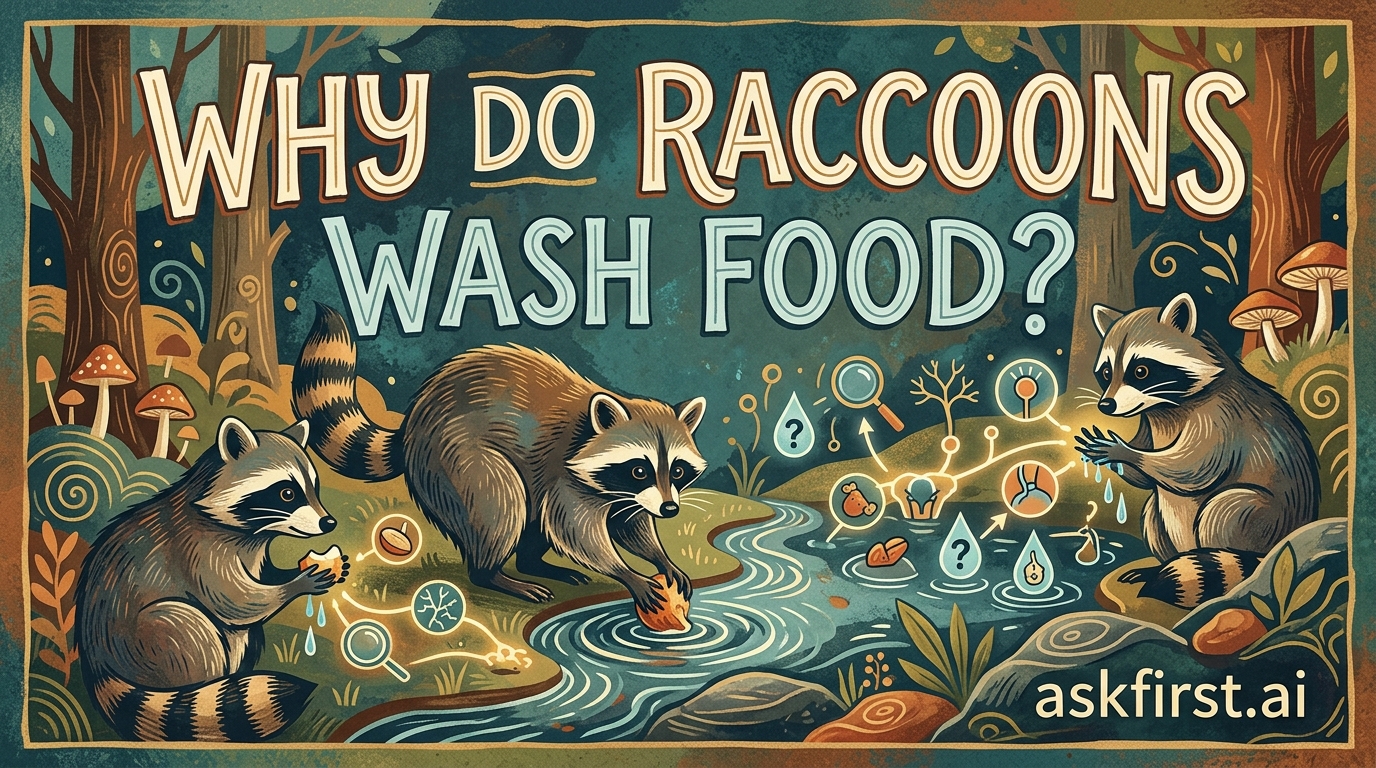
The Curious Behavior of Raccoons: Why They Wash Their Food
The sight of a raccoon dipping its food into a nearby water source is one of nature’s most iconic and endearing behaviors. Often referred to as "washing," this activity has led to the common misconception that raccoons are fastidious creatures concerned with hygiene. In reality, the scientific reasoning behind this behavior is far more fascinating and rooted in evolutionary biology.
The Sensory Science: Dousing, Not Cleaning
Biologists have determined that raccoons are not actually cleaning their food. Instead, they are engaging in a behavior known as dousing. Raccoons possess an extraordinary sense of touch, which is their most vital tool for foraging.
The Role of the Forepaws
A raccoon’s forepaws are incredibly sensitive, containing a high density of mechanoreceptors. When these paws are dry, they are protected by a thick layer of stratum corneum. However, when the paws are moistened, this layer softens, significantly increasing the tactile sensitivity of the nerve endings. By dipping their food into water, raccoons are effectively "turning on" their sense of touch. The water allows them to create a detailed "tactile map" of what they are about to eat, helping them identify the texture, size, and potential hazards of the object.
Evolution and Foraging Habits
Raccoons are opportunistic omnivores that frequently forage in aquatic environments, such as stream banks or pond edges. Their ancestors likely developed this dousing behavior as a means to identify prey, such as crayfish, frogs, or snails, in murky water. By feeling the object while it is submerged, they can distinguish between edible prey and inedible debris like rocks or sticks.
Is It Necessary?
While the behavior is common, it is not mandatory. Raccoons raised in captivity or those living in dry environments often skip the dousing process entirely. This proves that the behavior is a learned adaptation for tactile sensory enhancement rather than an innate biological requirement for digestion.
Pros and Cons of Dousing
- Pros:
- Enhanced Sensitivity: Allows for precise identification of food items.
- Safety: Helps filter out non-edible items or identify dangerous parasites.
- Hydration: Provides additional moisture, particularly during dry spells.
- Cons:
- Energy Expenditure: Searching for a water source takes time and energy.
- Predatory Risk: Staying near water edges makes the raccoon more vulnerable to larger predators.
Future Trends and Urban Adaptation
As urban environments continue to encroach upon natural habitats, researchers are observing changes in raccoon behavior. Urban raccoons often "wash" food in man-made water sources, such as birdbaths, swimming pools, or even decorative fountains. This highlights the species' remarkable plasticity and ability to adapt their innate foraging strategies to the modern world.
In conclusion, while we may enjoy the anthropomorphic image of a raccoon "scrubbing" its dinner, the truth is a testament to the animal’s sophisticated sensory capabilities. They are not washing their food; they are using water to "see" with their hands, ensuring they make the most of their next meal.