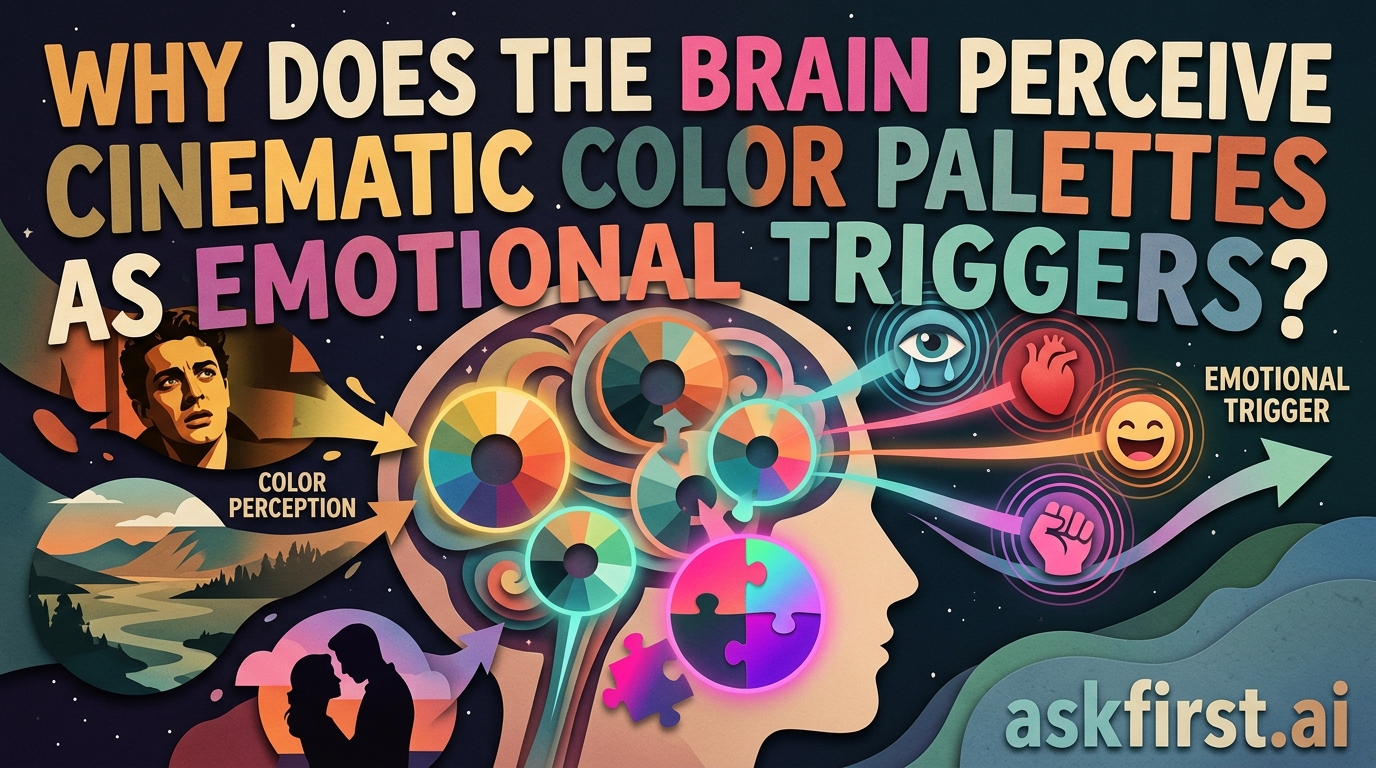
The Psychology of Chromatic Impact: How Color Dictates Emotion
Color is far more than a visual aesthetic; it serves as a profound psychological bridge between the external world and the internal human psyche. When cinema directors utilize specific color palettes—often referred to as color grading—they are tapping into deeply rooted biological and evolutionary responses that have been refined over millennia.
The Evolutionary Blueprint
Human perception of color is tied to survival. Evolutionarily, our brains learned to associate specific hues with environmental outcomes. For instance, the spectrum of blues, often associated with water or sky, induces a state of calm and clarity because these elements were generally stable and non-threatening. Conversely, high-saturation reds and yellows trigger an alertness response, as these colors historically signaled danger, heat, or the ripeness of caloric-dense foods. This biological conditioning is the foundational reason why a cool, desaturated blue environment in a film feels melancholic or distant, while warm tones create intimacy.
The Neurobiology of Color
When light enters the eye, it strikes the retina and is converted into electrical signals that travel to the hypothalamus. This brain region regulates hormones and autonomic functions. Therefore, when the brain processes the intense contrast of a teal-and-orange palette—a favorite in contemporary blockbuster filmmaking—it is simultaneously activating different pathways related to both biological safety (cool blue) and arousal (warm orange). This sensory duality forces the brain to process more data at once, keeping the audience physically engaged.
Psychological Association and Cultural Context
Beyond basic biology, culture acts as a filter for chromatic perception. While some associations are universal, others are learned. In many Western cultures, white symbolizes purity, whereas in some Eastern traditions, it is associated with mourning. Filmmakers leverage these learned associations to manipulate audience expectations. Consider the following common color impacts:
- Deep Greens: These colors often evoke feelings of growth, stability, or sometimes unease depending on the shadow intensity, frequently used in forest-themed or supernatural films.
- Desaturated Grays: These typically communicate a lack of life, industrial oppression, or a depressed, nihilistic character state.
- High-Contrast Purples: Frequently used to denote luxury, madness, or surrealism, challenging the viewer's grasp on reality.
The Future of Chromatic Design
As neuroscience advances, the mastery of color theory allows creators to build subconscious narratives. By manipulating light temperatures and color depth, cinema transcends mere storytelling, becoming a visceral experience. The brain does not simply 'see' a color; it interprets a frequency as an emotional directive, proving that the cinematic palette is perhaps the most powerful silent language available to modern art.