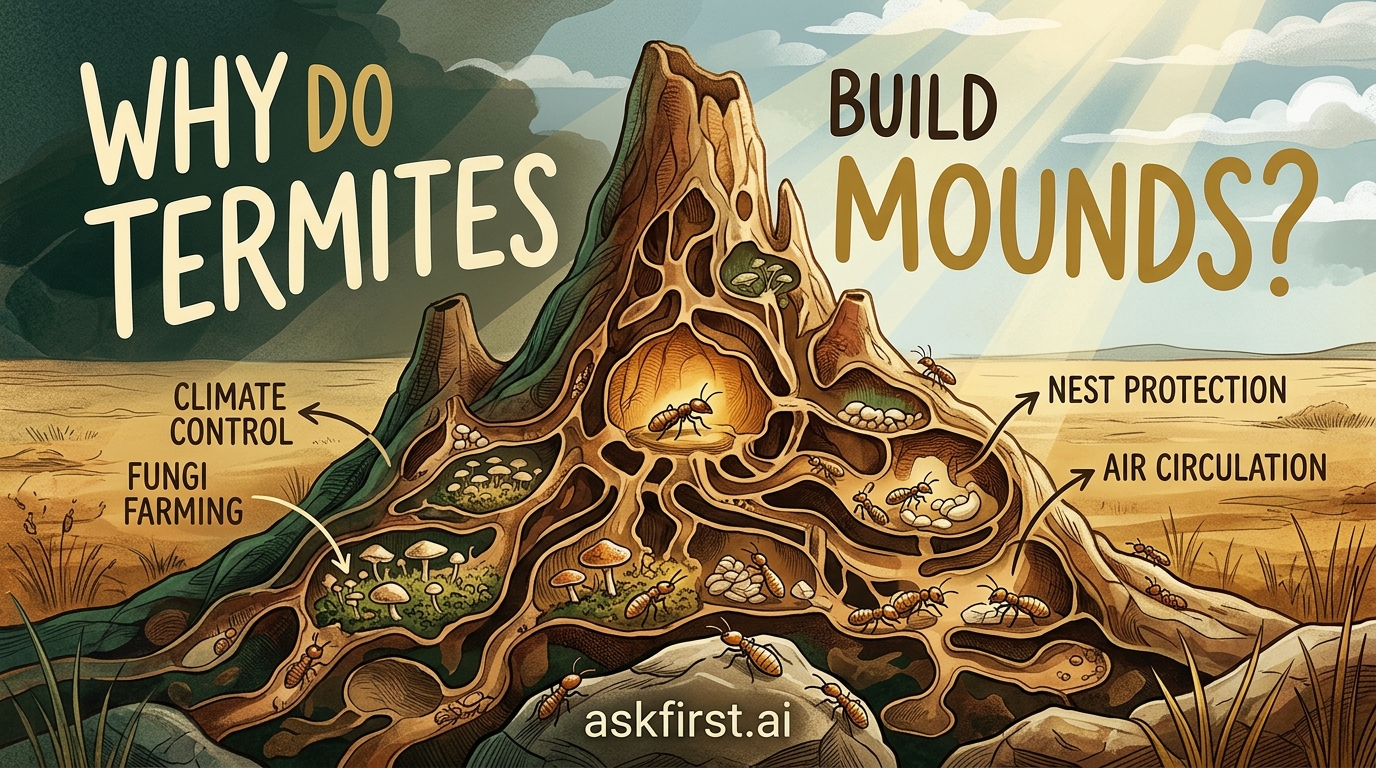
The Architectural Marvels of Nature: Why Termites Build Mounds
Termite mounds are among the most sophisticated examples of bio-architecture in the natural world. Far from being mere piles of dirt, these structures are highly engineered thermal regulatory systems designed to support the survival of a colony. Built by various species, particularly those in the family Termitidae, these mounds serve as the epicenter of termite society.
The Evolutionary Purpose: Survival and Regulation
The primary driver for mound construction is homeostasis. Termites are soft-bodied insects that are extremely sensitive to desiccation (drying out) and temperature fluctuations.
1. Thermal Regulation
The most critical function of a mound is its ability to maintain a constant internal temperature. By utilizing the principles of passive ventilation, termites create a "chimney effect." Cool air is drawn in through subterranean tunnels, circulates through the mound’s complex network of flues and chambers, and warms up as it rises, eventually exiting through the top. This keeps the colony’s nursery areas at a steady 30°C (86°F), even when outside temperatures swing wildly between day and night.
2. Moisture Control
Termites require high humidity to prevent their exoskeletons from drying out. The mound acts as a barrier against the arid external environment. By digging deep into the water table and incorporating soil with specific clay content, termites create a moist microclimate that supports the growth of fungi—the primary food source for many species.
3. Defense and Protection
Mounds serve as an impenetrable fortress against predators such as ants, aardvarks, and birds. The walls are constructed from a mixture of soil, saliva, and excrement, resulting in a concrete-like material that is incredibly durable. Some mounds can stand up to 30 feet tall and remain structurally sound for decades.
Construction Methodology
Building a mound is a collaborative, instinctive process. It begins with the queen and king selecting a site. As the colony grows, workers gather soil particles, moisten them with saliva, and deposit them in specific patterns.
- The Foundation: Deep subterranean tunnels are excavated to access moisture.
- The Core: The nursery and the royal chamber are located in the center, shielded by thick, insulating walls.
- The Ventilation System: Workers construct vertical shafts that allow for gas exchange, ensuring the colony receives oxygen while expelling carbon dioxide.
Pros and Cons of Mound Presence
While termites are often viewed as pests due to their wood-consuming habits, their mounds provide essential ecosystem services:
- Pros: They improve soil aeration, increase water infiltration, and concentrate nutrients, creating "islands of fertility" that support local vegetation.
- Cons: They can cause significant structural damage to human infrastructure and compete with livestock for grazing land.
Future Trends and Biomimicry
Modern engineers are increasingly studying termite mounds to develop passive cooling systems for buildings. A famous example is the Eastgate Centre in Harare, Zimbabwe, designed by architect Mick Pearce. By mimicking the ventilation channels found in termite mounds, the building uses 90% less energy for climate control than conventional buildings of similar size. As global temperatures rise, this form of biomimicry will likely become a cornerstone of sustainable urban design.