The Psychology of Nostalgia: Why Childhood Movies Create Unbreakable Bonds
The Neural Architecture of Shared Memory
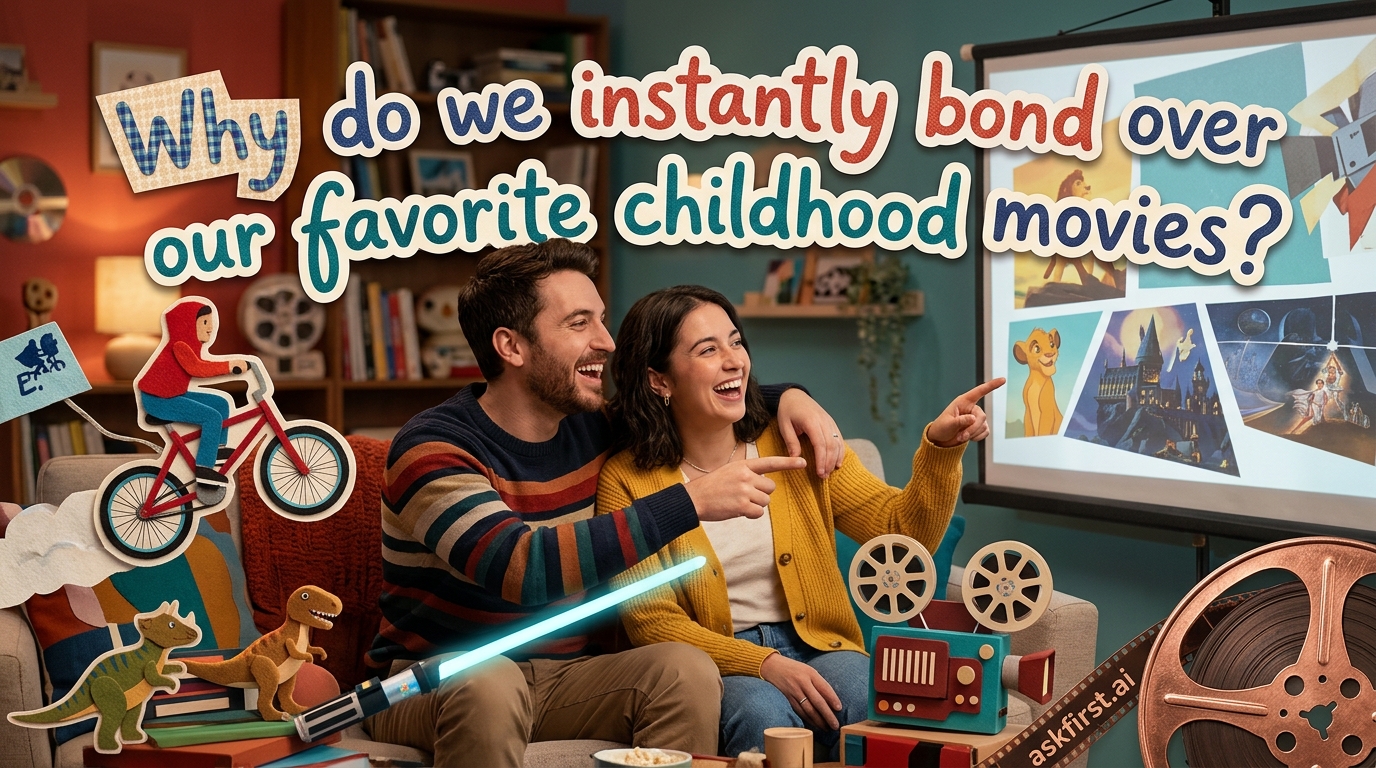
The phenomenon of instant social connection over shared childhood media is rooted in the psychology of Collective Nostalgia. When individuals bond over a movie from their formative years, they are not merely discussing a film; they are accessing a shared emotional repository. Research in cognitive psychology suggests that nostalgia functions as a psychological resource, promoting social connectedness and meaning in life. When two people discover a mutual love for a specific film, the brain initiates a process of 'self-concept overlap,' where the identity of the other person becomes integrated with one's own positive memories of the past.
Why Childhood Media Operates Differently
Childhood movies are uniquely encoded in the human brain. According to the 'reminiscence bump' theory, experiences occurring during adolescence and early adulthood are more easily recalled than those from other life periods. These movies provide a sense of ontological security—the confidence that there is continuity in one's life. Key reasons for this instantaneous bonding include:
- Emotional Anchoring: Films watched as children act as temporal anchors, connecting the current self to the more vulnerable, authentic child self.
- Simplified Moral Frameworks: Classic childhood narratives often emphasize clear-cut archetypes, which creates a common cultural language that is easily understood and mutually validated across diverse groups.
- Dopamine Encoding: The initial excitement of childhood discovery releases dopamine, which strengthens the synaptic pathways associated with these movies, making them 'feel' more significant than adult cinematic experiences.
The Social Lubricant of Shared Aesthetics
Psychologists view these movies as social lubricants that decrease the friction of initial social interaction. By sharing a favorite movie, individuals effectively bypass the awkwardness of small talk, moving directly into a state of 'collective reminiscence.' This provides immediate trust cues. If a person shares a favorite childhood movie, they are implicitly signaling their values, humor, and upbringing. This 'cultural mirroring' signals that both participants belong to the same 'emotional tribe.'
Conclusion
Ultimately, bonding over childhood films is an evolutionarily beneficial behavior. It fosters community, reinforces shared values, and provides a stable mental map in an ever-changing world. By revisiting these films, society ensures that collective joy is not lost, but instead transmitted through interpersonal connection. Whether it is the visual style of animation or the thematic simplicity of the storytelling, these movies remain potent symbols of human connection that bridge the gap between strangers and solidify the foundation of long-term social relationships.