The Genetic Ghost: Unlocking Ancestral Memory and Epigenetics
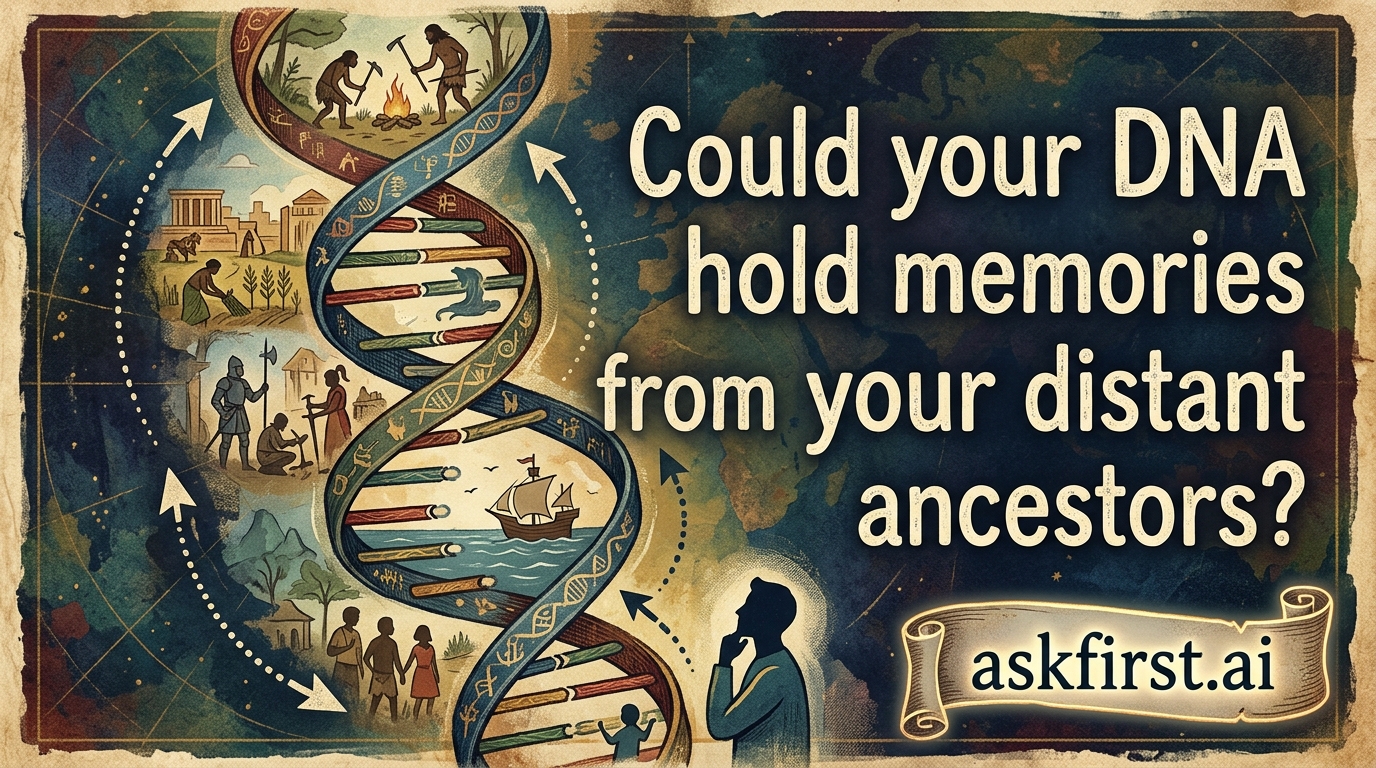
Recent breakthroughs in the field of epigenetics have sparked a fascinating debate: does human biology carry the echoes of our predecessors' lived experiences? While standard genetics focuses on the sequence of nucleotides—the "hardware" of the body—epigenetics functions as the "software" that dictates how those genes are expressed. This mechanism allows chemical modifications, known as methylation, to toggle genes on or off without altering the underlying DNA structure.
The Mechanism of Inherited Experience
Epigenetic markers serve as a biological shorthand for environmental adaptation. Research suggests that when an organism faces significant stress or nutritional scarcity, its body adjusts gene expression to prioritize survival. The groundbreaking study by Brian Dias and Kerry Ressler at Emory University demonstrated that mice conditioned to fear a specific scent passed this physiological aversion down to their offspring. Even though the second and third generations had never encountered the stimulus, they exhibited heightened sensitivity and fear responses to the odor, suggesting that environmental trauma or adaptation can indeed be encoded via epigenetic modifications.
Can This Apply to Humans?
Translating animal research to human subjects remains complex, yet historical observations point toward similar trends. Scientists analyzing the offspring of survivors of the Dutch Hunger Winter, a period of severe famine during World War II, found distinct epigenetic signatures linked to metabolic health. These individuals showed increased susceptibility to obesity and diabetes, suggesting their bodies were programmed for a world of scarcity, even when living in modern conditions of abundance. This implies that while humans may not inherit "memories" in the sense of conscious, narrative recollections, the body does retain "biological memories" of environmental hardship.
Debunking the Myth of Conscious Recall
It is crucial to differentiate between biological predisposition and actual memory storage. DNA does not function as a hard drive for specific life events, faces, or conversations. Instead, it serves as a repository for regulatory instructions. The idea that one might recall a grandparent's specific experience is currently relegated to the realm of speculative science fiction. Scientific consensus holds that memory requires a functioning neural network, and because these networks are erased and rebuilt with every generation, conscious recall cannot be passed down through the germline. However, the influence of these markers on instinctual behaviors, stress responses, and metabolic pathways is a proven, tangible reality that shapes our physical well-being.
A Future Perspective
As research continues, the implications for human health are profound. If we understand how ancestral history influences current gene expression, medicine could evolve toward personalized, proactive interventions. We are not merely the sum of our genetic codes; we are the descendants of every environment our ancestors survived, carrying the silent, chemical whispers of their resilience within our own cells.