The Science of Lightning Rods: Principles, Installation, and Protection
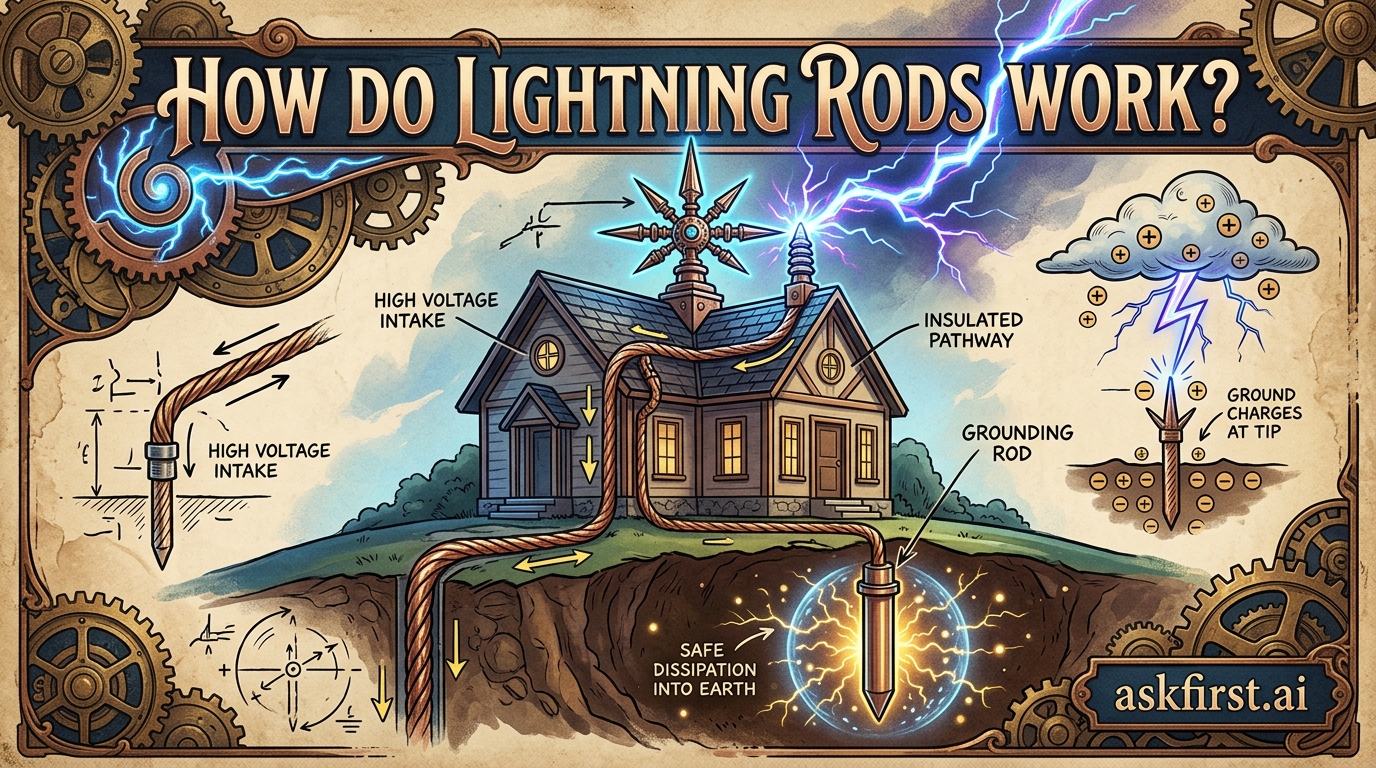
A lightning rod, also known as a lightning conductor or air terminal, is a metal rod mounted on the structure of a building and electrically bonded to the ground through wires. Contrary to popular misconception, a lightning rod does not "attract" lightning in the sense of pulling it from the sky; rather, it provides a low-resistance path for the electrical discharge to follow, safely shunting the immense energy into the earth.
Historical Foundations
The lightning rod was invented by Benjamin Franklin in 1752. Through his famous kite experiment, Franklin demonstrated that lightning is electricity. He theorized that pointed metal rods could either dissipate the static charge buildup in the atmosphere to prevent a strike or provide a safe channel for the current if a strike were inevitable. His innovation revolutionized fire safety for buildings in the 18th century.
How It Works: The Physics of Discharge
Lightning is a massive electrostatic discharge caused by imbalances between storm clouds and the ground. When the electrical potential difference becomes high enough, a conductive path is formed.
- Ionization: The sharp, pointed tip of the rod creates a localized high-electric-field intensity. This facilitates the formation of a "streamer"—a small, upward-moving electrical discharge that seeks to connect with the downward-moving "stepped leader" from the cloud.
- Path of Least Resistance: When the streamer connects with the leader, an ionized channel is established. Because the copper or aluminum rod is connected to a heavy-gauge conductive cable, the lightning current flows through the rod and down the conductors rather than through the building's structural materials (like wood or masonry), which have high electrical resistance and would explode or catch fire.
- Grounding: The system terminates in a grounding electrode system, consisting of copper-clad rods buried deep into the earth. This disperses the charge into the soil, effectively neutralizing the energy.
Practical Installation Guidelines
Modern lightning protection systems must adhere to standards such as NFPA 780 (Standard for the Installation of Lightning Protection Systems).
- Placement: Air terminals should be placed at the highest points of a roof, including chimneys and ridges.
- Conductors: Down conductors must be routed as straight as possible, avoiding sharp 90-degree bends that can cause the lightning to "jump" (side-flash) to other metal objects.
- Bonding: All metallic objects on the roof, such as HVAC units and vent pipes, must be bonded to the lightning protection system to prevent arcing.
Pros and Cons
Pros:
- Fire Prevention: Significantly reduces the risk of structural fires caused by lightning strikes.
- Equipment Protection: Protects sensitive electronic infrastructure within the building.
- Insurance Benefits: Many insurance providers offer reduced premiums for certified installed systems.
Cons:
- Cost: Professional installation can be expensive.
- Maintenance: Systems require periodic inspection to ensure connections have not corroded or loosened.
Future Trends
While traditional metal rod systems remain the industry standard, research is exploring laser-based lightning protection. By using high-intensity lasers to ionize the air, scientists aim to create a "virtual" lightning rod that can guide strikes to a safe ground, potentially shielding larger areas like airports or power stations without the need for physical towers.