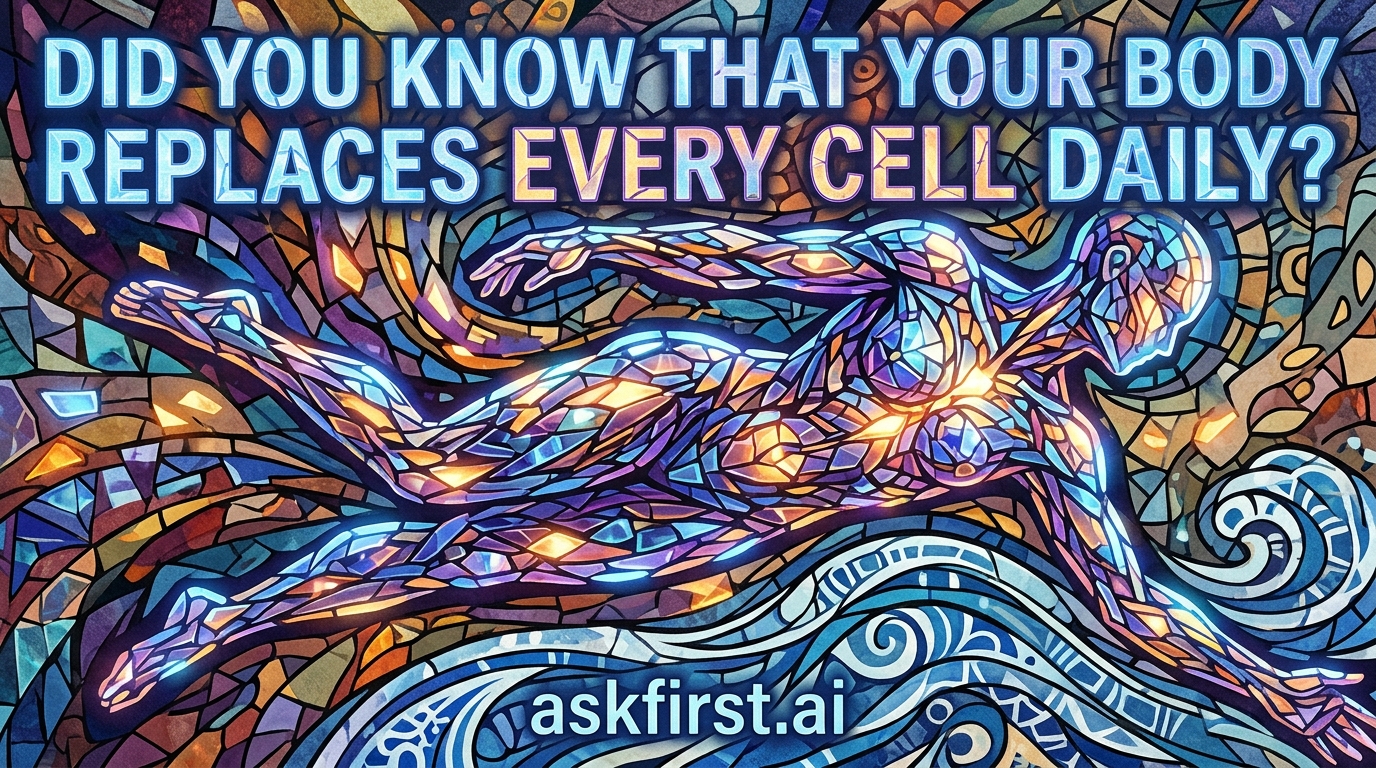
The Myth of Cellular Renewal: Are You A Brand New Person? The notion that the human body undergoes a complete cellular replacement every single day is one of the most persistent and captivating biological myths in popular culture. While it is true that the human body is in a constant state of flux, the reality of cellular turnover is far more nuanced, fascinating, and structurally diverse than a simple daily reset. ## The Science of Cellular Turnover Biological turnover does not happen at a uniform rate across all tissues. Instead, the body operates on a tiered system of regeneration. Some cells are remarkably short-lived, while others remain with an individual from birth until death. * The Skin Barrier: The epidermis is the most rapidly renewing tissue. Keratinocytes move from the deep layers to the surface, shedding every 28 to 40 days. * The Digestive Tract: The lining of the stomach and intestines faces harsh acidic conditions, requiring rapid replacement every few days to maintain digestive integrity. * The Bloodstream: Red blood cells have an average lifespan of about 120 days, meaning the body constantly recycles millions of cells every second, yet it is certainly not a full-body daily turnover. ## Cells That Stay for a Lifetime Contrary to the popular myth, significant portions of the human body are remarkably static. This stability is critical for the storage of complex biological data. * Cardiac Muscle Cells: Research from the Karolinska Institute suggests that the majority of cardiomyocytes—the cells that make up the heart muscle—are not replaced throughout an entire human lifespan. A small percentage may turn over, but the heart you are born with is largely the same one that sustains you in old age. * Central Nervous System: Neurons in the cerebral cortex are famously non-renewing. Once mature, these cells remain for the duration of a life. While the concept of neurogenesis exists, it is limited to specific areas like the hippocampus and does not account for a whole-brain replacement. * Oocytes: Women are born with their entire lifetime supply of oocytes, which remain in a state of suspended animation for decades. ## The Complexity of Biological Identity The idea of a daily refresh is scientifically inaccurate but conceptually beautiful. It highlights that humans are not static objects but dynamic processes. The body manages a delicate balance: renewing the parts exposed to the external environment while preserving the permanent architecture of the brain and heart. Understanding this cycle proves that biological identity is a blend of continuous, rapid change and enduring structural foundation. While cells are indeed replaced, they are replaced by functional copies, ensuring the integrity of the organism remains consistent across decades of existence.

AuthorAce Fernandez
June 25, 2026
P.S. You can ask any follow-up question on this topic by continuing the dialogue with AI in the chat below