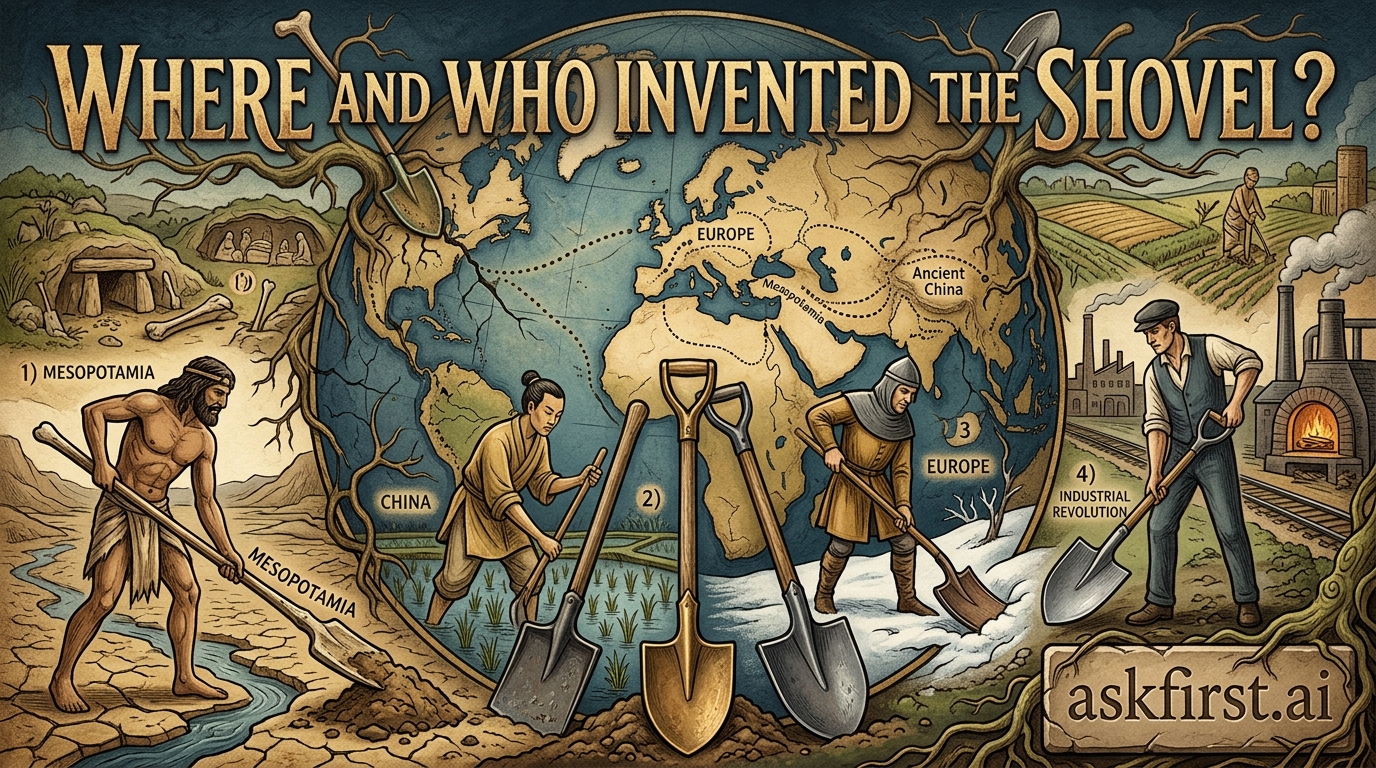
The Evolution of the Shovel: From Animal Scapulae to Industrial Engineering
The shovel is one of the oldest and most fundamental tools in human civilization, representing a pivotal technological leap in our ability to manipulate the environment. Its invention cannot be attributed to a single individual, as it evolved through incremental innovations across various prehistoric cultures.
Origins and Prehistoric Development
The earliest "shovels" were not manufactured in a factory but were discovered in nature. Paleolithic humans utilized the scapula (shoulder blade) of large animals—such as oxen, deer, or mammoths—as primitive digging implements. These bones provided a natural, scoop-like shape and a durable edge, making them ideal for digging up tubers, clearing soil for burial, or excavation for shelter.
As human societies transitioned from nomadic hunter-gatherer lifestyles to settled agriculture during the Neolithic Revolution (circa 10,000 BCE), the need for more specialized tools grew. Early farmers began shaping wood into flat, paddle-like blades, often fire-hardening the tips to increase resistance to abrasion. These wooden implements were the direct ancestors of the modern shovel.
The Metallurgical Revolution
The true transformation of the shovel occurred with the advancement of metallurgy.
- Copper and Bronze: By the Bronze Age, civilizations in Mesopotamia and Egypt began attaching metal plates to wooden handles. This allowed for greater durability and the ability to break through harder, rocky soil.
- Iron and Steel: During the Iron Age, blacksmiths refined the design, creating blades that could be sharpened and tempered. This allowed the shovel to move from a simple digging tool to a multi-purpose implement used in mining, construction, and large-scale irrigation.
Anatomy and Practical Usage
A standard shovel consists of three primary components: the blade (the working end), the shaft (the handle), and the grip (the top handle).
Types of Shovels
- Round-Point Shovel: The classic digging tool used for breaking up ground and moving heavy soil.
- Square-Point Shovel: Designed for moving loose materials like gravel, sand, or snow.
- Spade: Characterized by a flat, rectangular blade, ideal for edging or cutting through sod.
- Scoop: Features a large, deep blade designed to move high volumes of light material.
The Industrial Impact and Modernization
The 19th and 20th centuries saw the mechanization of digging. The steam shovel, invented by William Otis in 1835, revolutionized the construction of canals, railroads, and skyscrapers. While the hand tool remains essential for precision work, industrial excavators—the modern descendants of the shovel—now move thousands of tons of earth daily.
Pros and Cons of Hand Digging
- Pros: High precision, zero fuel consumption, minimal environmental footprint, and accessibility for small-scale gardening or landscaping projects.
- Cons: High physical exertion, potential for repetitive strain injuries (ergonomics), and limited efficiency in heavy-duty commercial construction.
Future Trends
The future of the shovel lies in ergonomic engineering. Modern manufacturers are focusing on lightweight materials like carbon fiber and advanced polymers to reduce operator fatigue. Furthermore, smart tools equipped with sensors to monitor soil moisture or composition are beginning to emerge, merging ancient design with 21st-century data analytics. From the shoulder blade of a mammoth to the high-tech alloys of today, the shovel remains a testament to human ingenuity.