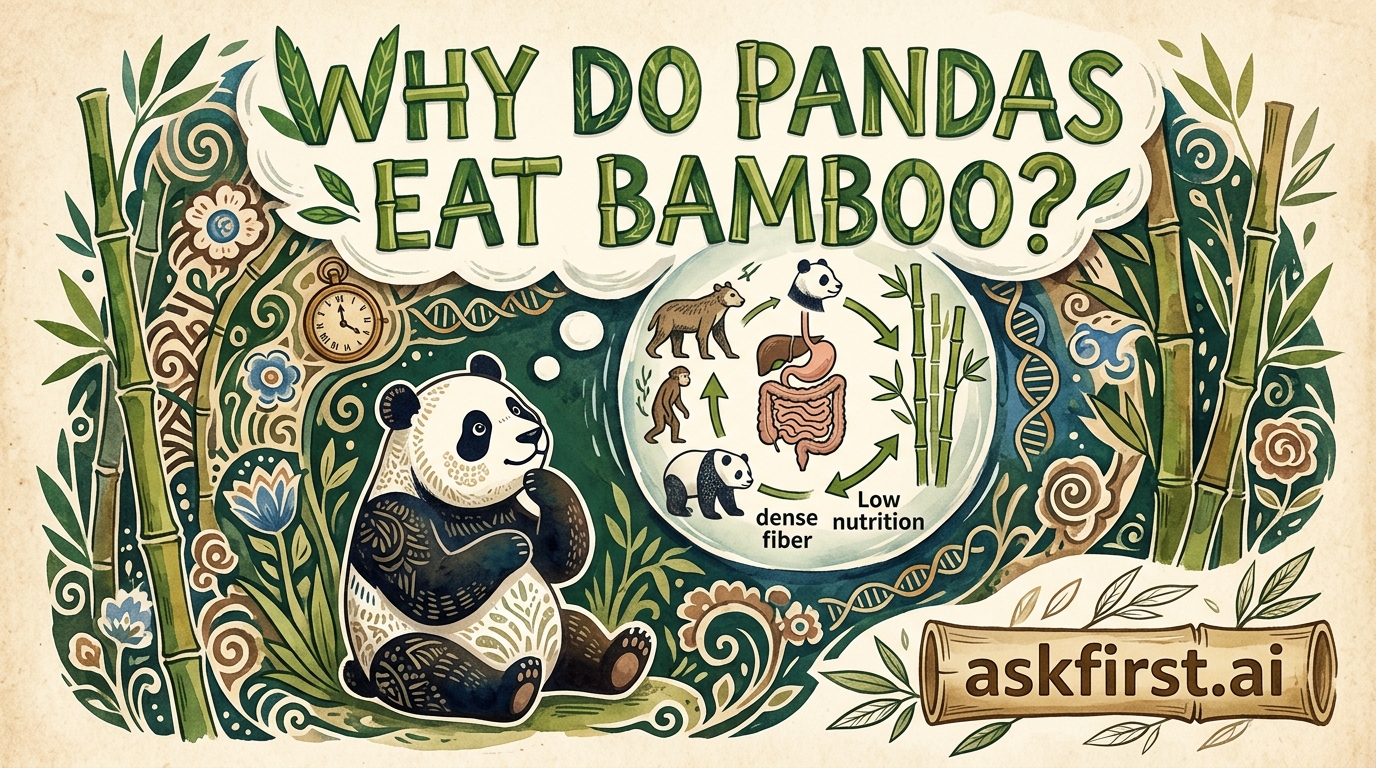
The Evolutionary Mystery: Why Giant Pandas Rely Exclusively on Bamboo
The Giant Panda (Ailuropoda melanoleuca) presents one of the most fascinating evolutionary paradoxes in the animal kingdom. Despite being classified taxonomically within the order Carnivora and possessing a digestive system structurally optimized for meat, 99% of its diet consists of bamboo. Understanding why this species transitioned to such a specialized, nutrient-poor diet requires examining evolutionary history, physiological adaptation, and ecological niche partitioning.
Evolutionary History and Dietary Shift
Approximately two million years ago, the ancestors of the Giant Panda were omnivorous. Genetic studies indicate that a mutation in the T1R1 gene—responsible for the "umami" or savory taste—occurred between 4.2 and 2 million years ago. This mutation likely rendered meat less palatable to pandas, effectively "turning off" their desire for protein-rich prey. During the Pleistocene epoch, as competition for resources intensified, pandas retreated into the bamboo-rich forests of central China. Abundant and year-round, bamboo provided a stable food source that allowed them to avoid direct competition with other large carnivores.
Physiological Adaptations
Because bamboo is notoriously difficult to digest and low in caloric density, the panda has undergone significant physiological changes:
- The "Pseudo-Thumb": Pandas have developed an enlarged radial sesamoid bone that functions like an opposable thumb. This allows them to grasp bamboo stalks with precision, stripping leaves and stems efficiently.
- Specialized Teeth: They possess massive molars and strong jaw muscles designed for grinding tough, fibrous cellulose.
- Microbiome Efficiency: While they lack the complex multi-chambered stomachs of ruminants (like cows), pandas harbor specialized gut bacteria (such as Clostridium and Bacteroides) that help break down the lignocellulose found in bamboo.
The Caloric Struggle
Bamboo is a grass with very low nutritional value. To survive, a giant panda must consume between 26 and 84 pounds of bamboo every day. This massive intake is necessary because the panda’s digestive tract is short—typical of a carnivore—meaning food passes through the system rapidly. Consequently, they absorb only about 17% of the nutrients from their food, necessitating constant feeding for 10 to 16 hours a day. This low-energy lifestyle is why pandas are notoriously sedentary; they must conserve energy to compensate for their nutrient-poor diet.
Pros, Cons, and Conservation
- Pros: Bamboo is an abundant, renewable resource. By specializing in this niche, pandas eliminated the need for high-energy hunting, which would be difficult given their body mass and metabolism.
- Cons: The primary risk is the cyclical flowering of bamboo species. When bamboo forests die off en masse after flowering, pandas face starvation if they cannot migrate to different forest patches.
- Future Trends: Climate change threatens the survival of bamboo habitats. Conservation efforts are now focused on establishing "bamboo corridors" to allow panda populations to migrate between isolated forest fragments, ensuring they can access diverse bamboo species as global temperatures shift.
In summary, the panda’s bamboo-centric diet is an evolutionary trade-off. By sacrificing the high-protein benefits of meat, they secured a reliable, albeit low-quality, food source that keeps them relatively safe from predators and direct competition.