The Physics of Hydro-Aerosols: Why Waterfalls Create Mist
Waterfalls are among nature’s most captivating phenomena, and the mist that perpetually shrouds their base—often referred to as "spray" or "aerosolization"—is a direct result of complex fluid dynamics and the transfer of kinetic energy. As water cascades from a height, it undergoes a transformation from a coherent stream into a chaotic, atomized cloud.
The Mechanics of Atomization
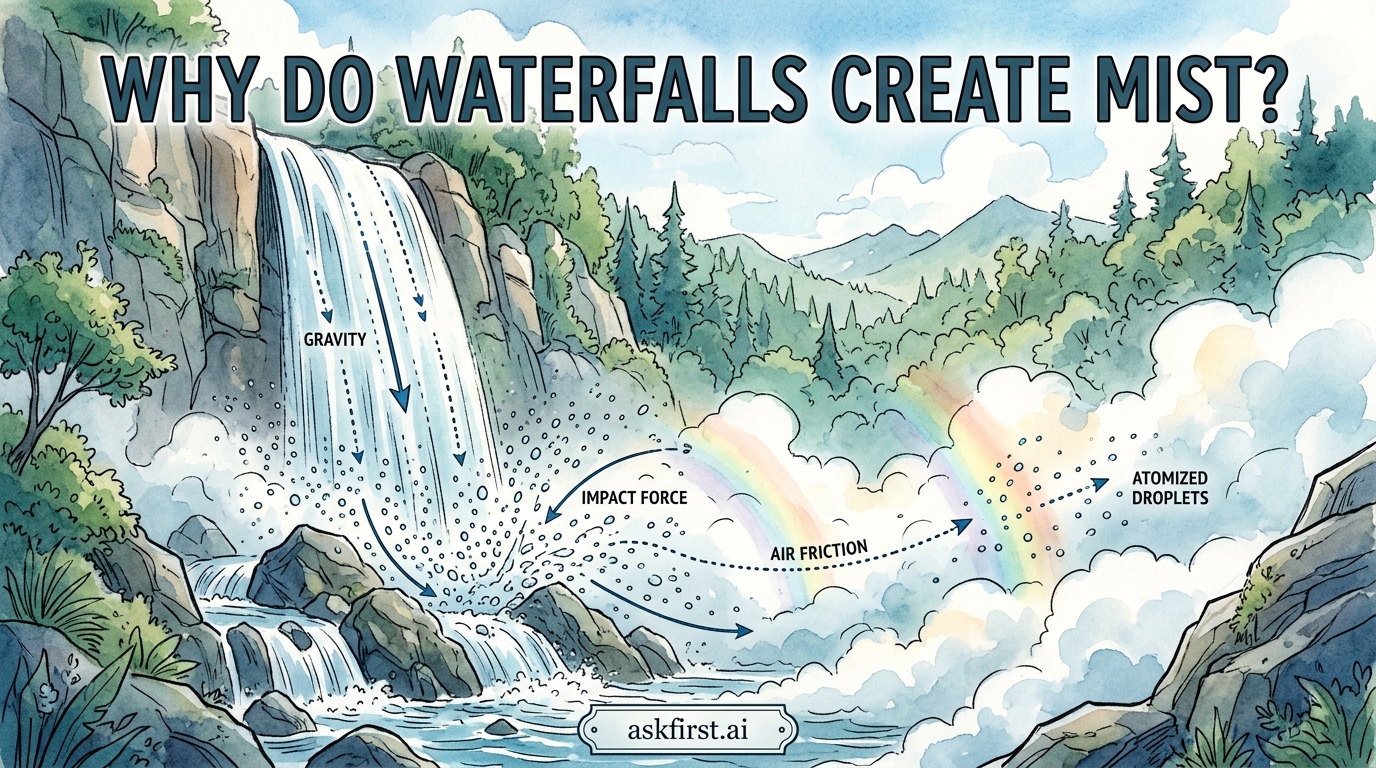
The primary reason waterfalls create mist is mechanical atomization. When a large volume of water free-falls, it accelerates due to gravity. Upon impact with the pool at the bottom (the plunge pool), the water’s kinetic energy is suddenly arrested. This violent collision forces the water to break apart into millions of tiny droplets.
Fluid Instability
As the water descends, it is subject to Rayleigh-Taylor instabilities and air resistance. The friction between the falling water column and the surrounding air causes the edges of the stream to fray. This "shearing" effect strips away the outer layers of the water, turning them into a fine mist long before they ever reach the bottom.
Entrainment and Turbulence
The process is further amplified by air entrainment. As the water falls, it acts like a pump, dragging a significant amount of air down with it. When this mixture hits the plunge pool, the trapped air is forced to escape rapidly, creating powerful upward currents. These currents carry the newly formed, microscopic droplets upward and outward, suspending them in the atmosphere as visible mist or fog.
Factors Influencing Mist Intensity
Not every waterfall creates the same level of mist. The intensity is determined by several critical variables:
- Height of the Fall: Greater height allows for higher terminal velocity, resulting in a more energetic impact and finer atomization.
- Volume of Flow: A larger mass of water hitting the base creates more displacement and turbulence.
- Wind Conditions: Localized wind patterns can disperse the mist over a wider area or concentrate it into thick, localized fog.
- Surface Tension: Water temperature and mineral content (salinity or sediment) can alter the surface tension, affecting how easily the water breaks into droplets.
Environmental and Biological Impact
The mist produced by waterfalls is not merely a visual spectacle; it is a vital ecological component.
- Microclimates: The constant presence of moisture creates a localized microclimate, allowing for the growth of mosses, ferns, and bryophytes that require high humidity.
- Negative Ionization: Waterfalls are famous for producing high concentrations of negative ions. Through the Lenard Effect, the atomization of water droplets creates an electrical charge, which many studies suggest may improve air quality and provide psychological benefits to humans.
Conclusion: A Continuous Cycle
In summary, the creation of mist is a natural byproduct of gravity, kinetic energy dissipation, and air displacement. By converting potential energy into kinetic energy and eventually into mechanical work, waterfalls effectively "shatter" water into an aerosol state. This perpetual cycle of atomization remains a cornerstone of the riparian ecosystems that surround these majestic geological features.