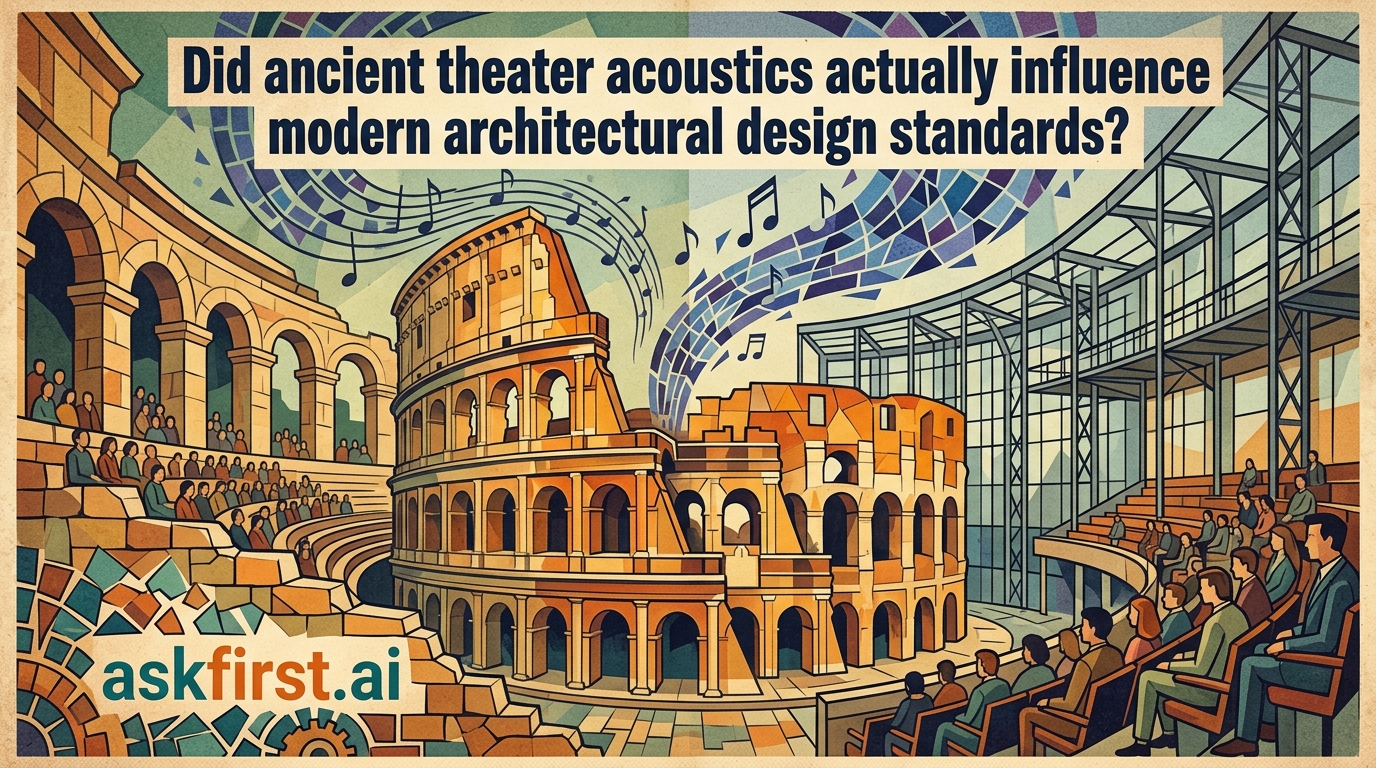
The Echoes of Antiquity: How Ancient Theaters Shaped Modern Sound
Ancient architects possessed an uncanny mastery over the laws of physics long before the invention of modern decibel meters. The design of structures like the Theater of Epidaurus, constructed in the 4th century BCE, remains a foundational blueprint for modern architectural acoustics. While current technology relies on digital modeling and synthetic materials, the fundamental principles governing sound wave propagation, absorption, and reflection were perfected by the Greeks thousands of years ago.
The Engineering Genius of Limestone
One of the most persistent mysteries of the Epidaurus theater is its near-perfect acoustic clarity, where even a whisper on stage can be heard clearly in the highest rows. Researchers, such as those from the Georgia Institute of Technology, have discovered that the limestone seat rows act as a high-pass acoustic filter. The material effectively suppresses low-frequency background noise—like the rustle of a crowd or the wind—while simultaneously amplifying high-frequency sounds from the stage. This "filtering" effect is a key principle applied in the construction of modern symphony halls, concert venues, and stadium seating arrangements today.
Geometric Precision and Wave Propagation
Ancient theater design utilized specific geometric configurations to ensure optimal sound dispersion:
- Semicircular Shape: This orientation creates a natural funnel that directs sound waves toward the audience.
- Steep Rake: The incline of the seating area prevents sound from being absorbed by clothing or human bodies at the front, allowing direct paths to higher levels.
- Reflective Surfaces: The strategic placement of hard stone surfaces ensures that early reflections of sound reach the listener within a short timeframe, enhancing speech intelligibility.
These design choices form the bedrock of architectural acoustic standards for performing arts centers. Architects now use materials with specific absorption coefficients, yet the geometric principles remain identical. The "Golden Ratio" and other mathematical proportions found in Vitruvian writings continue to influence how sound is managed in theaters and legislative chambers alike.
Legacy in Modern Construction
Modern stadium design represents the evolution of these ancient principles. Large-scale arenas utilize massive overhangs and specialized sound-baffle systems that mimic the functional goal of the ancient orchestra pit and cavea. Furthermore, the integration of digital audio enhancement systems does not replace the physical architectural geometry; instead, it works in tandem with it. If the building's physical structure does not manage sound waves effectively, no amount of electronic amplification can compensate for acoustic anomalies like echoes or dead zones. By studying these ancient marvels, modern designers ensure that public spaces maintain structural integrity while optimizing the listener experience, proving that ancient engineering remains an essential pillar of contemporary architecture.