The Temporal Illusion: Why Time Accelerates With Age
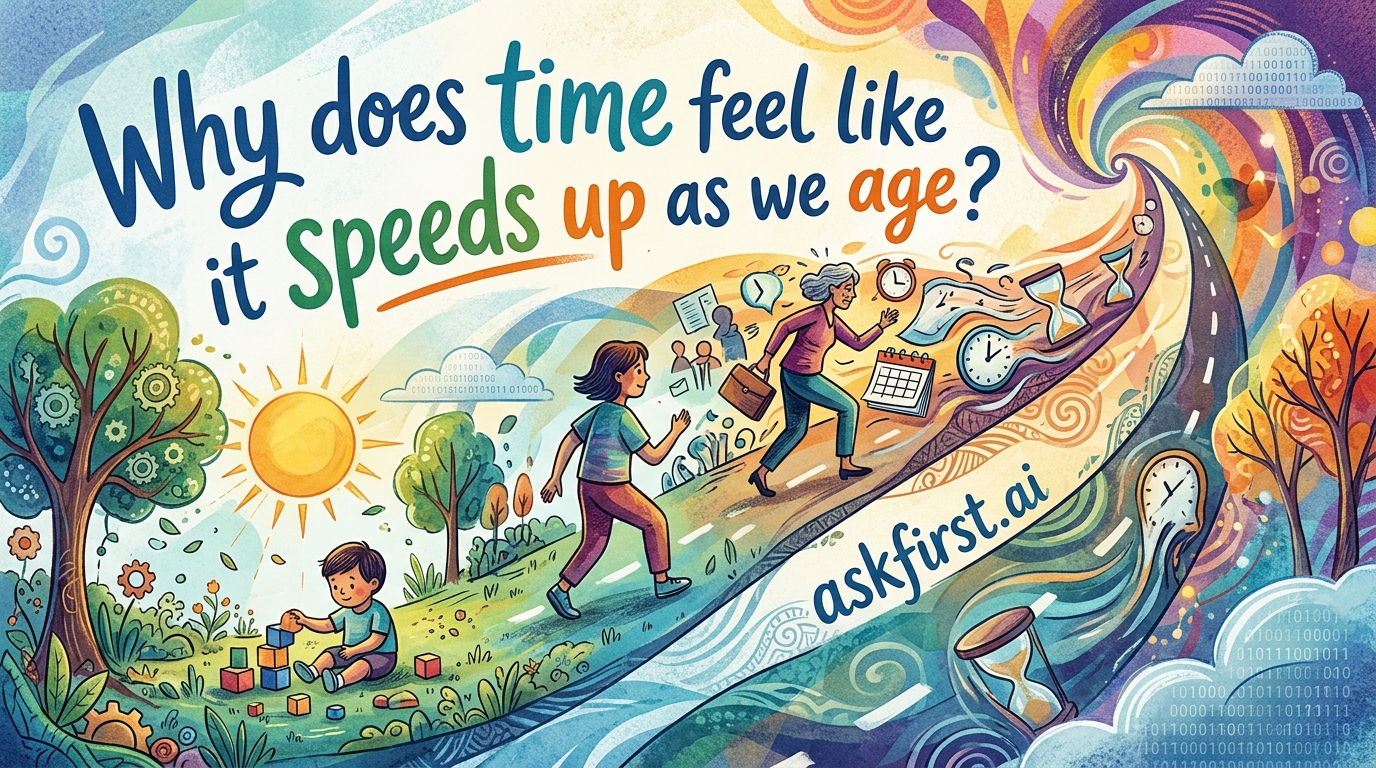
Have you ever wondered why childhood summers felt like they stretched on for an eternity, while adult years seem to flash by in the blink of an eye? This phenomenon is not merely a trick of memory; it is a fascinating intersection of cognitive psychology, neural processing, and proportional perspective. Researchers suggest that our perception of time is far more elastic than the mechanical ticking of a clock.
The Proportional Theory
One of the most compelling explanations for this temporal shift is the proportional theory, first proposed by philosopher Paul Janet in 1877. This perspective argues that as we grow older, each unit of time represents a smaller fraction of our total life experience. For a five-year-old child, one year constitutes 20% of their entire existence—a massive, transformative slice of their world. In contrast, for a fifty-year-old, a single year is a mere 2% of their total life. Consequently, our brains perceive the passing of a year as significantly shorter relative to the duration of our life thus far.
The Novelty Factor
Beyond mere proportions, the way our brains process information plays a crucial role. Neuroscientist David Eagleman explains that our perception of time is heavily dependent on the amount of new data we are encoding. In childhood, the world is a landscape of "firsts." When the brain encounters novel stimuli, it records these experiences with high detail and density. Because the brain spends more neural energy processing these unique moments, memory stores them as more substantial, stretching the perceived duration of the interval. As we reach adulthood, we fall into familiar routines. When life becomes predictable, the brain does not need to expend as much energy recording details. These "autopilot" days seem to disappear because there is very little new information for the brain to latch onto, resulting in a "telescoping" effect where weeks and months blend together.
The Neural Processing Speed
Another biological factor involves the rate at which our neural pathways process images. Some experts theorize that as we age, our internal processing speed slows down, or the complexity of the neural pathways increases. When we are young, the brain processes information very rapidly, meaning we perceive more images or "frames" per second. As we age, if these processes slow down, we perceive fewer frames within the same objective time period. Similar to a camera capturing fewer frames per second in a video, the resulting subjective experience is a sense that time is moving much faster than it truly is.
Reclaiming Temporal Awareness
Understanding these mechanisms offers a remedy. By intentionally seeking novelty, travel, new hobbies, or learning complex skills, adults can consciously increase the density of their neural encoding. By forcing the brain out of its habitual patterns, the perception of time can effectively be "slowed down," allowing for a richer and more present experience of the journey of life.