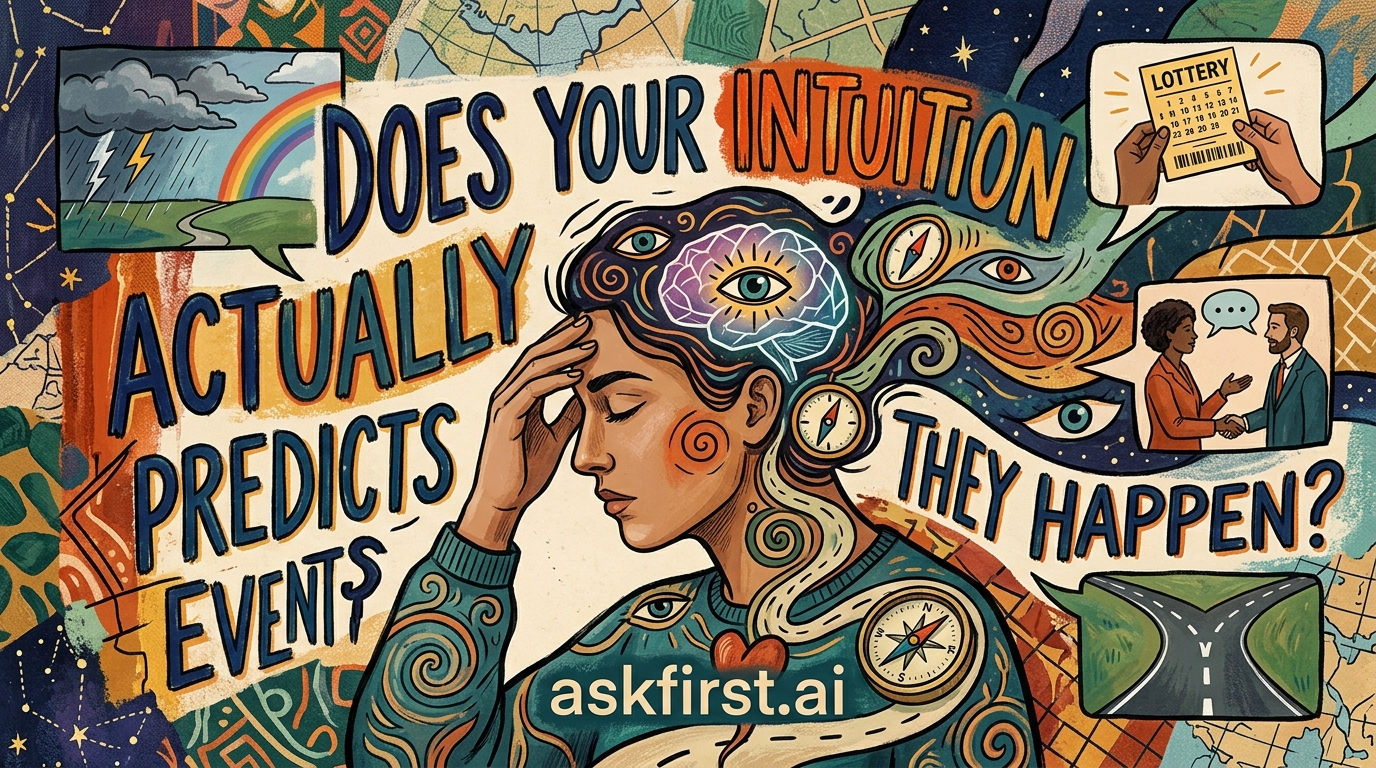
The Science of Intuition: Decoding the Predictive Mind
Human intuition is often described as a sixth sense, a subtle whisper that guides decisions before logic can catch up. While pop culture paints intuition as a mystical power, modern cognitive psychology offers a more grounded, yet equally fascinating, explanation for why the brain seems to "know" things before they occur.
The Mechanism of Pattern Recognition
Intuition is not magic; it is rapid, unconscious pattern recognition. The human brain is an advanced predictive machine that constantly scans the environment for familiar cues. When an individual has spent years mastering a skill, the subconscious mind archives thousands of micro-patterns. When a similar scenario emerges later, the brain triggers a "hunch" by accessing these stored patterns, bypassing the slower, deliberate process of conscious analysis.
- Expert Intuition: A chess grandmaster senses a winning move without calculating every possibility.
- Heuristics: These are mental shortcuts that allow for quick decision-making under uncertainty.
The Role of Somatic Markers
Neuroscientist Antonio Damasio proposed the Somatic Marker Hypothesis, which suggests that emotions are linked to bodily states. When faced with a decision, the body often generates a visceral response—a tightness in the chest or a sense of ease—before the conscious mind realizes why. These somatic markers act as a biological alarm system, steering people away from risky outcomes and toward beneficial ones long before analytical reasoning is fully engaged.
Separating Perception from Reality
While intuition feels like a look into the future, it is strictly bound to the present. The brain does not predict the future; it predicts the immediate next step based on the statistical likelihood of previous experiences. Problems arise when individuals confuse intuition with cognitive biases, such as:
- Hindsight Bias: The tendency to believe that an event was predictable after it has already occurred.
- Confirmation Bias: Focusing on times when an intuitive hit was correct while conveniently ignoring the many times it failed.
Cultivating Informed Intuition
Intuition is most reliable in environments with consistent feedback loops. In fields like firefighting or emergency medicine, professionals develop "predictive" capabilities because their training exposes them to repeated, high-stakes patterns. Conversely, in volatile or novel environments, intuition often leads to error. Developing reliable intuition requires deep study, experience, and the humility to constantly test one's hunches against reality. By merging logical analysis with gut feelings, one can harness the full power of the human intellect to navigate complex life paths with greater clarity and confidence.