The Invisible Synchrony: How Your Inner Circle Shapes Your Essence
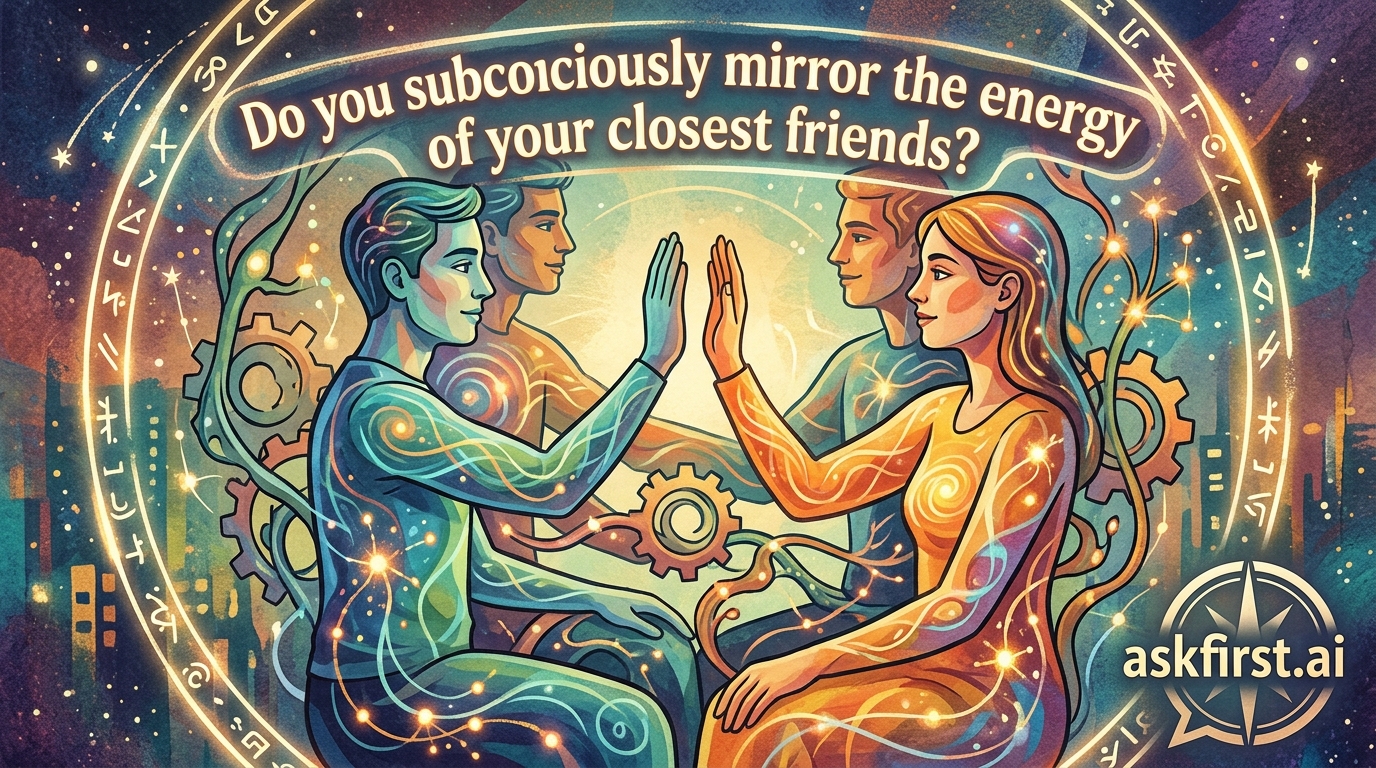
Human beings are inherently social creatures, biologically hardwired to calibrate their behaviors, emotions, and even physiological states to those within their immediate proximity. The phenomenon of mirror neurons plays a pivotal role in this process. When observing the actions or emotional states of a close friend, the same neural regions in the brain fire as if one were performing those actions oneself. This mechanism is the bedrock of empathy, yet it extends far beyond simple mimicry.
The Neuroscience of Emotional Contagion
Emotional contagion refers to the automatic process of catching the moods or energy levels of others. Research indicates that when a close friend is stressed, frustrated, or jubilant, the observer often experiences a corresponding shift in neurochemistry. This occurs through the limbic system, which constantly monitors social cues. Over time, these transient states can crystalize into more permanent changes in temperament. If a social circle consistently exhibits a specific energy—whether it be calm, driven, or chaotic—an individual is statistically likely to adopt that same frequency as a baseline trait.
The Role of Social Homophily
While mirroring is an active process, it is bolstered by social homophily—the human tendency to bond with others who share similar characteristics. However, even if people start with differences, longitudinal studies show a "convergence effect." Friends who spend extensive time together gradually synchronize their vocabulary, body language, and worldview. This synchronization is not merely superficial; it influences the autonomic nervous system. Heart rates, respiration patterns, and cortisol levels often align among those who share deep, long-term bonds, suggesting that the body treats the friend as a reflection of the self.
Practical Implications and Conscious Curation
Understanding that one subconsciously absorbs the energy of peers allows for intentional social design. Since energy is dynamic and permeable, the selection of one's closest companions becomes a vital factor in personal growth and mental stability.
- Energy Auditing: Evaluate the feeling experienced after leaving a gathering with friends. Does the interaction feel depleting or nourishing?
- Intentional Interaction: Consciously choose to surround oneself with individuals who embody the traits one aspires to cultivate.
- Awareness of Influence: Recognize that being a leader in a group involves setting the emotional tone, as others will naturally mirror that input.
In conclusion, the psyche is never a closed system. It is a porous, adaptive entity that continuously recalibrates based on the social environment. By recognizing this profound link, individuals can better manage their own emotional equilibrium and choose circles that support their personal development. The mirror effect is not just a psychological curiosity; it is a fundamental architecture of human interconnectedness that shapes the very essence of personality over a lifetime.