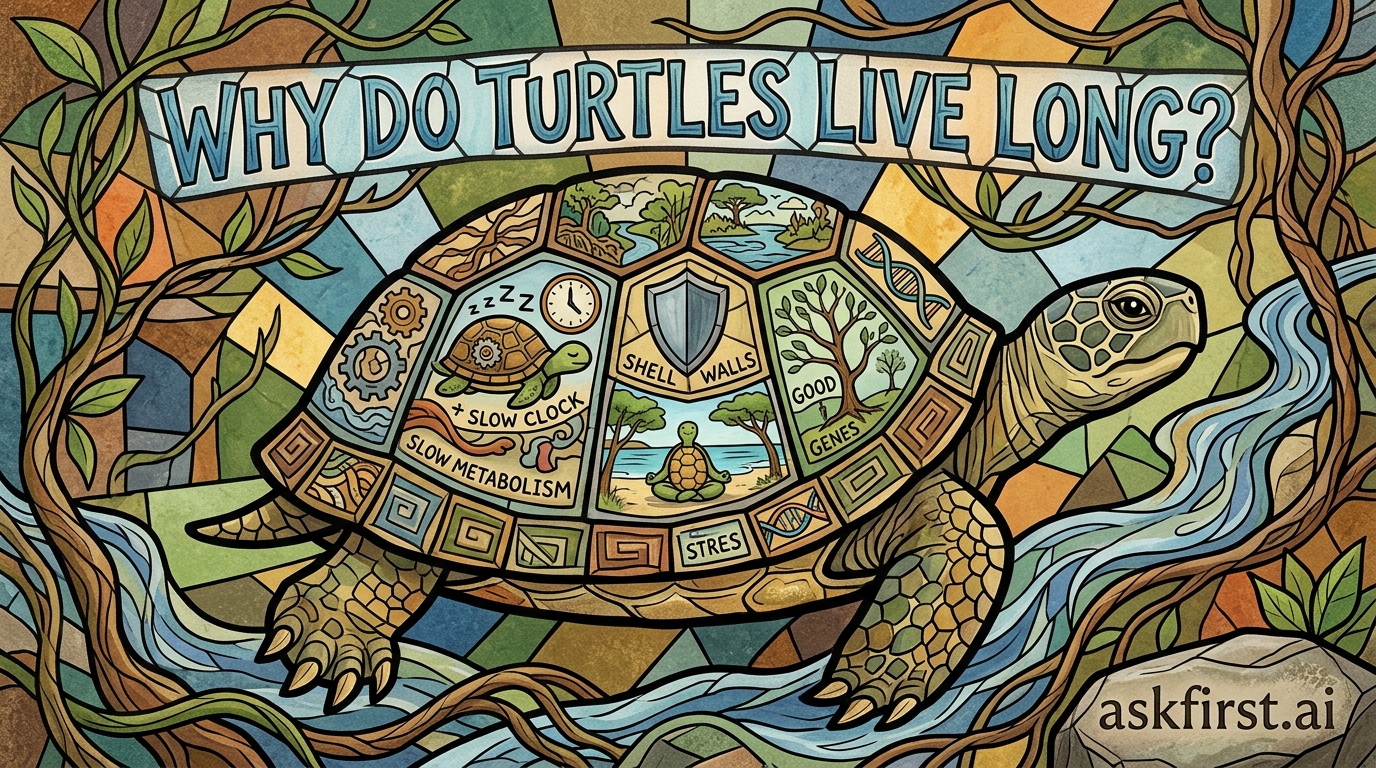
The Secrets of Longevity: Why Turtles Live Extraordinary Lives
Turtles are among the longest-lived vertebrates on Earth, with some species, such as the Galápagos giant tortoise, capable of exceeding 150 years. This biological anomaly has fascinated scientists for centuries, leading to extensive research into the intersection of evolution, metabolism, and cellular repair.
Biological Mechanisms of Longevity
The primary driver of a turtle's lifespan is its slow metabolic rate. Turtles are ectothermic, meaning they rely on environmental temperatures to regulate their body heat. Because they do not expend energy to maintain a constant internal body temperature, their physiological "clock" ticks much slower than that of endothermic mammals.
1. Cellular Integrity and DNA Repair
Turtles possess highly efficient mechanisms for DNA repair. Their cells are remarkably resistant to oxidative stress—a process where unstable molecules damage cellular structures, leading to aging. Studies suggest that turtles have advanced antioxidant defense systems that neutralize these harmful molecules, effectively shielding their DNA from the degradation that typically limits the lifespan of other animals.
2. Negligible Senescence
Many turtle species exhibit a phenomenon known as "negligible senescence." Unlike humans, whose physiological function declines sharply with age, turtles show little or no decline in reproductive capacity or physical health as they grow older. In some cases, older tortoises are even more robust than their younger counterparts, as they have survived the high-mortality juvenile stage.
Evolutionary Advantages
The turtle's shell is its greatest evolutionary asset. By providing near-impenetrable protection against predators, the shell allows turtles to adopt a "slow and steady" survival strategy.
- Low Predation Risk: Because they are well-defended, turtles do not need to reproduce at a young age to ensure the survival of their lineage. This allows them to allocate energy toward growth and maintenance rather than rapid reproduction.
- Energy Conservation: Their ability to survive for long periods without food—sometimes months—allows them to endure harsh environmental conditions that would be fatal to other species.
Practical Insights into Turtle Care
If you are keeping a turtle as a companion, understanding their longevity is crucial. Providing a long, healthy life requires:
- Species-Specific Habitat: Ensure the enclosure mimics their natural environment, including proper UVB lighting for calcium metabolism.
- Balanced Nutrition: A diet rich in leafy greens and specific proteins prevents metabolic bone disease.
- Regular Veterinary Exams: Because turtles mask illness well, annual check-ups are vital to detect issues early.
The Future of Longevity Research
Scientists are currently analyzing the genomes of turtles to understand how their genes regulate cell death and aging. By unlocking the secrets of their telomeres (the protective caps on DNA strands), researchers hope to gain insights into human longevity and age-related diseases. While we cannot replicate the turtle’s shell, their biological blueprints offer a promising frontier for regenerative medicine.
In summary, the turtle's longevity is a masterclass in evolutionary efficiency. Through a combination of low metabolic demands, superior cellular repair, and a defensive morphology that minimizes predation, they have secured their place as the Earth’s most enduring survivors.