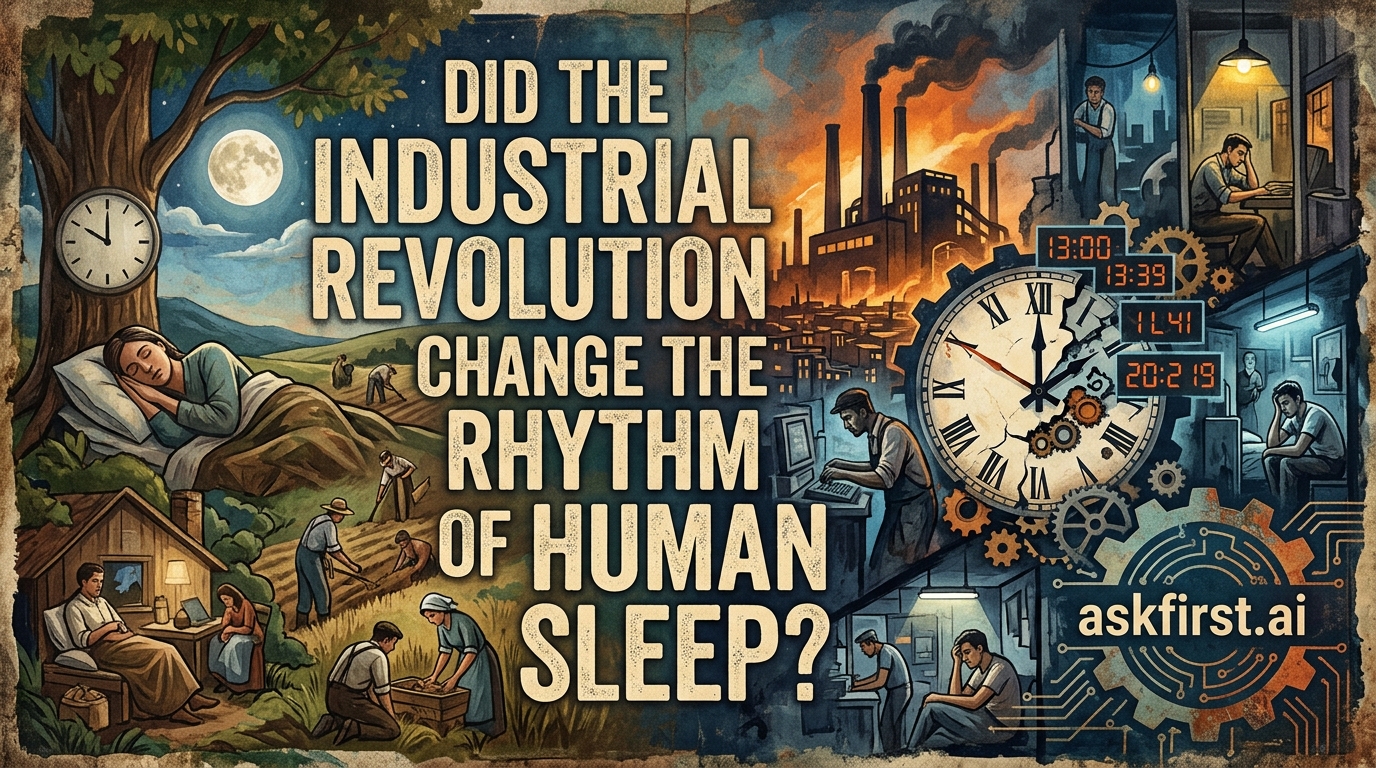
The Great Sleep Shift: How Industrialization Altered Our Nights
Before the rise of the mechanical clock and the widespread adoption of artificial lighting, human sleep was a dramatically different biological experience. Historical research, most notably by historian A. Roger Ekirch, reveals that pre-industrial societies typically practiced a segmented sleep pattern known as "biphasic sleep."
The Biphasic Revolution
In the centuries preceding the Industrial Revolution, humans did not perceive an eight-hour continuous block of sleep as the gold standard. Instead, people commonly slept in two distinct chunks. The first sleep began shortly after dusk, lasting for approximately four hours. This was followed by a one-to-two-hour period of wakefulness during the middle of the night, often termed "the watch." During this interlude, individuals might read, pray, engage in intimate conversation, or complete household chores. This quiet time was often seen as the most contemplative part of the day, before the second sleep commenced, lasting until dawn.
The Impact of Industrialization
As the Industrial Revolution took hold in the 18th and 19th centuries, the demand for structured factory labor transformed the cadence of life. Three major factors converged to eliminate the biphasic rhythm:
- Artificial Illumination: The development of gas lamps and later incandescent bulbs suppressed the body's natural melatonin production. By extending the perceived length of the day, light pollution made the quiet, dark midnight hours less conducive to natural wakefulness.
- The Tyranny of the Clock: Factory work necessitated synchronization. The rigid, time-based schedule imposed by industrial employers incentivized a consolidated sleep block to ensure workers were alert and present for the start of shifts. The efficiency of the machine dictated the efficiency of the human body.
- Cultural Shift: As urban density increased and social structures modernized, the value placed on "productive" time rose. The leisurely "watch" period became stigmatized as idle time, eventually fading from public consciousness as society aligned with the industrial pace.
Scientific Perspective on Modern Sleep
Modern sleep science suggests that the current expectation of a monophasic (single, continuous block) sleep pattern is a relatively recent social construct. While the body has adapted to modern rhythms, some experts argue that the modern epidemic of insomnia may stem from forcing a rigid, continuous sleep model on individuals whose internal biology may still possess vestigial tendencies toward segmented rest. By forcing the population into a standardized 11:00 PM to 7:00 AM cycle, industrial society effectively redefined what it meant to have a "healthy" night, prioritizing economic productivity over the historical, multi-phasic reality of human rest. This transition remains one of the most profound, yet under-recognized, biological alterations in modern human history.