How Daily Intention Rituals Reshape Your Subconscious Mind
The Neuroscience of Intention: Rewiring Your Subconscious Reality
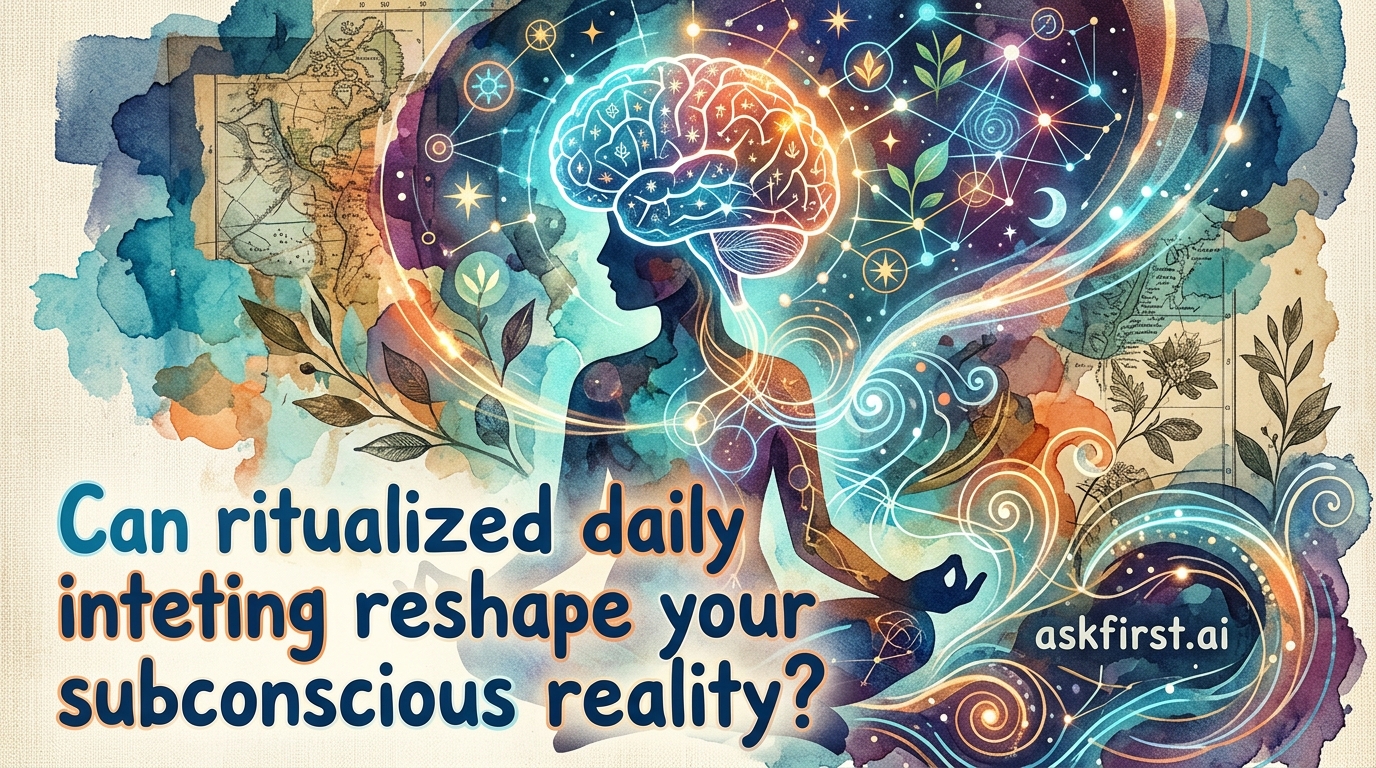
Daily intention setting, often dismissed as a mere mindfulness trend, functions as a powerful psychological mechanism for cognitive restructuring. By consciously directing focus toward specific goals, individuals initiate a process known as neuroplasticity—the brain's ability to reorganize itself by forming new neural connections. When ritualized, this practice transcends simple goal-setting and begins to penetrate the subconscious, effectively automating desired behaviors and perceptions.
The Mechanism of Selective Attention
The Reticular Activating System (RAS) is a bundle of nerves at the brainstem that acts as a gatekeeper for incoming sensory data. Throughout daily life, the human brain is bombarded with millions of bits of information. The RAS filters this data, allowing only what is deemed "relevant" to reach the conscious mind. Through ritualized intention setting, the RAS is programmed to prioritize information that aligns with these stated goals. For instance, if an intention focuses on "finding opportunities for professional growth," the RAS becomes hyper-attuned to conversations, books, or people that facilitate such growth—opportunities that previously existed but remained invisible due to cognitive filtering.
Moving from Conscious to Subconscious
The transition from a conscious thought to a subconscious habit involves the Basal Ganglia, the brain region responsible for habit formation. When an intention is practiced repeatedly, the neural pathways involved in that thought process become faster and more efficient. Eventually, the effort required to consciously recall the intention diminishes, and it becomes a default mode of operation. This phenomenon is supported by research into Hebbian Theory, often summarized as "cells that fire together, wire together." As an intention is consistently reinforced, the corresponding neural circuit strengthens, effectively shifting one's "default" perspective on reality.
Practical Framework for Implementation
To effectively reshape the subconscious, the ritual must be precise and emotionally resonant:
- Specificity: Use "I am" or "I will" statements that are unambiguous.
- Emotional Anchoring: Connect the intention to an emotional outcome. Emotions act as a glue for memory, helping the subconscious retain the goal.
- Consistency: Perform the ritual at the same time daily, ideally upon waking, to ensure the brain is in a receptive, plastic state.
Challenging Common Misconceptions
Critics often argue that intentions are passive manifestations. However, neuroscience suggests otherwise. Intentions are active directives that prioritize cognitive resources. This is not about magically changing external circumstances but about changing the lens through which those circumstances are interpreted and engaged. By consistently reinforcing a specific intention, the brain is forced to adapt its predictive processing, leading to behavioral shifts that naturally result in a changed external reality. This rigorous, evidence-based approach confirms that the subconscious is a malleable architecture, constantly updated by the deliberate input of daily intentions.