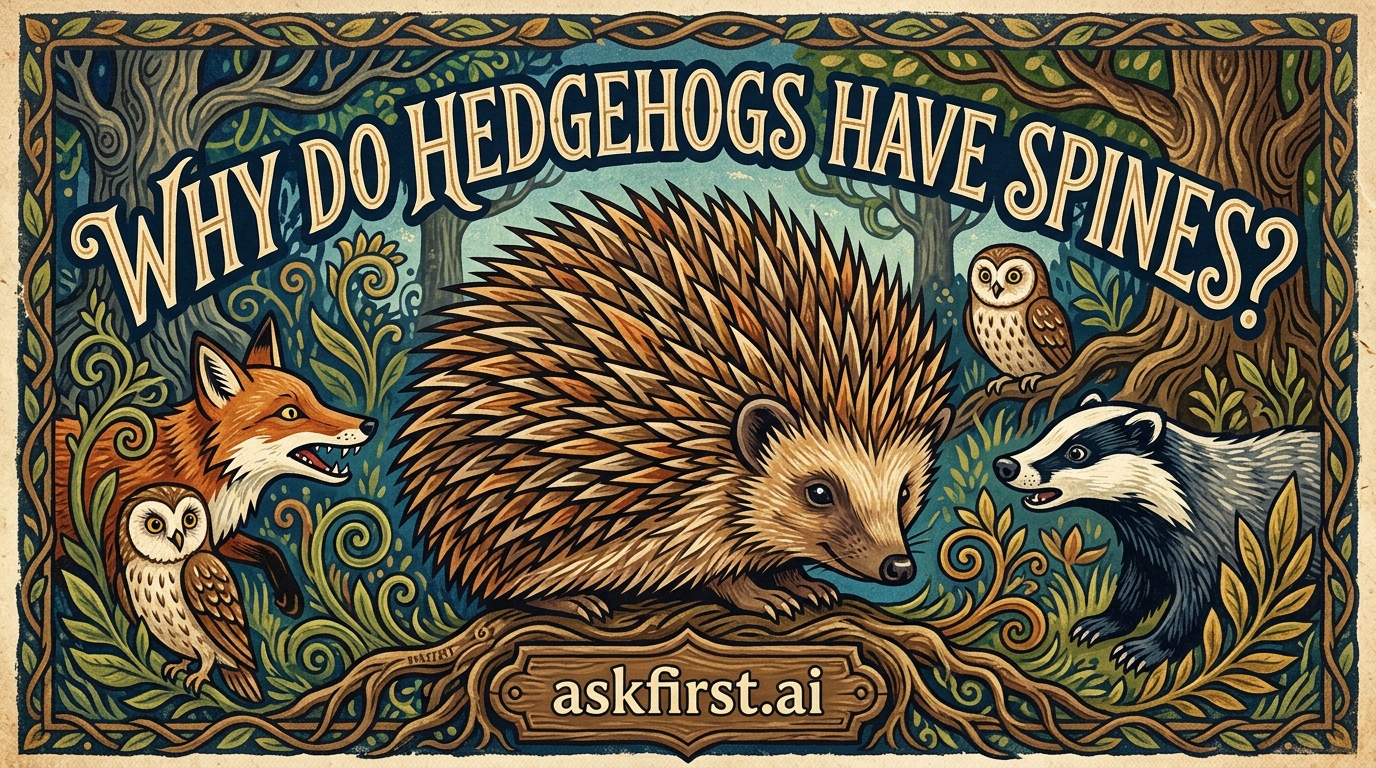
The Evolutionary Marvel: Why Hedgehogs Have Spines
The hedgehog (Erinaceinae) is one of nature’s most distinct examples of specialized evolutionary defense. Their defining physical characteristic—the thousands of sharp, keratinous spines—serves as a primary survival mechanism against a variety of predators. Understanding why hedgehogs have spines requires an exploration of their biological composition, their defensive utility, and their role in the animal's behavior.
Biological Composition and Structure
Contrary to popular belief, hedgehog spines are not quills like those of a porcupine; they are hollow, stiffened hairs made of keratin, the same protein found in human fingernails and hair. An adult hedgehog typically carries between 5,000 and 7,000 spines. Each spine is attached to a complex network of muscles, specifically the orbicularis panniculi, which allows the animal to manipulate the direction of the spines and retract them at will.
The Primary Function: Defensive Armor
The primary evolutionary pressure that necessitated the development of spines was the need to deter predators. When a hedgehog senses danger, it does not flee; instead, it utilizes its unique muscular structure to roll into a tight, impenetrable ball. This behavior, known as conglobation, hides the animal's vulnerable underbelly and face, leaving only the sharp, outward-pointing spines exposed.
- Deterrence: The spines act as a physical barrier that makes the hedgehog incredibly difficult to bite, chew, or swallow.
- Shock Absorption: The base of each spine is designed to bend upon impact, which helps the hedgehog survive falls from significant heights, acting as a natural shock-absorber.
- Protection against environment: Beyond predators, the spines provide limited protection against abrasive terrain and dense, thorny undergrowth.
Pros and Cons of the Spiny Defense
While highly effective, the spiny defense mechanism comes with trade-offs:
Pros:
- High Survivability: It successfully wards off common predators such as foxes, badgers, and birds of prey.
- Low Energy Expenditure: Once the ball is formed, the hedgehog requires very little movement to remain protected.
Cons:
- Vulnerability to Parasites: The dense network of spines provides a perfect micro-habitat for fleas, ticks, and mites, which are notoriously difficult for the hedgehog to groom away.
- Immobility: Once curled, the hedgehog is essentially immobile, making it susceptible to being rolled into water or carried away by persistent predators.
Self-Anointing: A Mysterious Behavior
A peculiar aspect of hedgehog life is "self-anointing." When a hedgehog encounters a new scent, it will lick the substance, create a frothy saliva, and spread it across its spines. Scientists hypothesize this may be a way to mask their scent from predators, provide protection against pathogens, or perhaps serve as a chemical deterrent.
Future Trends and Conservation
Today, hedgehogs face significant threats, not from natural predators, but from human-induced factors like habitat fragmentation and road traffic. Because their primary defense—curling into a ball—is ineffective against cars, conservationists are working to create "hedgehog highways" and wildlife-friendly garden corridors. Protecting these unique creatures is vital, as they serve as essential regulators of garden insect populations, proving that their spines are just one part of a complex, beneficial ecological role.