Decoding the Unseen: Can We Watch Our Own Dreams?
For centuries, dreams have been the final frontier of human privacy. While science has mapped the geography of the brain, the visual reconstruction of the subconscious remains one of the most tantalizing challenges in neuroscience. The short answer is that while scientists cannot yet play your dreams on a television screen, they are making remarkable strides in mapping the neural precursors of visual imagery.
The Mechanism of Neural Reconstruction
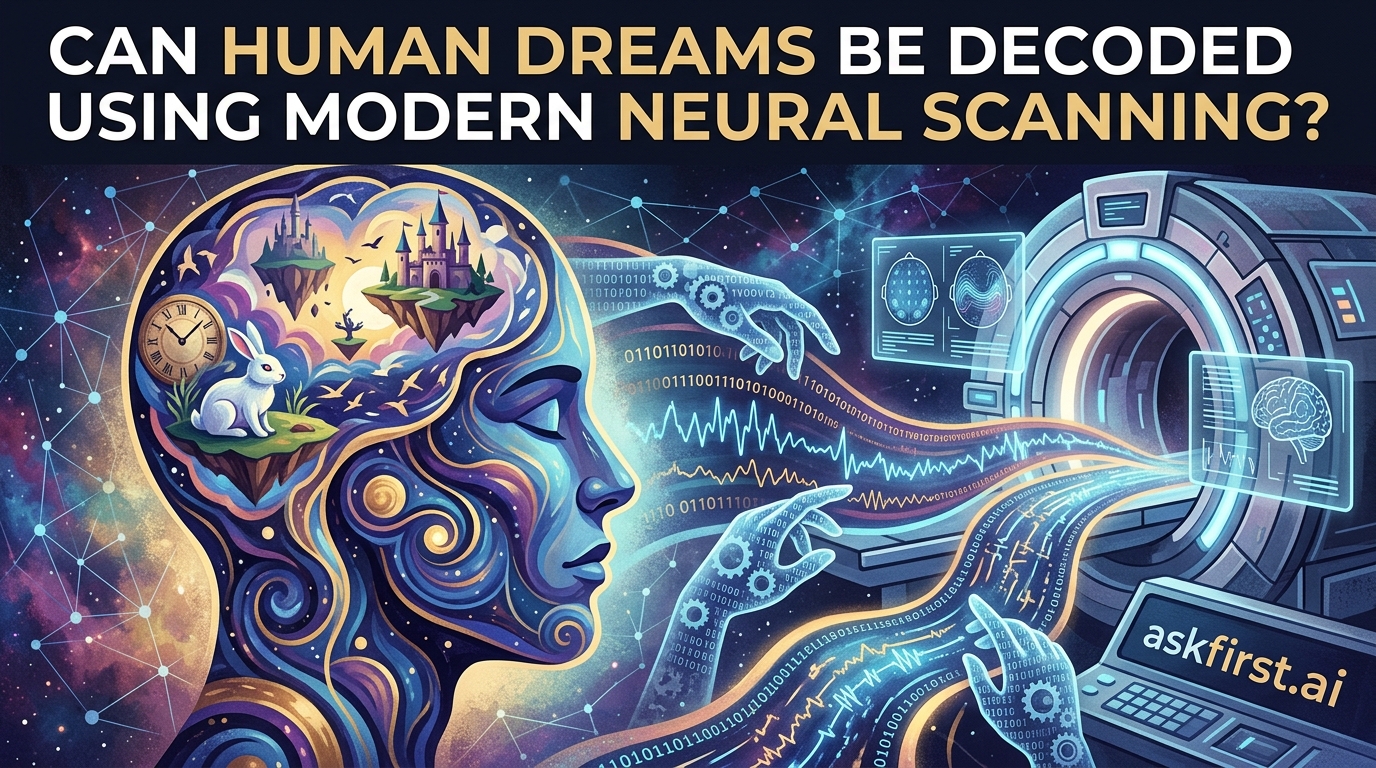
Modern research primarily utilizes functional Magnetic Resonance Imaging (fMRI) combined with sophisticated machine learning algorithms. The core principle involves training a decoder to associate specific patterns of neural activity in the primary visual cortex (V1) and higher-order areas with external images viewed by the subject while awake. By building a massive database of how the brain reacts to various shapes, colors, and concepts, computers can mathematically predict what a person is perceiving.
Recent landmark studies, such as those conducted at the ATR Computational Neuroscience Laboratories in Japan, have demonstrated the ability to reconstruct images of objects that a person is focusing on, with significant accuracy. When applied to the sleep cycle, researchers track the neural activation signatures that occur during Rapid Eye Movement (REM) sleep. Before the subject wakes up, the computer predicts the semantic category of the dream—such as whether the subject was dreaming of a person, a car, or a building—with an accuracy rate significantly higher than chance.
Challenges and Current Limitations
Despite this progress, true dream "video playback" faces two major technical hurdles:
- Spatial Resolution: fMRI measures blood oxygen levels, which is a proxy for neural activity. It is slow and lacks the granular detail required to capture the fleeting, high-speed nature of a dream.
- Subjectivity: Dreams are idiosyncratic. Unlike viewing a photograph, dreaming is an internal creation of the mind that lacks a singular objective referent. An apple in a dream might be associated with a unique childhood memory, making its neural signature different from a standard, objective "apple" representation.
Future Implications: The Frontier of Neural Privacy
If perfect decoding becomes possible, it would unlock unprecedented insights into mental health, helping to understand recurring nightmares or the cognitive processing of trauma. However, it also raises ethical questions regarding cognitive liberty. For now, the "dream theater" is mostly a work in progress, requiring participants to spend hours in cumbersome scanners. We are essentially decoding the "pixels" of the mind, gradually moving from blurry shapes toward clearer, conceptual imagery. As technology improves, we may eventually reach a point where the subconscious is no longer entirely hidden, bridging the gap between internal experience and external digital visualization.