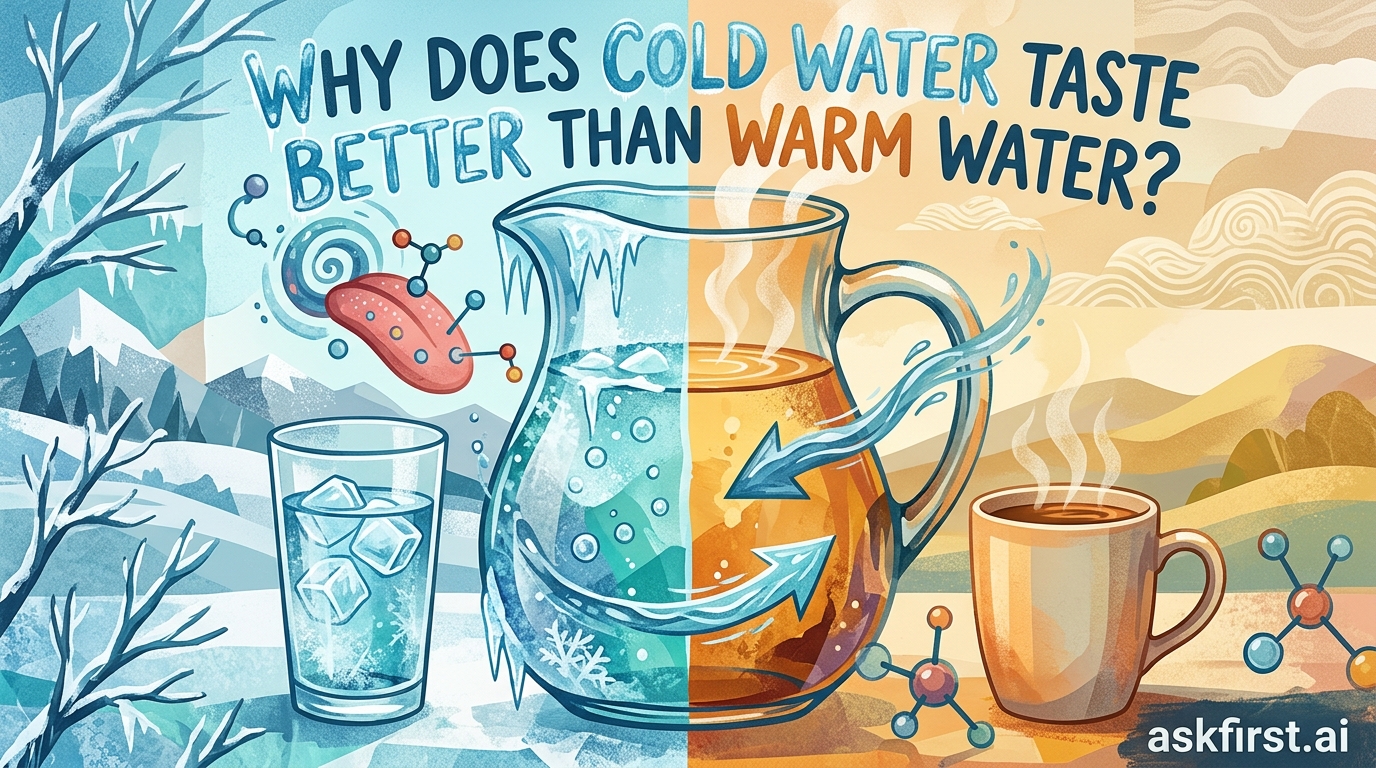
The Science of Refreshment: Why Cold Water Tastes Superior
Many people notice that water seems significantly more refreshing when it is served chilled compared to when it is served at room temperature. This is not merely a matter of personal preference; it is a complex interaction involving human physiology, sensory biology, and fluid dynamics. Understanding why this happens requires exploring how the tongue perceives flavor and how our brain interprets hydration.
The Role of Thermoreceptors
Human taste buds are not isolated from the rest of our sensory experience. While taste receptors detect basic profiles like salty, sweet, sour, bitter, and umami, the mouth is also heavily populated by thermoreceptors. These specialized neurons detect temperature fluctuations. When cold water hits the tongue, it triggers these receptors, which transmit a signal to the brain that the fluid is crisp and clean. Studies have shown that when these receptors are stimulated by cold temperatures, they can actually dampen the sensitivity of certain bitterness receptors. This makes the water taste more neutral and refreshing, as the brain perceives cold as a sign of purity.
Psychological Perception and Evolution
From an evolutionary standpoint, human beings are hardwired to associate cold water with safety. In nature, stagnant, warm, or room-temperature water is more likely to harbor harmful bacteria, parasites, and algae, which proliferate rapidly in heat. Conversely, cold, running water, such as from a spring or a mountain stream, is usually cleaner and safer for human consumption. Consequently, our ancestors evolved a biological preference for colder water because it was more likely to be free from dangerous contaminants. This ancestral instinct remains deeply ingrained, making cold water feel inherently more satisfying and thirst-quenching.
Impact on Olfactory Sensitivity
Flavor is significantly influenced by smell. At higher temperatures, water molecules are more active, which can intensify the volatility of any minerals or dissolved gases present in the liquid. If the water has even a slight odor or taste—such as residual chlorine from tap treatment or dissolved minerals—this profile is magnified when the water is warm. By chilling the liquid, the olfactory impact of these subtle, potentially off-putting aromas is diminished. Consequently, cold water is perceived as having a "cleaner" and more "neutral" taste, allowing for a more pleasurable drinking experience.
The Physiological Thirst Response
Finally, the act of consuming cold water provides a more rapid psychological sense of relief. During physical exertion or heat exposure, the body's internal temperature rises. Consuming chilled fluids acts as an immediate internal heat sink, signaling to the brain that the body's thermoregulation needs are being met. This provides a tactile sensation of "cooling down," which is absent when drinking room-temperature fluids. Ultimately, the preference for cold water is a combination of sensory suppression, evolutionary safety signaling, and the immediate physiological relief of cooling the body from the inside out.