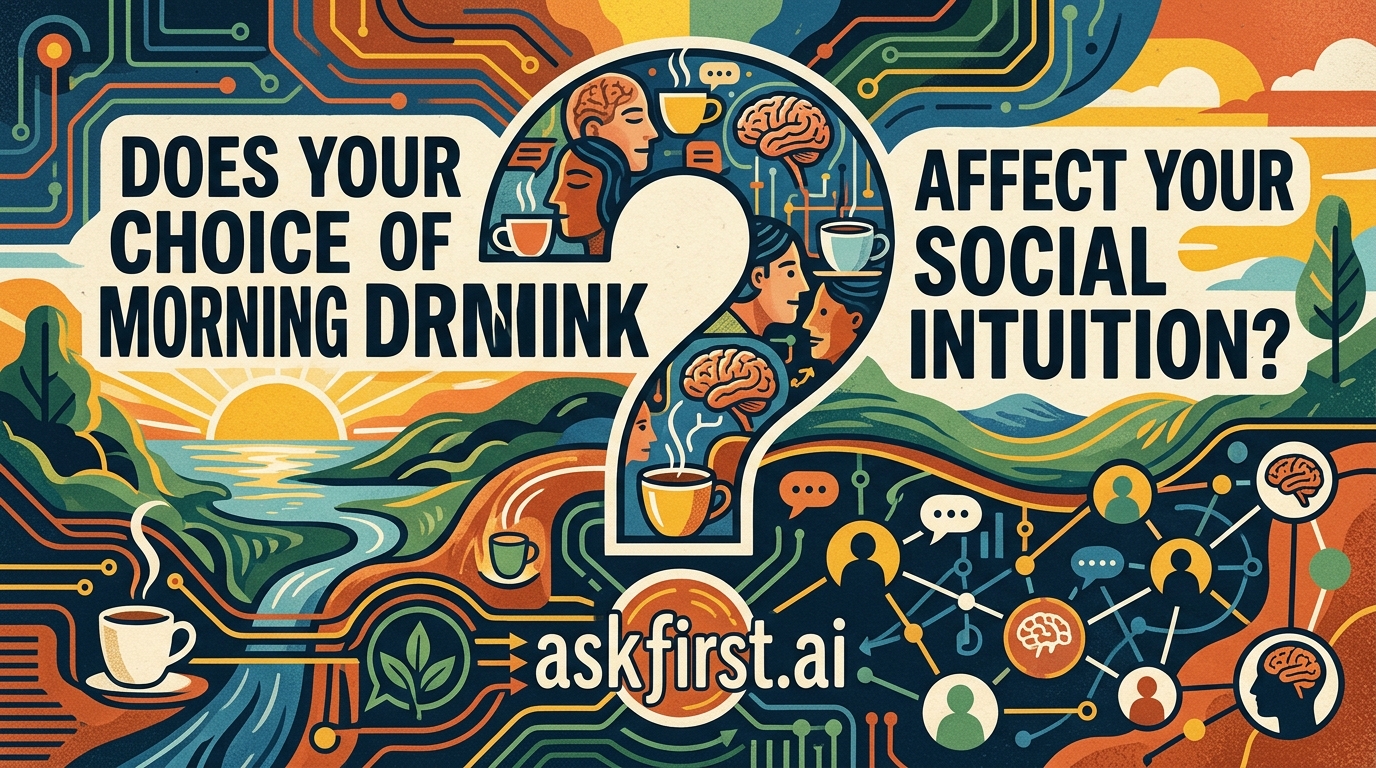
How Your Morning Drink Shapes Your Social Intuition
The Neuro-Social Impact: How Your Morning Beverage Shapes Social Intuition
The relationship between morning consumption habits and social cognition is a burgeoning field of study in neuro-nutrition. While caffeine is the world’s most widely consumed psychoactive substance, its impact extends far beyond simple wakefulness, deeply influencing the complex neurological processes required for social intuition—the ability to read cues, empathize, and navigate interpersonal dynamics effectively.
The Neurochemistry of Morning Drinks
Most morning rituals revolve around caffeine (coffee/tea) or hydration (water/herbal infusions). Caffeine acts as an adenosine receptor antagonist. By blocking adenosine—a neurotransmitter that promotes sleep and relaxation—caffeine increases alertness and dopamine signaling.
Coffee and Social Performance
For many, coffee is a social lubricant. The surge in dopamine can enhance mood and cognitive processing, which theoretically improves "social fluency." However, there is a distinct U-shaped curve to this effect:
- Low to Moderate Doses: Often associated with increased gregariousness, faster verbal processing, and improved focus on social cues.
- High Doses: Can trigger cortisol spikes, leading to anxiety, jitteriness, and "social hyper-vigilance," where an individual misinterprets neutral social cues as aggressive or negative, thereby impairing intuition.
The Role of Hydration
Social intuition relies heavily on the prefrontal cortex and the amygdala. Dehydration, even at mild levels (1–2%), has been clinically shown to impair executive function and mood. Starting the day with water ensures optimal blood viscosity and nutrient transport to the brain, which is foundational for maintaining the emotional regulation required to process social information accurately.
Analyzing Social Intuition Mechanisms
Social intuition is essentially the brain’s "Theory of Mind"—the capacity to attribute mental states to oneself and others.
- The Amygdala-Prefrontal Pathway: Stress hormones (induced by excessive stimulants) can "hijack" the amygdala, pushing the brain into a fight-or-flight state. When this occurs, the brain prioritizes survival over social nuance, effectively lowering one’s social IQ.
- Gut-Brain Axis: Recent research suggests that the microbiome—influenced by what we drink—communicates with the brain via the vagus nerve. Polyphenols found in tea and coffee can foster a healthy gut environment, which indirectly supports the stable neurotransmitter production necessary for steady emotional intelligence.
Practical Considerations for Social Optimization
To maximize social intuition through beverage choice, consider these strategies:
- The "Caffeine-Theanine" Balance: If choosing tea (specifically green or matcha), the presence of L-theanine promotes alpha-brain wave activity. This creates a state of "calm alertness," which is arguably the ideal physiological state for high-level social intuition.
- Avoid Sugar-Heavy Additives: High-glycemic morning drinks cause insulin spikes followed by "crashes." A sugar crash leads to irritability and fatigue, both of which are detrimental to reading social cues correctly.
- Timing: Consuming stimulants 60–90 minutes after waking allows for natural cortisol levels to stabilize, preventing the jittery over-arousal that causes social miscalibration.
Future Trends and Scientific Outlook
As nutritional psychiatry evolves, we are moving toward personalized "nootropic" morning routines. Future trends suggest the integration of adaptogens—such as Ashwagandha or Rhodiola—into morning beverages to modulate the stress response, allowing individuals to maintain high social intuition even in high-pressure environments. Ultimately, while your drink does not create your personality, it significantly modulates the physiological substrate upon which your social intuition is built. Prioritizing stability and hydration is the key to mastering your morning social interface.