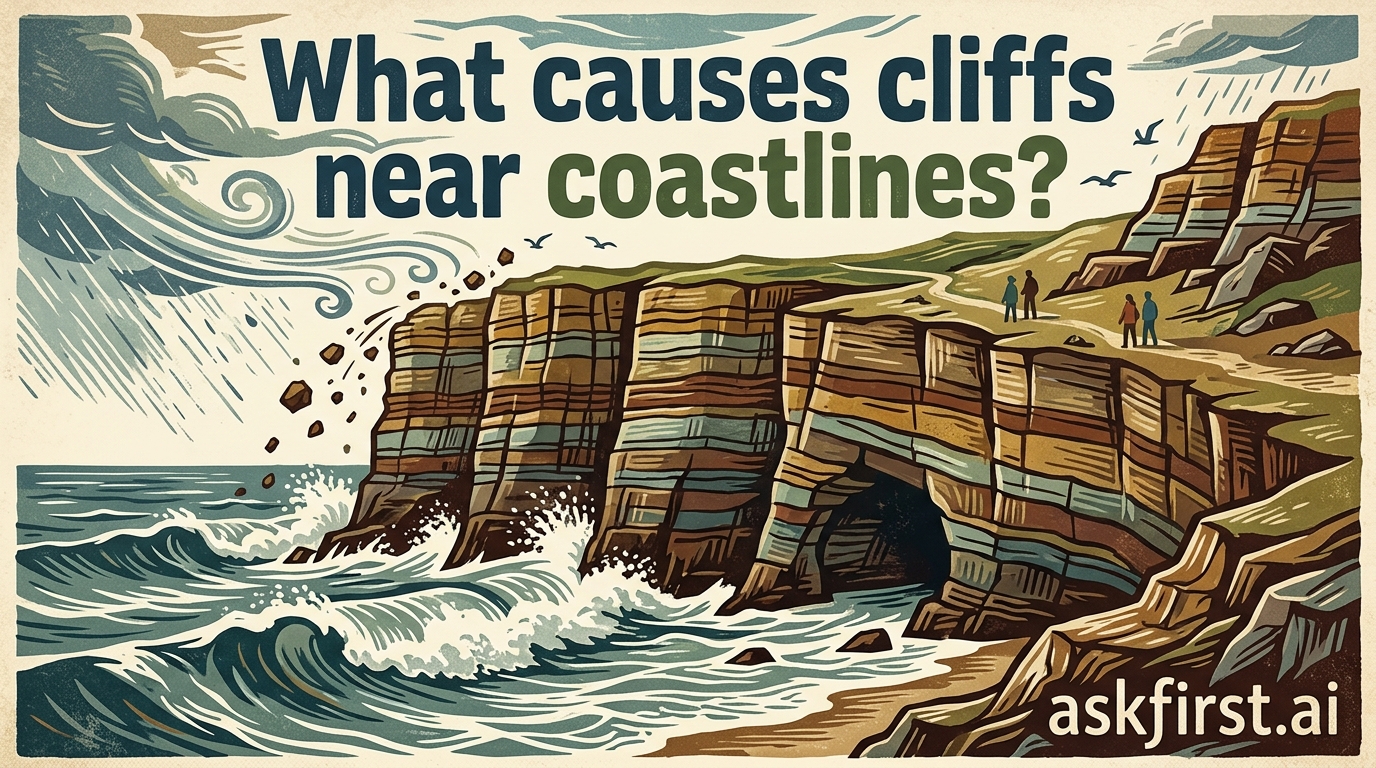
How Coastal Cliffs Are Formed: The Science of Erosion
The Geological Genesis of Coastal Cliffs: Erosion and Tectonic Forces
Coastal cliffs are among the most dramatic landforms on Earth, serving as the interface between the relentless power of the ocean and the stability of the terrestrial landscape. Their formation is a complex geological process driven by the interplay of erosion, weathering, and tectonic activity over millions of years.
The Mechanics of Formation
The primary architect of coastal cliffs is marine erosion. This process occurs through several distinct mechanisms:
- Hydraulic Action: As waves crash against a rock face, they trap air in cracks and crevices. The sudden compression of this air exerts immense pressure, effectively "blasting" fragments of rock away.
- Abrasion (Corrasion): Waves carry sediment, pebbles, and boulders, which act like sandpaper. This material is hurled against the cliff base, scouring and wearing down the rock surface.
- Attrition: This involves the collision of rock particles against each other within the surf zone, reducing their size and increasing their potential as abrasive tools.
- Solution (Corrosion): Specifically in limestone or chalk cliffs, the chemical action of seawater dissolves minerals, weakening the cliff's structural integrity.
The Role of Subaerial Weathering
While waves attack the base, subaerial weathering attacks the cliff face from above. Rainwater, frost, and biological activity (such as plant roots) infiltrate joints in the rock. When water freezes in these cracks, it expands, causing the rock to shatter—a process known as freeze-thaw weathering. This loosens material, leading to rockfalls that contribute to the cliff's gradual retreat.
Evolutionary Stages: From Headland to Stump
Cliffs do not remain static. They undergo a well-documented evolutionary cycle:
- Wave-Cut Notch: Erosion concentrates at the high-tide mark, carving a notch into the base.
- Cliff Collapse: As the notch deepens, the overhanging rock loses support and eventually collapses due to gravity.
- Wave-Cut Platform: The cliff retreats, leaving behind a smooth, gently sloping rock platform at the base.
- Stacks and Stumps: Harder rock sections may be left behind as isolated pillars (stacks) after surrounding softer rock erodes, eventually collapsing into stumps.
Geological Composition and Stability
The height and slope of a cliff are heavily dictated by its geology. Hard rock cliffs (like granite or basalt) are often vertical and resistant to erosion. Soft rock cliffs (like clay or sandstone) are prone to rotational slumping and landslides, often resulting in more gradual, vegetated slopes.
Pros, Cons, and Environmental Significance
- Pros: Coastal cliffs provide unique habitats for seabirds, offer significant tourism value, and act as natural barriers against storm surges in some regions.
- Cons: They represent a significant hazard to human infrastructure. Coastal retreat threatens homes and roads built near the edge, leading to expensive stabilization projects.
Future Trends
Climate change poses a severe threat to coastal stability. Rising sea levels increase the reach of wave energy, accelerating the rate of cliff erosion worldwide. As sea levels rise, we can expect a global increase in landslide activity and a faster rate of coastline recession, necessitating more robust coastal management strategies and long-term land-use planning.