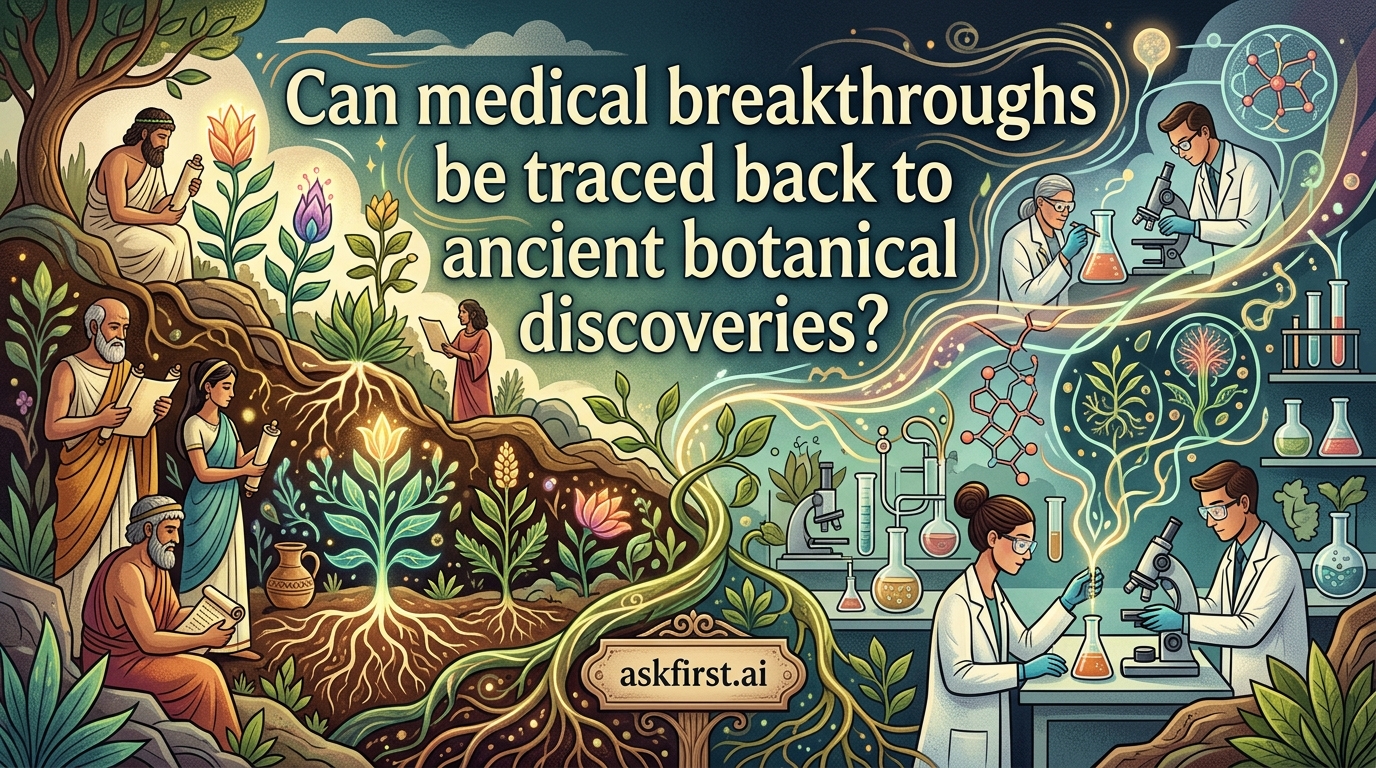
Ancient Botanical Secrets Behind Modern Medical Breakthroughs
From Roots to Remedies: How Ancient Botany Built Modern Medicine
Many of the life-saving pharmaceutical marvels found in modern pharmacies are not recent inventions born in high-tech laboratories, but rather sophisticated refinements of knowledge held by ancient civilizations. For thousands of years, humans have observed the natural world, identifying specific plants that possess remarkable healing properties. This deep historical connection between botanical wisdom and modern pharmacology remains the bedrock of medical advancement.
The Foundation: Ancient Knowledge
Long before the advent of modern chemical synthesis, early civilizations like the Mesopotamians, Egyptians, Greeks, and Chinese compiled extensive pharmacopoeias. These records documented the use of roots, barks, and leaves to treat ailments ranging from inflammation to chronic pain. Many of these traditional remedies were not merely folklore; they were effective chemical interventions that identified potent active compounds long before their molecular structures were known.
Pivotal Botanical Breakthroughs
Several modern medical breakthroughs demonstrate a direct evolutionary line from ancient botany:
- Aspirin (Salix alba): The use of willow bark for pain relief dates back to Hippocrates in ancient Greece. Today, scientists recognize salicylic acid as the active precursor to aspirin, one of the most widely used drugs in human history.
- Artemisinin (Artemisia annua): Known as sweet wormwood, this plant was utilized in traditional Chinese medicine for centuries to treat fevers. Its identification as a source for potent antimalarial medication earned the discovery a Nobel Prize in Physiology or Medicine in 2015, bridging ancient practice with cutting-edge medical science.
- Morphine (Papaver somniferum): Derived from the opium poppy, the pain-relieving properties of this plant have been recorded since the Neolithic period. The isolation of morphine in the 19th century provided the template for modern analgesics, fundamentally changing the approach to surgery and trauma medicine.
- Digoxin (Digitalis purpurea): The use of foxglove in folk medicine to treat "dropsy" (congestive heart failure) was the direct inspiration for the development of modern cardiac glycosides, which remain vital for maintaining heart rhythm today.
The Future of Ethnopharmacology
Modern "bioprospecting" frequently returns to ancient indigenous knowledge as a guide. By analyzing plants used by local populations for millennia, pharmacologists can narrow their search for novel therapeutic agents. This collaborative approach between historical records and molecular biology ensures that nature continues to serve as an infinite library of chemical diversity. While high-throughput screening and computer modeling play significant roles today, the initial blueprint for many of these discoveries is written in the pages of ancient botanical texts. Humanity continues to stand on the shoulders of the ancient herbalists, proving that the most advanced medical future is deeply rooted in our distant past.