Does Your Brain Stop Working Instantly After Death?
The Twilight of Consciousness: Does the Brain Die Instantly?
The question of when the human brain truly ceases to function after clinical death is one of the most profound intersections of neuroscience, biology, and philosophy. Contrary to popular belief, the transition from life to biological death is not a singular, instantaneous event, but rather a complex, multi-stage process that unfolds over several minutes, and in some cases, hours.
The Physiology of Clinical Death
Clinical death occurs the moment the heart stops beating and respiration ceases. At this exact second, the brain is deprived of its primary source of fuel: oxygenated blood. Because the brain is the most metabolically demanding organ in the human body—consuming roughly 20% of the body’s total oxygen—it is highly sensitive to ischemia (restricted blood supply).
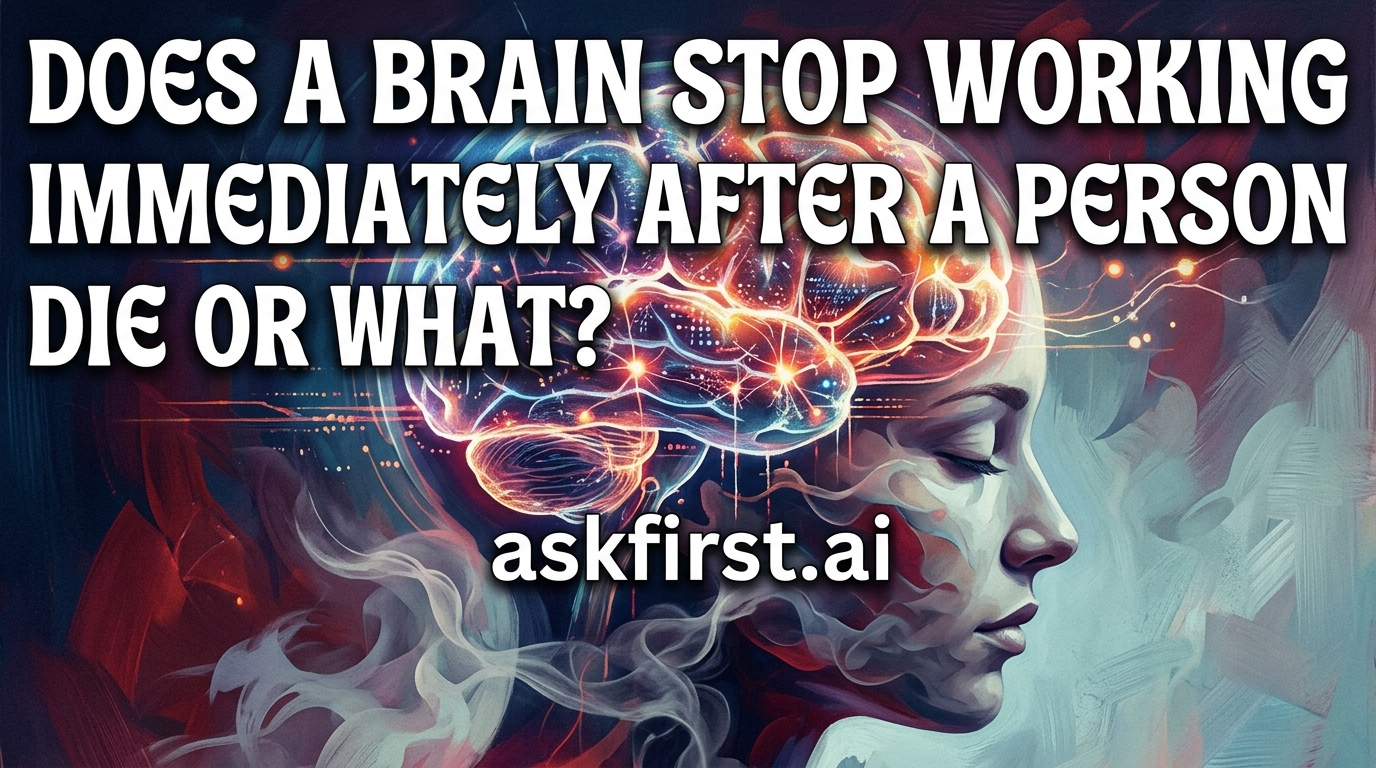
However, the brain does not "shut off" like a light switch. Research suggests that as oxygen levels plummet, neurons enter a state of extreme metabolic stress. Within seconds, electrical activity in the cerebral cortex—the area responsible for complex thought and consciousness—begins to flatten. Yet, deep-seated brain structures may continue to show residual electrical signatures for a short window.
The "Death Wave": A Final Surge
Recent studies, including those using electroencephalography (EEG) on dying patients, have identified a phenomenon often referred to as the "death wave." Shortly after cardiac arrest, a massive surge of electrical activity has been observed in the brain. Scientists hypothesize that as neurons starve of oxygen, they release a final, chaotic burst of neurotransmitters, particularly glutamate. This surge might explain the vivid experiences reported by survivors of near-death experiences (NDEs), such as the sensation of light or life-reviewing memories.
The Stages of Cellular Degradation
After the initial electrical collapse, the brain enters a phase of gradual cellular degradation:
- Ischemic Cascade (0–4 minutes): ATP (cellular energy) reserves are depleted. Ion pumps in cell membranes fail, leading to an influx of calcium and the activation of enzymes that begin to digest the cell from within.
- Irreversible Damage (4–10 minutes): Without intervention (like CPR or therapeutic hypothermia), the lack of oxygen typically leads to permanent neuronal death.
- Autolysis (Hours): Enzymes begin to break down cellular structures. The brain, which is largely composed of fats and water, begins to lose its structural integrity.
Implications for Modern Medicine
The existence of this "twilight" period has massive implications for medical ethics and organ transplantation. Because brain cells do not die instantly, doctors can sometimes reverse cardiac arrest through rapid resuscitation. Conversely, if oxygen deprivation persists too long, the brain enters a state of "brain death," where the brainstem—the controller of vital functions—is irreparably destroyed, even if the heart is kept beating mechanically.
Conclusion: The Final Frontier
While the "person" (consciousness, memory, and personality) is likely extinguished very quickly as the cortex shuts down, the biological machine of the brain persists in a state of suspended decay. Future research into neuroprotection may one day allow us to extend this window, but for now, the brain remains a resilient, yet ultimately fragile, organ that fades away rather than vanishing in an instant.