The Secret Origins of Science: Did Hermeticism Build Modern Inquiry?
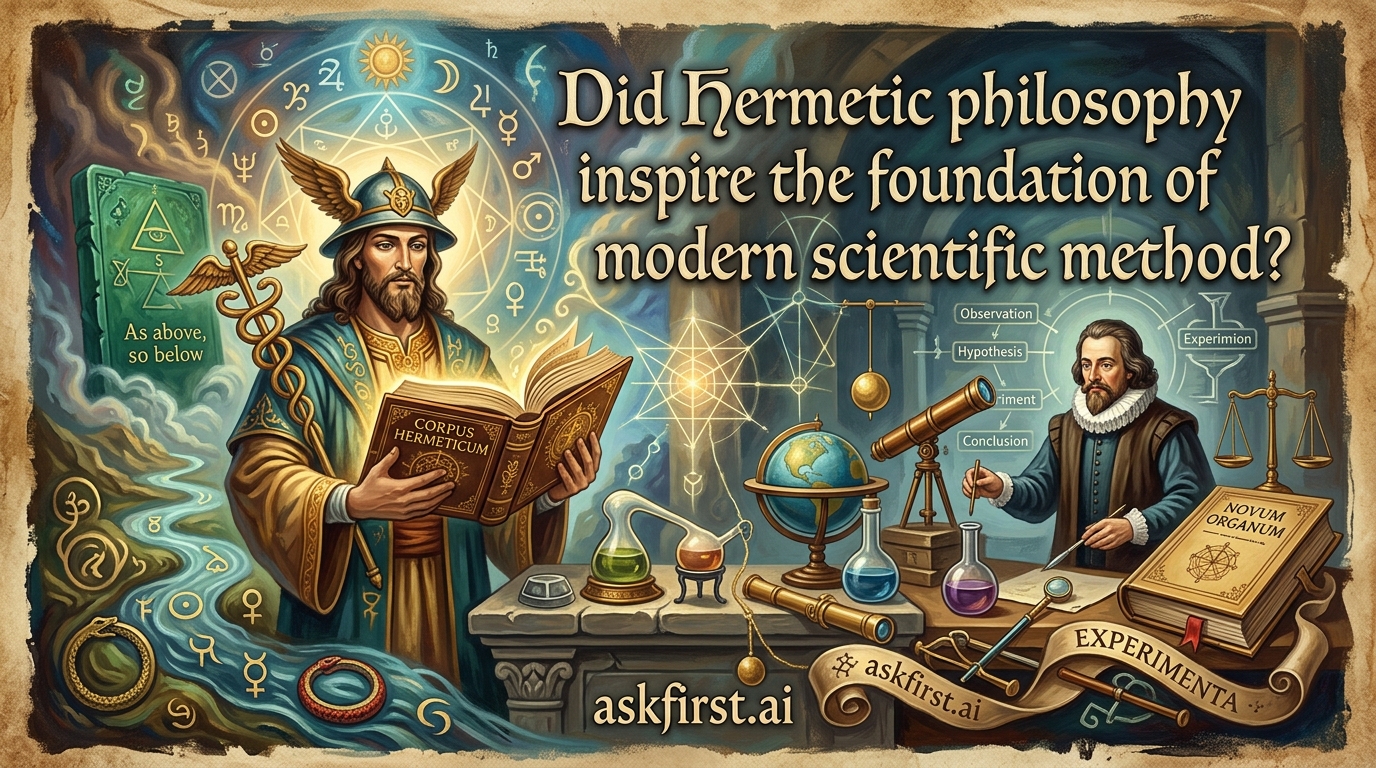
For centuries, a persistent narrative has painted the history of science as a clean break from the mystical past. However, a deeper examination reveals that the modern scientific method owes a profound, albeit often obscured, debt to the ancient traditions of Hermetic philosophy. Hermeticism, based on the teachings attributed to the legendary Hermes Trismegistus, emphasized the interconnectedness of the cosmos and the principle that the macrocosm is reflected in the microcosm. This philosophical framework provided the intellectual scaffolding for the early pioneers of science.
The Hermetic Influence on Early Modern Science
Many of the architects of the Scientific Revolution, including Isaac Newton and Robert Boyle, were deeply immersed in Hermetic and alchemical texts. These thinkers were not looking to discard the secrets of the universe but rather to systematize the study of nature. The Hermetic belief that the universe operated according to specific, immutable laws—often summarized in the axiom "as above, so below"—directly fueled the quest to discover universal physical laws that govern both earthly and celestial motion. This transition from esoteric contemplation to rigorous empirical investigation marked the birth of the scientific method.
Core Principles Shared with Science
Several fundamental pillars of modern research trace their roots back to these older traditions:
- Systematic Observation: Hermeticists prioritized the meticulous study of material transformations, a practice that evolved directly into modern experimental chemistry and empirical data collection.
- Mathematical Modeling: The Pythagorean influence within Hermeticism insisted that the universe was structured mathematically, a prerequisite for the predictive power required by contemporary science.
- Active Engagement: Unlike some ancient traditions that favored passive philosophical meditation, Hermeticism encouraged active, hands-on intervention in nature to "solve" its mysteries, setting the stage for the experimental laboratory environment.
Challenging the Enlightenment Myth
Historians now argue that the rigid separation of "science" and "occultism" is a retrospective invention. In the seventeenth century, the pursuit of alchemy, astrology, and chemistry were often treated as facets of the same objective: understanding the hidden mechanics of reality. Figures like Newton spent more time studying alchemical manuscripts than they did writing the Principia. By investigating how nature could be manipulated through chemistry, they unknowingly pioneered the rigorous standards of validation and reproducibility that define modern peer-reviewed inquiry. Therefore, the scientific method did not emerge in a vacuum; it grew from the curiosity that previously defined the Hermetic quest for knowledge. Recognizing this lineage does not diminish science, but rather reveals the continuity of human inquiry, showing that our modern quest for truth is a direct descendant of ancient curiosity.