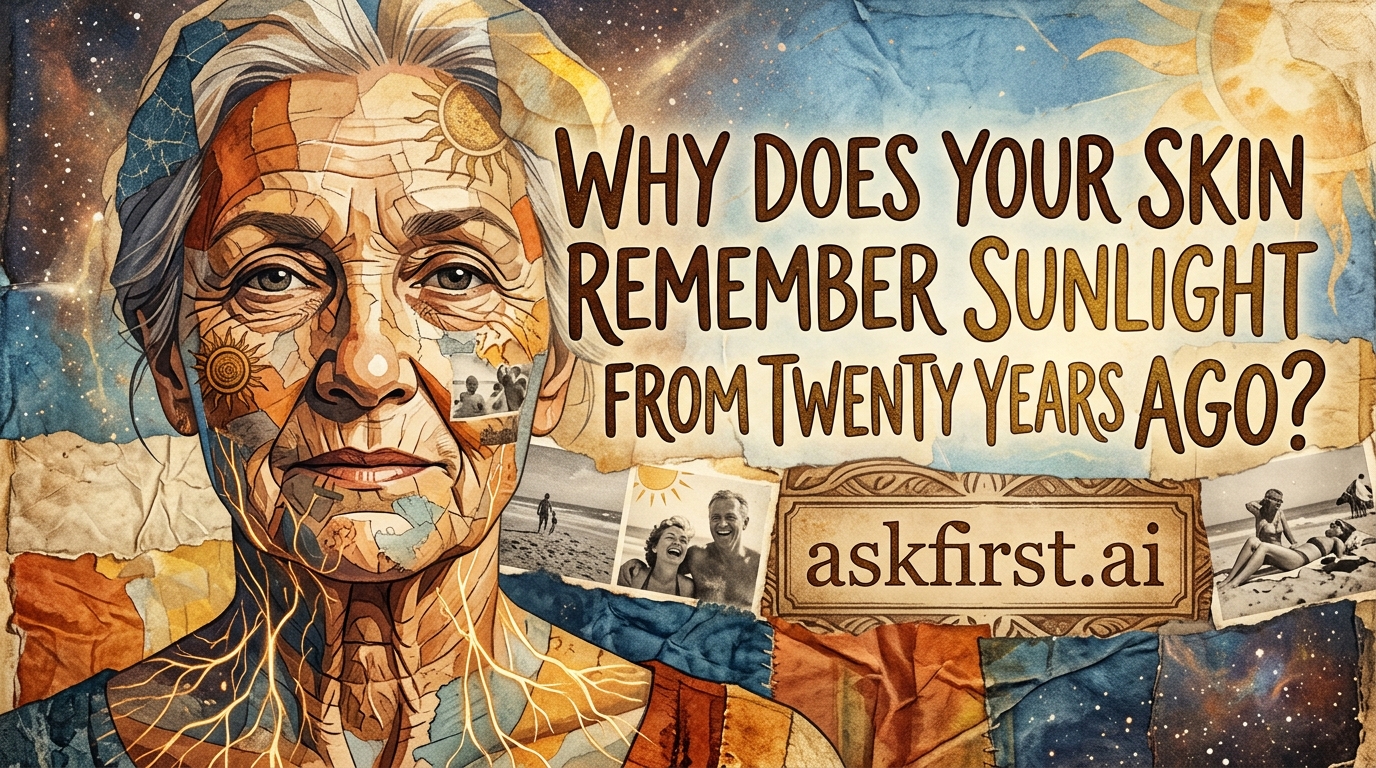
The Biological Time Capsule: How Skin Archives UV Damage
Skin does not "forget" because UV radiation initiates permanent alterations at the molecular level, specifically within the cellular blueprint of our existence: DNA. When ultraviolet (UV) light penetrates the dermis, it acts as a mutagenic force, causing structural changes to DNA that remain long after the initial exposure has faded. This cumulative biological recording system is why dermatologists emphasize that protection is a lifelong commitment rather than a temporary necessity.
The Mechanisms of Molecular Memory
When UV radiation interacts with skin cells, it causes pyrimidine dimers—a specific type of DNA damage where two adjacent DNA bases become fused together. While the human body possesses sophisticated DNA repair mechanisms, such as Nucleotide Excision Repair (NER), these systems are not flawless. Over decades, errors in replication accumulate. These molecular "scars" are not immediately visible as wrinkles or spots, but they represent a state of permanent instability. These errors persist because cells replicate, and when damaged DNA is copied into daughter cells, the genetic mutation is effectively passed on.
Photoaging and Extracellular Matrix Degradation
Beyond nuclear DNA damage, long-term exposure alters the structural integrity of the skin's supporting framework. Sunlight triggers the activation of enzymes known as Matrix Metalloproteinases (MMPs). These enzymes are responsible for the breakdown of collagen and elastin, the proteins that provide skin with its firm, youthful structure.
- Collagen Fragmentation: Continuous UV exposure leads to the permanent disruption of the collagen matrix. This results in the skin's inability to retain its snap-back quality.
- Elastosis: Years of sun exposure result in the accumulation of abnormal elastin fibers, a process called solar elastosis. This causes the characteristic leathery texture seen in chronic sun-damaged skin.
The Cumulative Nature of Pigmentary Changes
Sun spots, often referred to as "age spots" or solar lentigines, serve as visual evidence of the skin’s long-term memory. Melanocytes—the cells responsible for producing melanin—are stimulated by UV light to produce pigment as a protective shield. When these cells are repeatedly damaged over two decades, they may become permanently hyperactive or clustered in specific regions. This creates localized hyperpigmentation that persists as a permanent mark of exposure history.
Why Prevention Matters Today
Understanding that skin possesses a long-term memory reinforces the necessity of consistent photo-protection. Because the biological clock of skin damage is cumulative, protecting the skin today prevents the future activation of latent mutations. Incorporating broad-spectrum sunscreens, wearing protective clothing, and avoiding peak-hour radiation remain the primary methods to preserve cellular integrity. By limiting current exposure, individuals prevent the further addition of "records" to their skin's permanent archive, ensuring healthier cellular function for the future.