The Taxonomy and Diversity of Ants (Formicidae)
Ants are among the most successful organisms on Earth, belonging to the family Formicidae within the order Hymenoptera. They are ubiquitous, found on every continent except Antarctica, and play critical roles in ecosystem maintenance, including soil aeration, nutrient cycling, and seed dispersal.
Global Diversity and Statistics
As of June 2026, entomologists have described approximately 14,000 to 16,000 extant species of ants. However, scientific consensus suggests that this number represents only a fraction of the true global diversity. Experts estimate that there may be as many as 20,000 to 22,000 species in total, with thousands remaining to be discovered, formally described, and classified in tropical rainforests and remote regions.
Taxonomic Classification
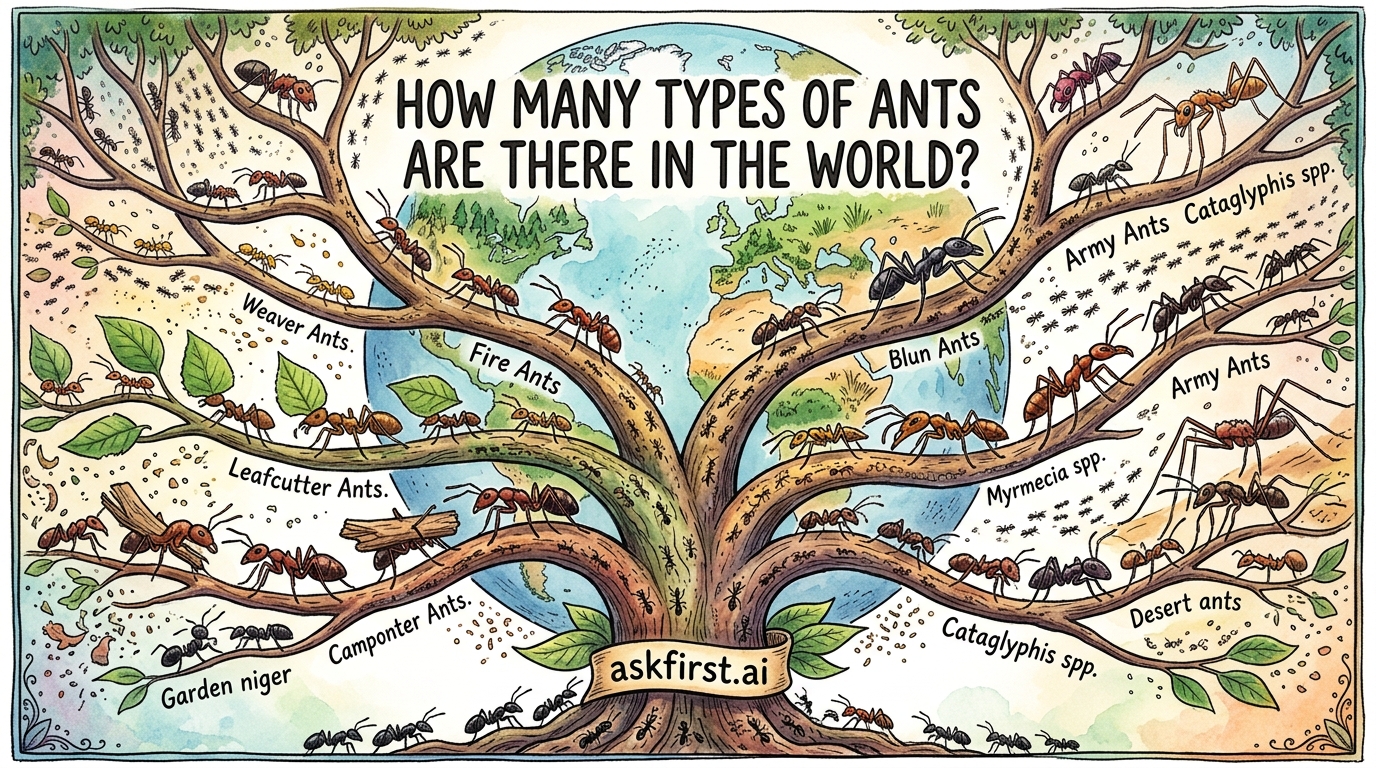
The family Formicidae is divided into several subfamilies, which serve as the primary categories for understanding their evolutionary divergence. While classification systems evolve with genetic research, the following subfamilies are recognized as major groupings:
- Myrmicinae: The largest subfamily, containing over 6,000 species. They are characterized by a two-segmented waist (petiole and postpetiole) and a stinger.
- Formicinae: Notable for the absence of a stinger, instead utilizing formic acid for defense. This group includes the common garden ants (Lasius and Formica).
- Dolichoderinae: These ants lack a stinger and rely on chemical secretions from anal glands to deter predators.
- Ponerinae: Often considered more "primitive," these ants typically possess a functional stinger and smaller colony sizes.
- Dorylinae: Commonly known as army ants or legionary ants, these species are nomadic and highly predatory.
Evolutionary History
Ants evolved from aculeate wasp ancestors during the Early Cretaceous period, roughly 140 to 168 million years ago. Following the rise of angiosperms (flowering plants), ants underwent an adaptive radiation that allowed them to occupy diverse ecological niches. Their ability to form complex social structures, known as eusociality, is the primary driver of their evolutionary success, allowing them to dominate terrestrial biomass.
Practical Identification: How to Distinguish Types
Identifying an ant species in the field requires observing specific morphological traits:
- The Waist: Check if the ant has one or two "nodes" (bumps) on the petiole.
- The Thorax: Observe the profile of the mesosoma; some are rounded, while others feature spines.
- The Head: Examine the number of antennal segments and the presence of ocelli (simple eyes).
Pros and Cons of Ant Populations
- Ecological Benefits: Ants act as "ecosystem engineers." They turn more soil than earthworms, control populations of agricultural pests, and facilitate plant reproduction.
- Invasive Risks: Certain species, such as the Red Imported Fire Ant (Solenopsis invicta) and the Argentine Ant (Linepithema humile), are considered major pests. They outcompete native species and cause significant economic damage to infrastructure and agriculture.
Future Trends in Myrmecology
The field of myrmecology is currently shifting toward genomic sequencing. Researchers are using high-throughput DNA barcoding to identify cryptic species—ants that look identical but are genetically distinct. Furthermore, as climate change alters habitats, scientists are monitoring how ant migration patterns affect biodiversity in temperate zones. Protecting these insects is paramount, as they are essential indicators of environmental health and soil stability across the globe.