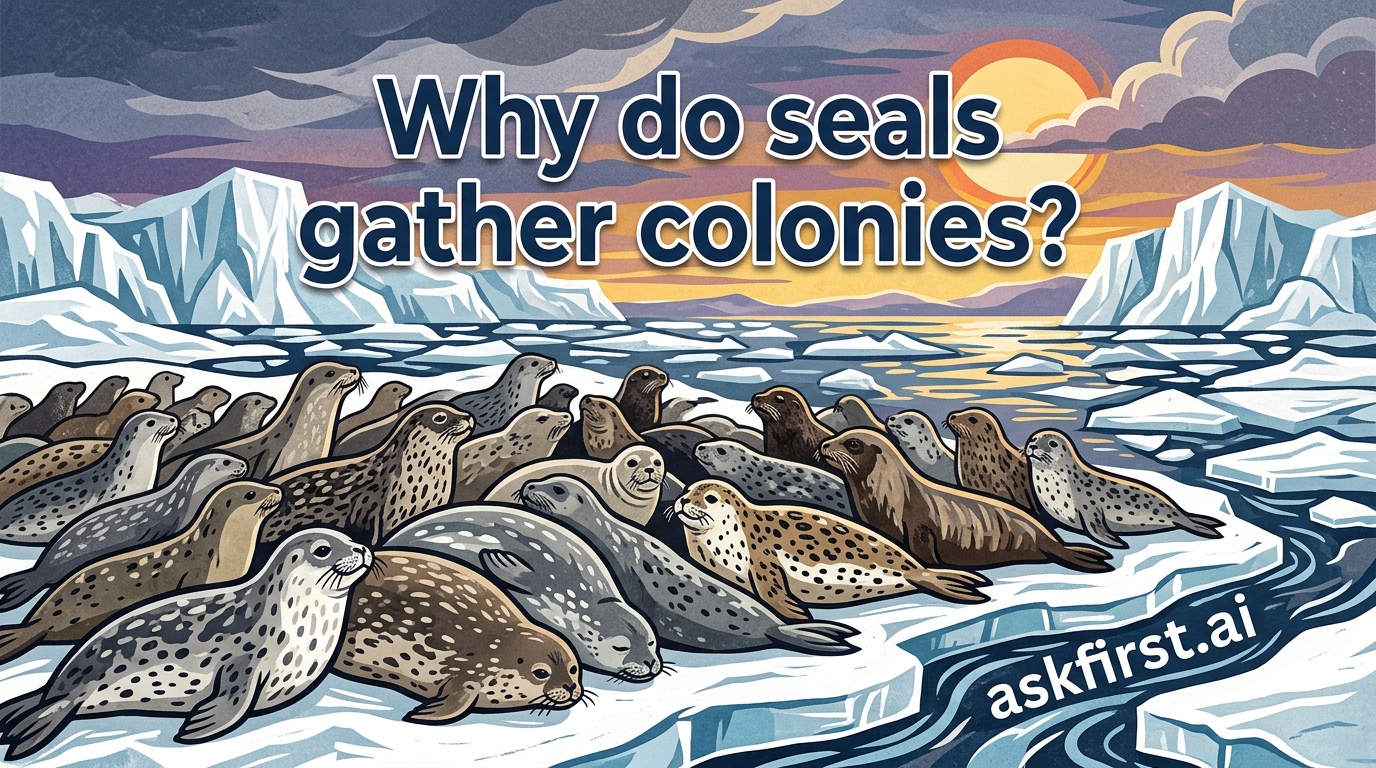
Safety in Numbers: Why Seals Gather in Colonies
The Social Dynamics of Pinnipeds: Why Seals Gather in Colonies
Seals, members of the clade Pinnipedia, are semi-aquatic marine mammals known for their distinct social structures. While some species remain relatively solitary at sea, they almost universally converge in massive congregations—known as rookeries or haul-out sites—during specific times of the year. This behavior is driven by a complex interplay of evolutionary survival strategies, reproductive necessity, and physiological requirements.
Evolutionary Drivers of Colonial Living
The primary reason seals gather in colonies is reproductive efficiency. Most pinnipeds, such as elephant seals and fur seals, are polygynous. Males compete fiercely for control over sections of a beach, known as harems, where they can mate with multiple females. By gathering in a single location, males can maximize their reproductive output, and females can select the most dominant, genetically robust mates.
Furthermore, predator avoidance plays a significant role. Although seals are apex predators in the water, they are vulnerable on land. The "dilution effect" suggests that in a large group, the individual probability of being targeted by a predator (such as orcas or large sharks near the shore) is statistically reduced. Additionally, the collective alertness of a colony—often characterized by constant vocalizations and movement—makes it difficult for a predator to approach undetected.
Physiological and Environmental Factors
Beyond reproduction, seals congregate for thermoregulation and molting. Many species, such as the harbor seal, undergo a process called "annual molt," where they shed their old fur and skin. During this period, the animal must remain dry and warm to facilitate the growth of new hair. Hauling out in large numbers creates a microclimate where body heat is conserved, and the social proximity encourages the metabolic processes required for skin regeneration.
The Structure of a Colony
Colonies are not chaotic; they are highly stratified environments:
- Territorial Males: Occupy the prime real estate near the water’s edge to intercept arriving females.
- Females and Pups: Cluster in the center of the colony for protection and to nurse young.
- Peripheral Males: Younger or subordinate males wait on the outskirts, constantly looking for opportunities to challenge territory holders.
Pros and Cons of Colonialism
Advantages
- Genetic Success: Facilitates mate selection and ensures the survival of the strongest lineages.
- Social Learning: Pups learn essential marine survival skills and social cues by observing adults in a dense setting.
- Energy Conservation: Body heat sharing reduces the metabolic cost of maintaining internal temperature while on land.
Disadvantages
- Disease Transmission: High-density living makes colonies hotspots for parasites and viral outbreaks.
- Aggression: Intense competition leads to high levels of physical trauma, particularly for pups caught in the crossfire of male territorial disputes.
- Resource Depletion: Localized over-foraging near the colony can force seals to travel further to find food, increasing the risk of starvation for nursing mothers.
Future Trends and Conservation
As climate change alters sea ice patterns, many pinnipeds are forced to spend more time on land than historically documented. This shift changes the dynamics of their colonies, often leading to overcrowding and increased stress. Conservation efforts currently focus on protecting these haul-out sites from human disturbance, as these areas are critical to the continued viability of pinniped populations worldwide.