The Vital Role of Forests in Regulating Global Climate Systems
Forests are the Earth’s most sophisticated biological mechanism for climate regulation. Covering approximately 31% of the total land area, forests function as massive carbon sinks, atmospheric regulators, and hydrological pumps. Their influence on the climate is multifaceted, spanning local, regional, and global scales.
1. Carbon Sequestration and Storage
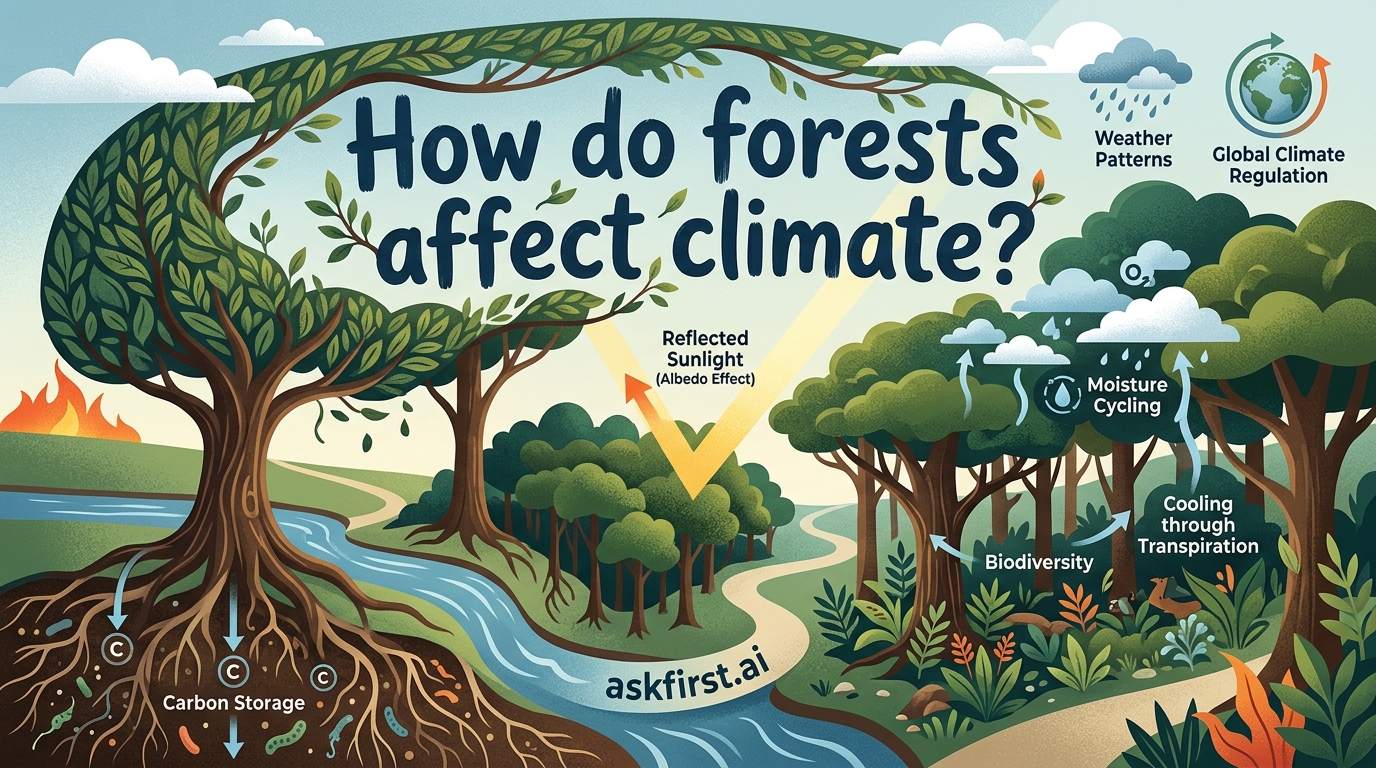
The primary mechanism by which forests mitigate climate change is through the process of photosynthesis. Trees absorb atmospheric carbon dioxide (CO2)—the primary greenhouse gas driving global warming—and convert it into biomass (wood, leaves, and roots) and soil organic matter.
- The Carbon Sink: Global forests absorb roughly 2.4 billion tonnes of carbon annually.
- Carbon Reservoirs: When forests are cleared or burned, this stored carbon is released back into the atmosphere, turning a vital carbon sink into a carbon source. Deforestation contributes to approximately 10–15% of annual global greenhouse gas emissions.
2. The Hydrological Cycle and Evapotranspiration
Forests act as the planet's air conditioning system. Through evapotranspiration, trees release water vapor into the atmosphere. This process has two cooling effects:
- Direct Cooling: It consumes heat energy from the surrounding environment, lowering ambient temperatures.
- Cloud Formation: The released moisture increases cloud cover, which reflects incoming solar radiation back into space (the albedo effect).
In regions like the Amazon Basin, "flying rivers"—massive currents of moisture generated by forest transpiration—are essential for regulating rainfall patterns across entire continents, preventing desertification and maintaining stable microclimates.
3. Albedo and Surface Characteristics
The impact of forests on climate is not solely cooling. The albedo effect describes how much sunlight a surface reflects.
- Dark Canopies: Forests are generally darker than grasslands or snow-covered land. While they absorb more solar heat, the cooling effect of transpiration and the carbon sequestration benefits significantly outweigh the warming effect of their lower albedo in most tropical and temperate regions.
- Boreal Exceptions: In high-latitude boreal forests, the heat absorption of dark needles can sometimes offset the cooling effect, making forest management in these zones a complex topic for climate scientists.
4. Practical Implications for Climate Policy
To leverage forests for climate stability, international strategies focus on three pillars:
- Afforestation/Reforestation: Planting trees to expand forest cover and restore degraded ecosystems.
- REDD+ (Reducing Emissions from Deforestation and Forest Degradation): A framework under the UN to provide financial incentives for developing nations to preserve their forests.
- Sustainable Forest Management (SFM): Ensuring timber harvesting does not compromise the ecosystem’s ability to store carbon.
5. Future Trends and Threats
The future of forest-based climate regulation is threatened by climate feedback loops. As temperatures rise, forests become more susceptible to:
- Increased Wildfires: Massive forest fires, such as those seen in Australia and Canada, release centuries of stored carbon in a matter of weeks.
- Pest Infestations: Warmer winters allow invasive insects to decimate tree populations, converting healthy forests into dead, carbon-releasing biomass.
In conclusion, forests are not merely static resources but active, dynamic engines of climate stability. Protecting existing primary forests is significantly more effective than planting new ones, as old-growth forests store disproportionately higher amounts of carbon and provide critical biodiversity that maintains ecosystem resilience against a changing climate.