The Green Human: Can Photosynthesis Become Our Reality?
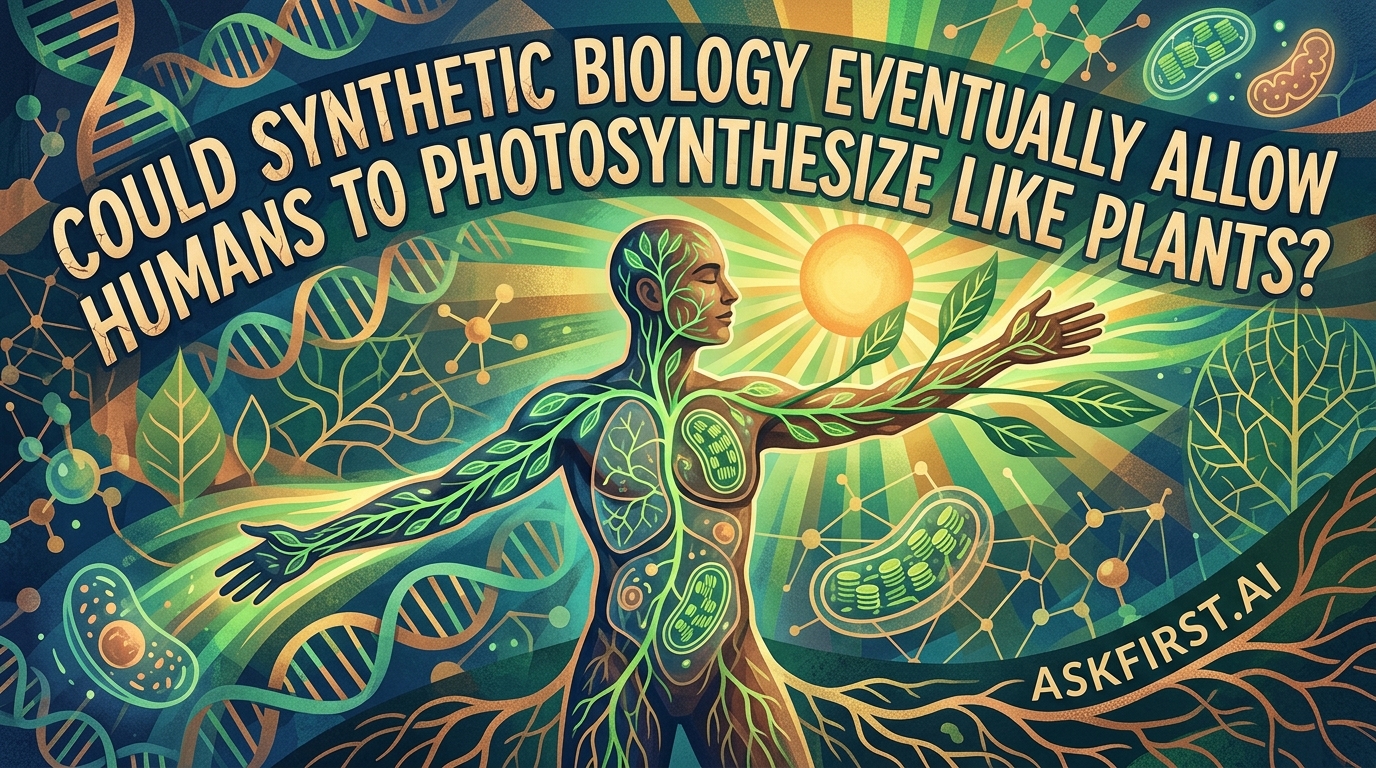
The prospect of humans deriving energy directly from sunlight—a process known as photosynthesis—is a staple of science fiction. While plants utilize chlorophyll to convert carbon dioxide and water into glucose, humans rely on the complex ingestion and metabolism of organic matter. Integrating photosynthetic capabilities into the human body represents one of the most audacious challenges in synthetic biology.
The Fundamental Biological Barrier
Photosynthesis relies on specialized organelles called chloroplasts. These structures house pigments capable of capturing solar radiation to drive chemical reactions. Animal cells lack these structures, and transferring them into human tissue faces several immense hurdles:
- Energy Density Constraints: The metabolic demands of a human brain and musculoskeletal system are vastly higher than those of a leafy shrub. A plant's surface area to volume ratio is optimized for maximum light exposure, whereas humans have relatively small surface areas, which would limit solar energy intake to a negligible fraction of our daily caloric requirements.
- Oxygen Toxicity: Photosynthesis releases oxygen as a byproduct. In a closed biological system like human cells, unchecked oxygen production and the associated reactive oxygen species could trigger significant cellular oxidative stress, leading to tissue damage.
Synthetic Biology Interventions
Researchers are exploring ways to mimic plant-like traits through bio-engineering. Projects such as the introduction of Elysia chlorotica genetics—a sea slug that incorporates algae chloroplasts into its own cells—provide a theoretical blueprint. Scientists investigate whether human cells could be modified to express genes that allow for the stable uptake and maintenance of photosynthetic organelles.
However, this requires more than just hardware; it requires a total metabolic overhaul. Even if human skin were modified to contain photosynthetic enzymes, it would function more like an auxiliary fuel tank rather than a primary power source. One might theoretically reduce the necessity for caloric intake by a small percentage, but maintaining the human physiological standard of movement and cognition remains tethered to chemical consumption.
The Future of Bio-Hybridization
While complete photosynthesis remains biologically unlikely, synthetic biology moves us closer to "bio-hybrid" functions. Current breakthroughs in optogenetics demonstrate that researchers can already control cell signaling via light stimulation. By engineering human cells to respond to solar energy through metabolic pathway adjustments, humanity may one day produce specific nutrients or facilitate internal healing processes powered by light.
In conclusion, while humans will not be lounging in the sun to replace their breakfast any time soon, the intersection of synthetic biology and cellular engineering suggests that light-driven biological processes are within the realm of scientific possibility. The objective is shifting from total autonomy to enhancing biological resilience through light-responsive technologies.