The Physics and Meteorology of Coastal Fog
Coastal fog, primarily categorized as advection fog, is a complex meteorological phenomenon occurring when moist air moves over a colder surface. Unlike radiation fog, which forms on calm, clear nights due to terrestrial cooling, coastal fog is driven by the horizontal transport of air masses, making it a persistent feature of maritime climates globally.
The Mechanism: Advection Cooling
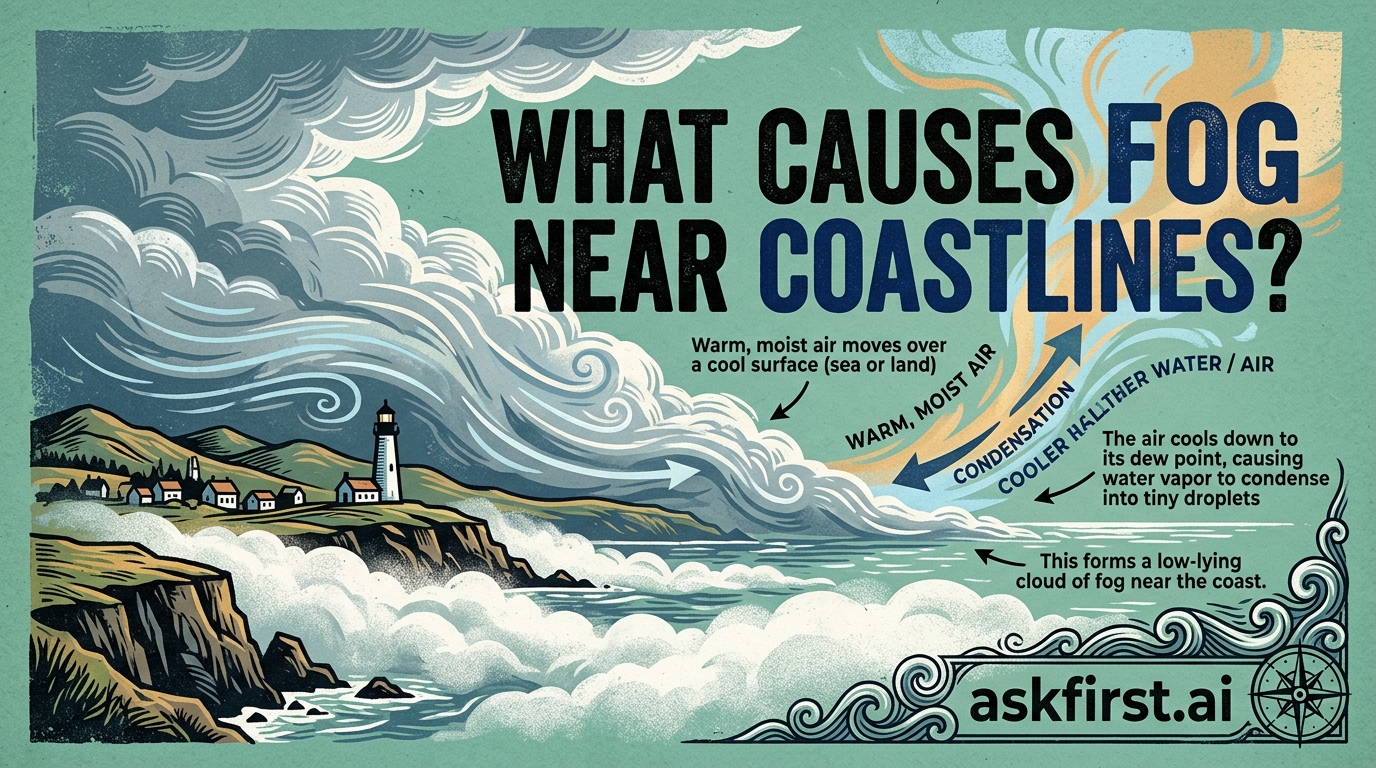
The fundamental driver of coastal fog is the temperature differential between air and water. When warm, moisture-laden air from the ocean drifts over a significantly colder surface—typically a cold ocean current or a patch of upwelled water—the air is cooled from below.
- Saturation: As the air cools, its capacity to hold water vapor decreases. If the air is cooled to its dew point, the water vapor condenses into tiny liquid water droplets suspended in the air.
- Condensation Nuclei: This process requires microscopic particles (salt crystals from sea spray, dust, or pollution) known as condensation nuclei, around which water molecules cluster to form the fog bank.
- Turbulence: Gentle winds (typically 5–15 mph) are essential. If winds are too calm, the fog remains shallow; if they are too strong, the fog mixes with drier air above, causing it to evaporate or lift into low-level stratus clouds.
Geographic and Seasonal Drivers
Coastal fog is most prevalent in regions influenced by major cold currents. Notable examples include:
- The California Current: Creates the famous "June Gloom" along the U.S. West Coast.
- The Humboldt Current: Affects the coast of Peru and Chile, sustaining the unique ecosystem of the Atacama Desert.
- The Benguela Current: Influences the Namib Desert, where fog provides the primary moisture source for endemic wildlife.
Upwelling plays a critical role here. When prevailing winds push surface water away from the coast, deeper, colder water rises to replace it. This creates a localized "refrigerator" effect that stabilizes the air mass and facilitates rapid fog formation.
Practical Implications and Safety
For mariners and coastal residents, fog presents significant logistical challenges:
- Navigation: Fog reduces visibility to near zero, necessitating the use of radar, GPS, and auditory fog signals. The International Regulations for Preventing Collisions at Sea (COLREGs) dictate specific speed and sound signal requirements during restricted visibility.
- Aviation: Coastal airports (like San Francisco International) often face severe flight delays when marine layers push inland, requiring advanced Instrument Landing Systems (ILS) for safe arrivals.
Pros and Cons
- Pros: Fog serves as a vital hydrological input. Many coastal ecosystems, such as the redwood forests of Northern California, rely on "fog drip"—where water condenses on needles and drips to the forest floor—to survive dry summers.
- Cons: High humidity associated with fog can lead to infrastructure corrosion, increased energy costs for dehumidification, and hazardous driving conditions.
Future Trends
Climate change is altering coastal fog patterns. Rising sea surface temperatures may reduce the frequency of advection fog in some regions, potentially stressing flora that depend on fog-derived moisture. Conversely, changes in wind patterns may alter upwelling intensity, leading to unpredictable shifts in fog density and inland penetration. Understanding these dynamics remains a priority for climatologists studying the delicate balance of coastal boundary layers.