The Evolutionary Enigma: Why Zebras Have Stripes
The question of why zebras possess their iconic black-and-white coat pattern has puzzled naturalists since Charles Darwin and Alfred Russel Wallace debated the topic in the late 19th century. While once considered a simple camouflage mechanism, modern research has unveiled a complex interplay of biological, ecological, and evolutionary advantages.
1. The Leading Theory: Deterring Biting Flies
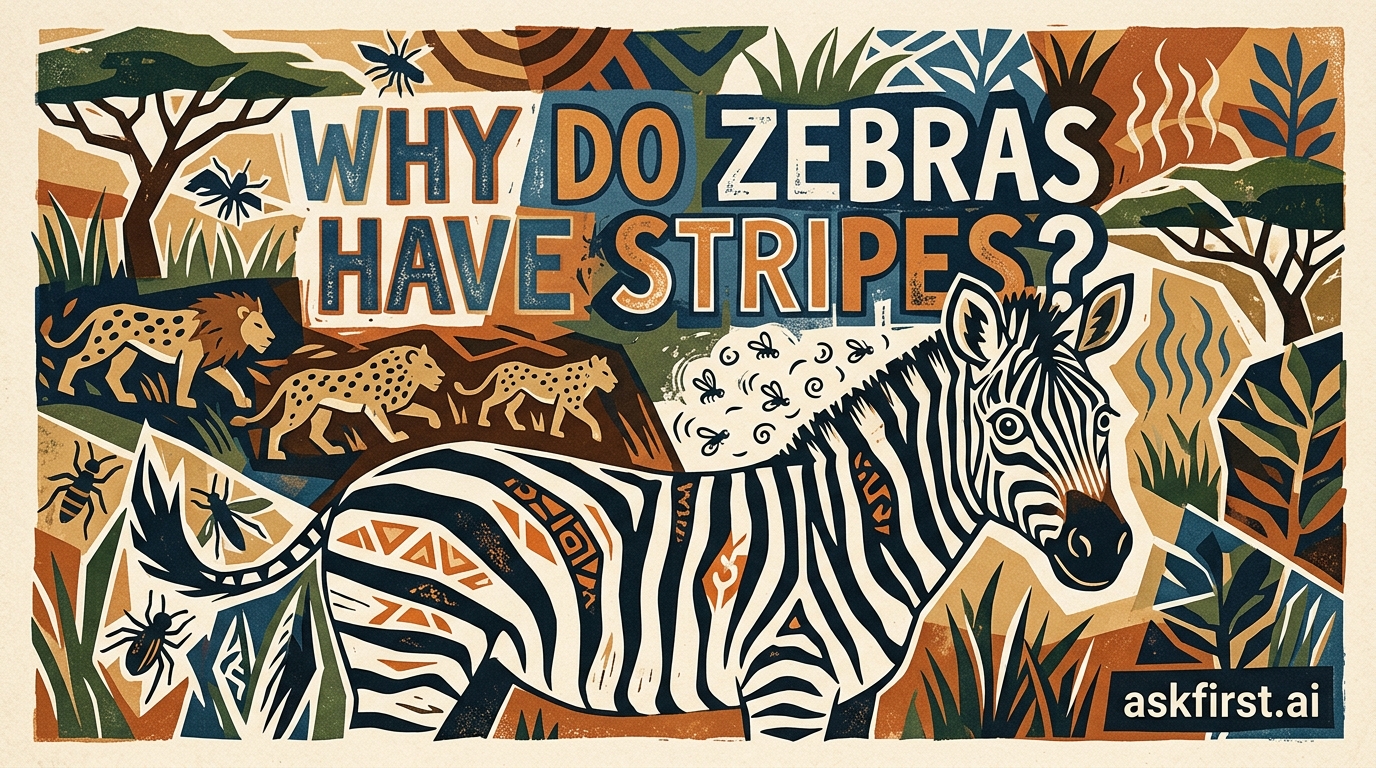
The most widely accepted scientific explanation today is the "fly-repellent" hypothesis. Research conducted by behavioral ecologists, notably Caro et al. (2019), suggests that stripes are highly effective at confusing blood-sucking insects like horseflies (Tabanidae) and tsetse flies.
- The Mechanism: These insects rely on visual cues to land on hosts. The high-contrast, narrow stripes appear to disrupt the insect's ability to accurately calculate speed and distance as they approach, causing them to either overshoot the target or fail to land smoothly.
- Field Evidence: Experiments using zebra-striped blankets on horses showed significantly fewer fly landings compared to solid-colored blankets. This provides a clear survival advantage, as these insects carry debilitating diseases like African horse sickness and equine infectious anemia.
2. Thermoregulation: The "Cooling" Theory
Another prominent theory proposes that stripes assist in thermoregulation.
- Convective Currents: Proponents suggest that black stripes absorb more heat than white stripes, creating subtle temperature differences on the zebra’s skin. These gradients may induce tiny air currents (micro-convection) that help the zebra stay cool in the scorching African savanna.
- Scientific Debate: While theoretically sound, recent thermal imaging studies have provided mixed results, suggesting this may be a secondary benefit rather than the primary evolutionary driver.
3. Social and Defensive Functions
Beyond environmental interaction, stripes serve crucial intra-species and defensive roles:
- Motion Dazzle: When a herd of zebras runs together, the shifting patterns of dozens of individuals can create a "dazzle" effect. This makes it difficult for a predator—such as a lion or hyena—to isolate a single individual, effectively confusing the predator’s depth perception and tracking capabilities.
- Social Recognition: While zebras are social, some researchers believe unique stripe patterns (similar to human fingerprints) may assist individuals in recognizing one another within the herd, facilitating social bonds and group cohesion.
4. Pros, Cons, and Evolutionary Limitations
- Pros: Protection from vector-borne diseases, potential cooling, and increased survival rates during predator attacks.
- Cons: The "conspicuousness" of stripes makes them stand out against solid-colored backgrounds, potentially making them easier to spot from a distance in certain light conditions.
- Evolutionary Context: Zebras evolved in environments where horseflies are a persistent, lethal threat. The evolutionary pressure to avoid disease-carrying insects likely outweighed the risk of being spotted by predators.
Future Trends in Research
Current research is shifting toward genomic mapping to understand the precise developmental genes responsible for pattern formation. Understanding how these patterns emerge in the embryo could provide insights into broader mammalian evolution. Furthermore, biomimicry experts are now studying zebra patterns to develop new types of insect-repellent textiles for human use, proving that this ancient evolutionary trait remains highly relevant in the 21st century.
In summary, the zebra's stripes are not a single-purpose adaptation but a multifaceted survival tool. They represent a masterclass in natural selection, balancing the immediate need to avoid disease-carrying insects with the necessity of group survival in a dangerous, predator-rich environment.