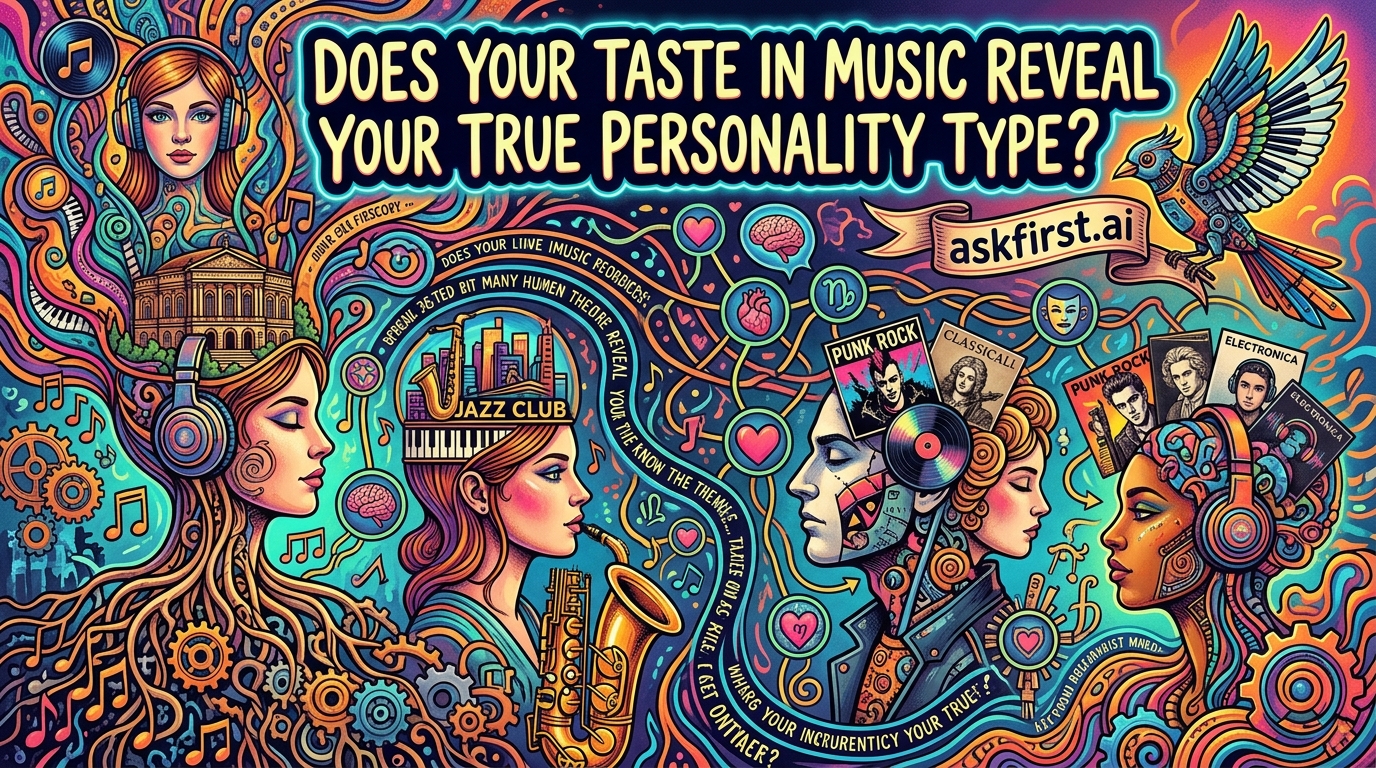
The Sonic Mirror: Does Your Playlist Decode Your Personality?
For decades, psychologists have investigated whether the rhythmic patterns, lyrical complexity, and emotional weight of our favorite songs serve as a window into the inner workings of the human mind. The consensus is increasingly clear: music is not merely auditory background noise, but a profound reflection of psychological architecture.
The Big Five and Sonic Preferences
Research frequently utilizes the "Big Five" personality traits—Openness, Conscientiousness, Extraversion, Agreeableness, and Neuroticism—to map musical affinity.
- Openness to Experience: This trait is the most reliable predictor of musical variety. Individuals scoring high in openness tend to gravitate toward complex, avant-garde, and nuanced genres such as jazz, classical, or progressive rock. They seek intellectual stimulation rather than comfort.
- Extraversion: Those who lean toward extraversion often prefer high-energy, socially stimulating music with strong beats, such as pop, dance, or hip-hop. These genres facilitate social cohesion and movement, aligning with the outward-focused nature of extraverts.
- Neuroticism: Individuals experiencing higher levels of neuroticism may use music as a form of emotional regulation. They often prefer melancholic or intense music to process complex inner states, utilizing lyrics as a mirror for their personal struggles.
The Psychological Mechanics
Why does this correlation exist? Psychologists suggest that music functions as a "cognitive shortcut." When a person listens to specific chord progressions or lyrical themes, the brain associates these stimuli with internal states that feel authentic. A person who values structure and tradition might find peace in the symmetrical, predictable cadence of folk or classic country, while someone craving novelty seeks the irregular time signatures of fusion jazz.
Challenging Common Myths
It is vital to distinguish between personality and social identity. While one's music taste often aligns with inherent traits, peer influence also plays a significant role in adolescent identity formation. However, once the personality matures, the "sonic signature" of an individual tends to remain remarkably stable. It is not that music causes a personality type, but rather that a personality seeks the music that validates its own worldview.
Conclusion: The Harmony of Self
Whether it is the intricate layers of a symphony or the driving pulse of electronic dance music, our auditory choices are sophisticated psychological signals. By analyzing what we listen to, we gain a deeper appreciation for the cognitive processes that drive our daily lives. Music remains one of the few universal languages that does not just entertain us, but also introduces us to our most authentic selves.