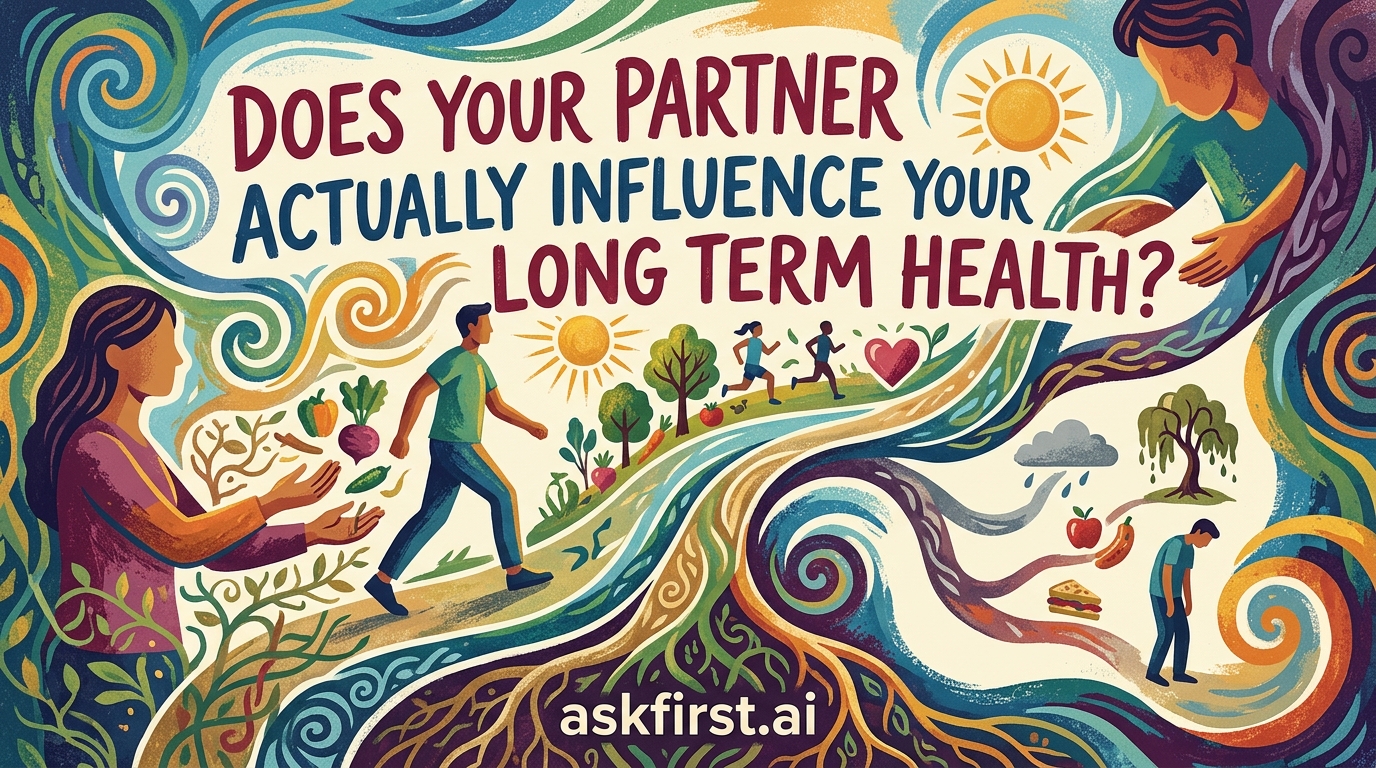
The Hidden Power of Partnerships: How Your Significant Other Shapes Your Biological Destiny
Scientific research increasingly suggests that intimate relationships are not merely social constructs but fundamental biological regulators. Living with a partner exerts a profound influence on long-term physiological outcomes, acting as a silent architect of personal wellness. This phenomenon, often referred to as the "dyadic effect," implies that the health of an individual is inextricably linked to the habits, stress levels, and emotional state of their partner.
The Behavioral Synchronization Effect
The most direct impact of a romantic partner on health occurs through behavioral synchrony. Humans are mimicry-prone creatures; we naturally adopt the dietary habits, exercise routines, and sleep patterns of those with whom we share a living space. If a partner prioritizes a Mediterranean diet or consistent physical activity, the other partner is statistically more likely to follow suit. Conversely, sedentary lifestyles are often contagious within households. Research indicates that when one partner successfully loses weight or quits smoking, the likelihood of the other partner achieving similar success increases significantly, demonstrating a shared health trajectory.
Biological Co-regulation and Stress
Beyond external behaviors, partners regulate one another on a hormonal level. Close physical touch, such as holding hands or hugging, triggers the release of oxytocin, a hormone known to buffer the body against cortisol—the primary stress hormone. A supportive partner acts as an external nervous system stabilizer. When individuals face external stressors, the presence of a responsive partner effectively lowers blood pressure and heart rate responses. This biological buffering prevents the "wear and tear" on the body known as allostatic load. Over decades, this cumulative difference in physiological stress management can manifest as significant variations in cardiovascular health and immune system function.
The Longevity Dividend
Data from large-scale longitudinal studies, such as the Harvard Study of Adult Development, consistently emphasize that high-quality relationships are the single greatest predictor of healthy aging. While genetic predispositions play a role, the relational environment dictates how those genes are expressed through epigenetic modifications. A stable, positive partnership provides a sense of security and purpose, which correlates with lower rates of chronic inflammation. Inflammation is a precursor to many age-related diseases, and it is frequently elevated in individuals experiencing chronic loneliness or conflict-ridden relationships. By providing social support, partners foster a sense of safety that allows the body to prioritize cellular repair and maintenance over hyper-vigilance.
Conclusion: Conscious Partnership
Recognizing the health-altering potential of a partnership transforms how we view intimacy. It shifts the narrative from finding a "soulmate" to building a "health-mate." By fostering open communication and consciously cultivating positive shared habits, partners actively optimize each other's physiological futures. The evidence is clear: the person chosen as a life partner is perhaps the most significant medical intervention any individual will ever encounter.