The Biological Mechanisms of Plant Growth
Plant height is a complex physiological process governed by a combination of genetics, environmental signals, and specialized cellular activity. Unlike animals, which grow throughout their entire bodies, plants exhibit indeterminate growth, meaning they continue to expand throughout their lifespans, primarily through localized regions of cell division known as meristems.
1. The Role of Meristems
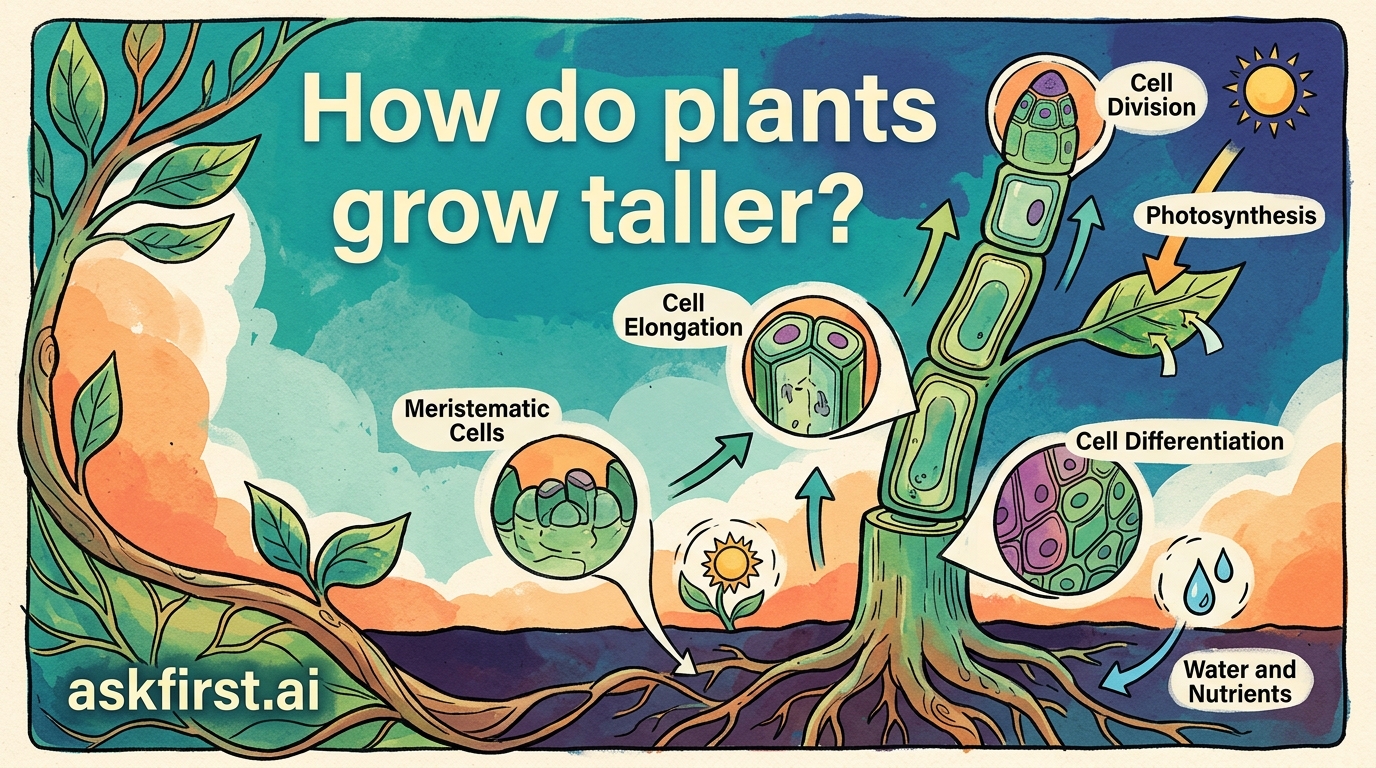
The primary engine of vertical growth is the Apical Meristem, located at the tips of shoots and roots.
- Cell Division (Mitosis): Within the shoot apical meristem, undifferentiated cells divide rapidly. These cells are totipotent, meaning they can develop into any type of specialized plant tissue.
- Cell Elongation: Once cells leave the meristematic zone, they undergo massive expansion. This is the primary driver of vertical height. The plant cell creates a large central vacuole, which fills with water, exerting turgor pressure against the cell wall.
- Cell Wall Loosening: For a cell to expand, its rigid cellulose cell wall must become flexible. The plant secretes enzymes called expansins, which break the bonds between cellulose microfibrils, allowing the cell to stretch under the internal turgor pressure.
2. Hormonal Regulation
Growth is strictly controlled by a suite of plant hormones (phytohormones):
- Auxins: Produced primarily in the shoot tips, auxins promote cell elongation. They regulate the expression of genes that soften cell walls. Auxins also facilitate phototropism—the bending of plants toward light. By concentrating on the shaded side of a stem, auxins cause those cells to elongate faster than those on the sunny side, effectively "pushing" the plant toward the light source.
- Gibberellins (GAs): These hormones are the "masters of height." They stimulate stem elongation by triggering the degradation of growth-inhibiting proteins. Plants lacking gibberellins often exhibit a dwarf phenotype.
- Cytokinins: While they primarily promote cell division in roots and shoots, they work in balance with auxins to determine the overall architecture of the plant.
3. Environmental Factors
Plants are master sensors of their surroundings. Key factors include:
- Photomorphogenesis: Plants use photoreceptors like phytochromes to detect light quality. If a plant is shaded by others, it detects a higher ratio of far-red to red light, triggering a "shade avoidance response" where the plant rapidly elongates its stem to reach sunlight.
- Gravitropism: Roots grow downward and shoots grow upward in response to gravity, detected by specialized cells called statocytes containing dense, starch-filled organelles called amyloplasts.
4. Secondary Growth
While primary growth increases height, woody plants also undergo secondary growth. The vascular cambium adds layers of xylem (wood) and phloem (bark), increasing the diameter of the stem. This structural support is essential; without secondary thickening, taller plants would collapse under their own weight.
Practical Steps to Encourage Vertical Growth
If you are cultivating plants, you can manipulate these mechanisms:
- Light Management: Ensure high-intensity full-spectrum lighting to prevent "leggy" (etiolated) growth caused by shade-avoidance responses.
- Nutrient Balance: Provide adequate nitrogen for vegetative growth, but avoid excess, which can lead to weak, elongated stems that lack structural integrity.
- Physical Stress: Gentle movement (simulating wind) triggers thigmomorphogenesis, a process where plants produce ethylene to thicken their stems, preventing them from becoming too tall and fragile.