The Physics and Perception of Color
Color is not an intrinsic property of matter; rather, it is a complex interaction between light, physical objects, and the human visual system. To understand why objects possess specific colors, one must examine the intersection of electromagnetic radiation, molecular chemistry, and neurological processing.
1. The Physics of Light and Reflection
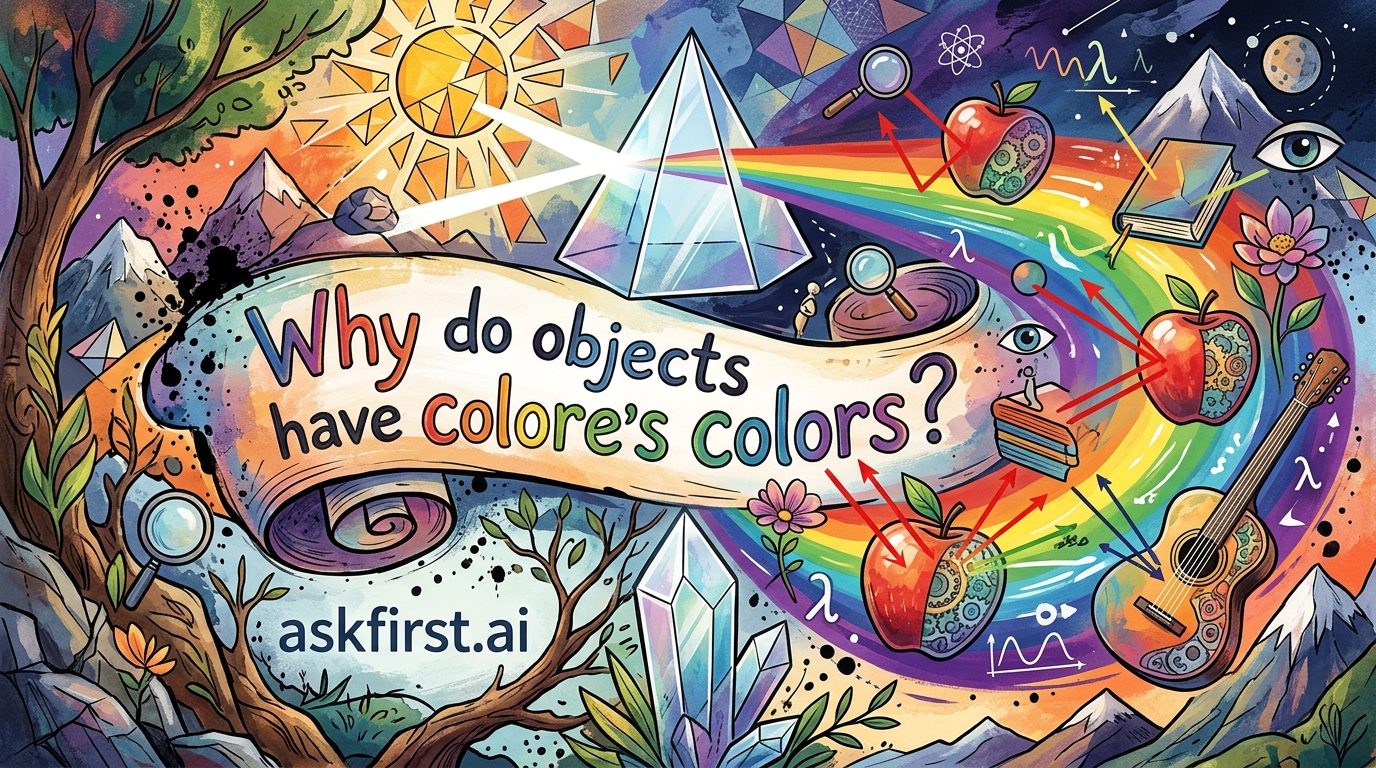
Visible light is a small segment of the electromagnetic spectrum, ranging from approximately 380 to 750 nanometers in wavelength. When white light—which contains all visible wavelengths—strikes an object, three primary physical phenomena occur: reflection, absorption, and transmission.
- Absorption: The object’s atoms absorb specific wavelengths of light, converting that energy into heat or chemical energy.
- Reflection: Wavelengths that are not absorbed are bounced back from the surface. The color we perceive is the combination of these reflected wavelengths.
- Transmission: In transparent or translucent materials, light passes through the object, which may filter or refract specific wavelengths (e.g., a green glass bottle).
If an object appears red, it is because its surface molecules are absorbing all wavelengths of the visible spectrum except for the red portion, which is reflected to our eyes. If an object absorbs all light, it appears black; if it reflects all light equally, it appears white.
2. The Role of Molecular Chemistry
The "why" behind selective absorption lies in the electronic structure of atoms and molecules. Electrons occupy specific energy levels (orbitals). When a photon of light hits a molecule, it can only be absorbed if its energy corresponds precisely to the energy gap between the molecule's current state and an excited state.
- Pigments: These are chemical compounds that reflect specific colors. In plants, chlorophyll absorbs red and blue light for photosynthesis, reflecting green.
- Structural Coloration: Some colors do not arise from pigments but from physical microstructures. Examples include the iridescent wings of a Morpho butterfly or the shimmer of a peacock’s feather. These structures cause light waves to interfere with one another, reinforcing certain colors through constructive interference while canceling others.
3. Human Perception and Biology
The final stage of color is the biological interpretation within the human eye. The retina contains specialized photoreceptor cells called cones. Most humans are trichromatic, possessing three types of cones sensitive to distinct ranges of light:
- S-cones: Short wavelengths (blues).
- M-cones: Medium wavelengths (greens).
- L-cones: Long wavelengths (reds).
The brain integrates the signals from these cones to construct the perception of color. This is why "color" is subjective; it is a neurological interpretation of reflected light energy.
4. Pros, Cons, and Practical Applications
Understanding color science has revolutionized modern industry:
- Pros: Color coding enhances safety (traffic lights), improves aesthetics in design, and allows for the identification of chemical substances via spectroscopy.
- Cons: Color blindness (deficiency in cone sensitivity) can hinder the ability to perceive certain spectral differences, necessitating universal design standards.
5. Future Trends
Advancements in metamaterials and nanotechnology are allowing scientists to manipulate light at the sub-wavelength level. We are entering an era of "structural color printing," where materials can change color based on external stimuli like pressure or electric fields, potentially replacing traditional toxic chemical dyes with sustainable, light-manipulating surfaces.