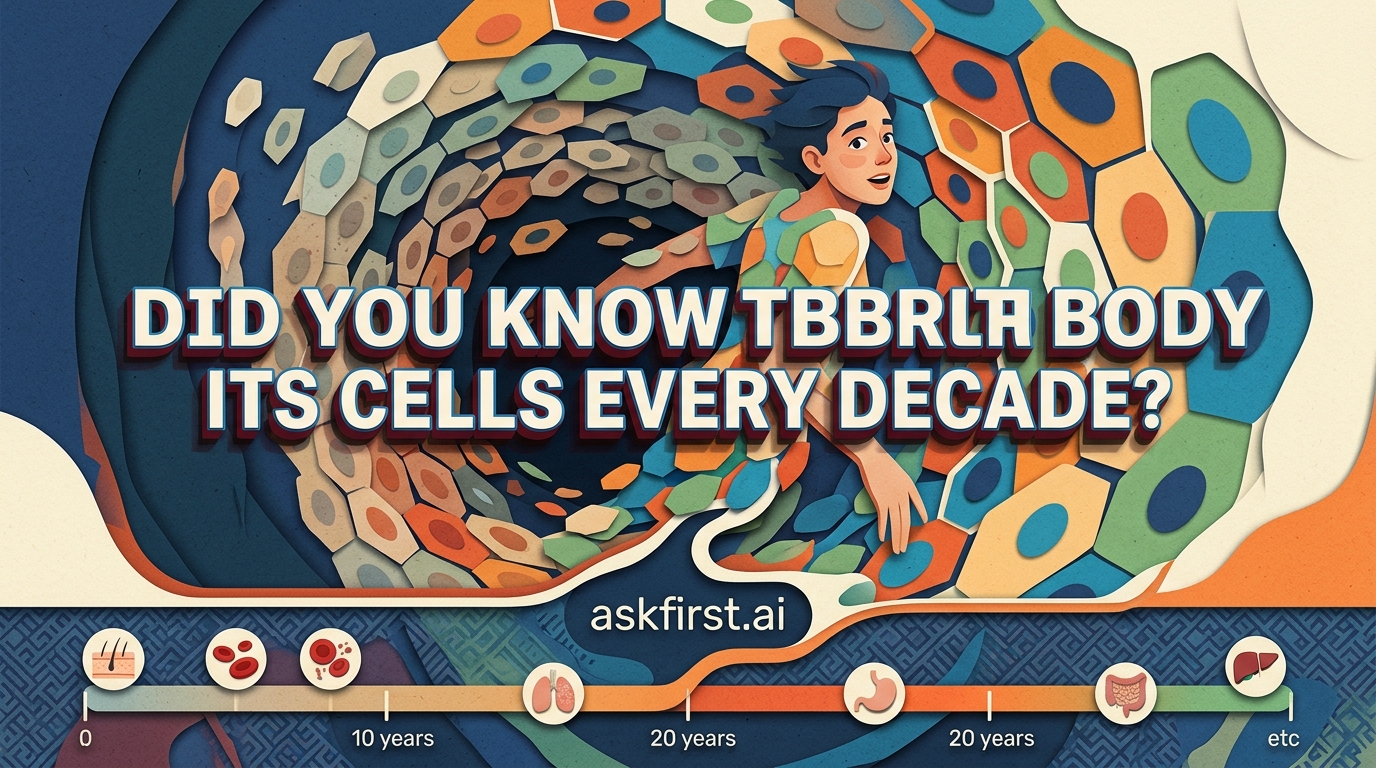
The Biological Paradox: Are You Actually A New Person Every Decade? The common assertion that the human body undergoes a total cellular turnover every seven to ten years is one of the most persistent myths in popular biology. While it is true that the body is in a state of constant, dynamic renewal, the reality is far more nuanced and fascinating than a simple decadal expiration date. Understanding this process requires a deep dive into the diverse lifespans of various cell types, from the lightning-fast turnover of skin cells to the lifelong companions found within the central nervous system. ## The Varied Lifespans of Human Cells Cellular renewal is governed by the specific functional demands of tissues. Organs that endure high mechanical stress or harsh environmental conditions are essentially biological assembly lines. * Epidermal Cells (Skin): These are the fastest to replenish, turning over roughly every 28 to 30 days to protect the body from pathogens and physical wear. * Gastrointestinal Lining: The cells lining the stomach and small intestine endure caustic digestive acids and friction, necessitating a renewal cycle every 3 to 5 days. * Red Blood Cells (Erythrocytes): These oxygen transporters have a lifespan of approximately 120 days before being recycled by the spleen. In contrast, other parts of the anatomy operate on vastly different schedules. The liver, while possessing incredible regenerative properties, typically replaces its cells over the course of 300 to 500 days. Meanwhile, the skeletal system undergoes a slower, constant remodeling process, with the complete turnover of the adult skeleton occurring approximately every decade. ## The Stationary Exceptions: Why You Remain You The most profound realization in this field involves cells that do not follow the turnover protocol. If every cell in the body were replaced, personal identity and long-term memory storage would face biological hurdles. Research indicates that certain cells are designed for longevity: * Neurons: Most neurons in the cerebral cortex are formed before birth and remain with an individual for their entire life. While limited neurogenesis occurs in specific areas like the hippocampus, the core architecture of human memory and cognition relies on the persistence of these specific cells. * Cardiac Muscle Cells: While these cells show a very slow, limited ability to regenerate, the vast majority of human cardiomyocytes present at birth persist throughout a lifetime. * Lens Cells: The fibers of the eye's lens are also formed during development and remain throughout life, which explains why the lens is susceptible to age-related opacity. ## Conclusion The human body is best described as a mosaic of renewal. It is a biological tapestry where some threads are constantly woven anew while others remain as part of the original design. Science shows that humans are not entirely replaced every decade; rather, the body maintains a brilliant balance of rapid regeneration for maintenance and permanent structure for continuity.
P.S. You can ask any follow-up question on this topic by continuing the dialogue with AI in the chat below