The Science of Bread Leavening: How Dough Rises
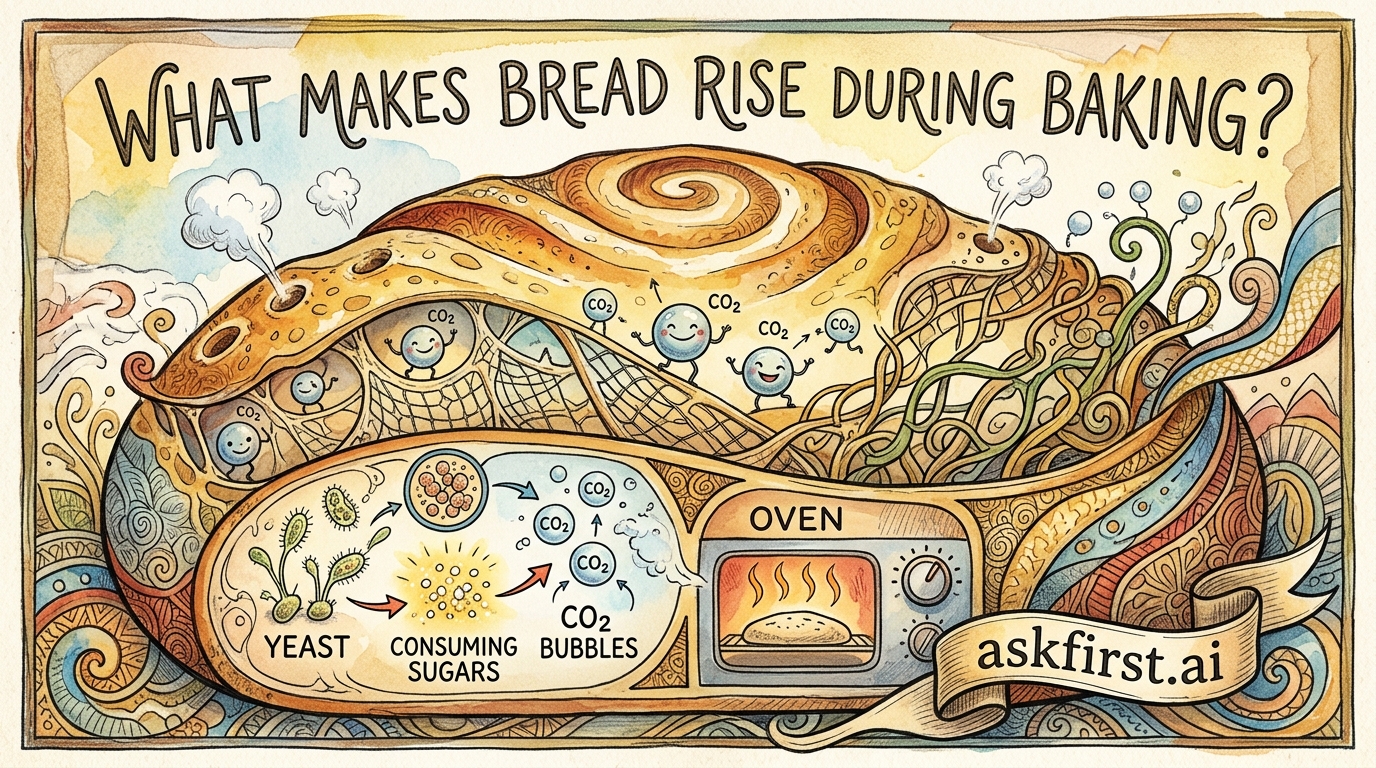
Bread rising, or leavening, is a complex biochemical process primarily driven by the interaction between microorganisms, enzymes, and the physical structure of flour proteins. At its core, the rise is a result of carbon dioxide (CO2) production trapped within a gluten network.
1. The Biological Catalyst: Yeast and Fermentation
The most common agent for leavening is Saccharomyces cerevisiae, or baker's yeast. When yeast is introduced to warm water and fermentable sugars (found naturally in flour or added as sucrose), it begins the process of cellular respiration and fermentation.
- The Reaction: Yeast consumes simple sugars and excretes CO2 and ethanol as byproducts.
- The Role of Gluten: Flour contains two primary proteins, gliadin and glutenin. When hydrated and kneaded, these proteins bond to form gluten, a viscoelastic network. This elastic web acts like a series of microscopic balloons, capturing the CO2 bubbles produced by the yeast. As the gas expands due to the heat of the oven (a process known as "oven spring"), the bread expands.
2. Chemical Leavening Agents
Not all bread relies on yeast. Quick breads (like soda bread or biscuits) utilize chemical leaveners:
- Baking Soda (Sodium Bicarbonate): Requires an acidic ingredient (buttermilk, yogurt, lemon juice) to trigger the release of CO2.
- Baking Powder: Contains both an acid and a base. It reacts once upon contact with liquid and a second time when exposed to the heat of the oven, ensuring a consistent rise.
3. The Mechanics of "Oven Spring"
"Oven spring" refers to the final, rapid expansion of dough during the first few minutes of baking. This occurs due to three physics-based phenomena:
- Gas Expansion: According to Charles's Law, gases expand as they heat up. The CO2 trapped in the gluten bubbles increases in volume significantly as the dough temperature rises.
- Water Vaporization: Water within the dough turns into steam, adding further pressure to the internal bubbles.
- Yeast Activity: Yeast activity accelerates as the temperature increases, peaking just before the yeast cells die at approximately 140°F (60°C).
4. Practical Guide: Ensuring a Perfect Rise
To maximize the rise in home baking, follow these steps:
- Temperature Control: Keep liquids between 100°F–110°F (37°C–43°C). Cold water inhibits yeast; water exceeding 140°F kills it.
- Proper Kneading: Develop the gluten structure thoroughly. Without a strong network, the CO2 will escape through the surface rather than lifting the loaf.
- Proofing Environment: Use a draft-free, warm area. High humidity is beneficial to prevent a "skin" from forming on the dough, which can restrict expansion.
5. Pros and Cons of Leavening Methods
- Biological (Yeast):
- Pros: Complex flavor development; superior texture; traditional.
- Cons: Time-consuming; requires temperature management.
- Chemical (Baking Powder/Soda):
- Pros: Instant rise; no waiting time.
- Cons: Can leave a metallic or soapy aftertaste if improperly measured.
6. Future Trends
Modern baking is moving toward precision fermentation, where specific yeast strains are engineered to provide better nutritional profiles or faster proofing times without sacrificing the artisanal quality of the crumb. Additionally, sourdough, which relies on wild yeast and lactic acid bacteria, continues to see a resurgence due to its superior digestibility and shelf stability.