The Chemistry of Connection: Is Love Merely Biology?
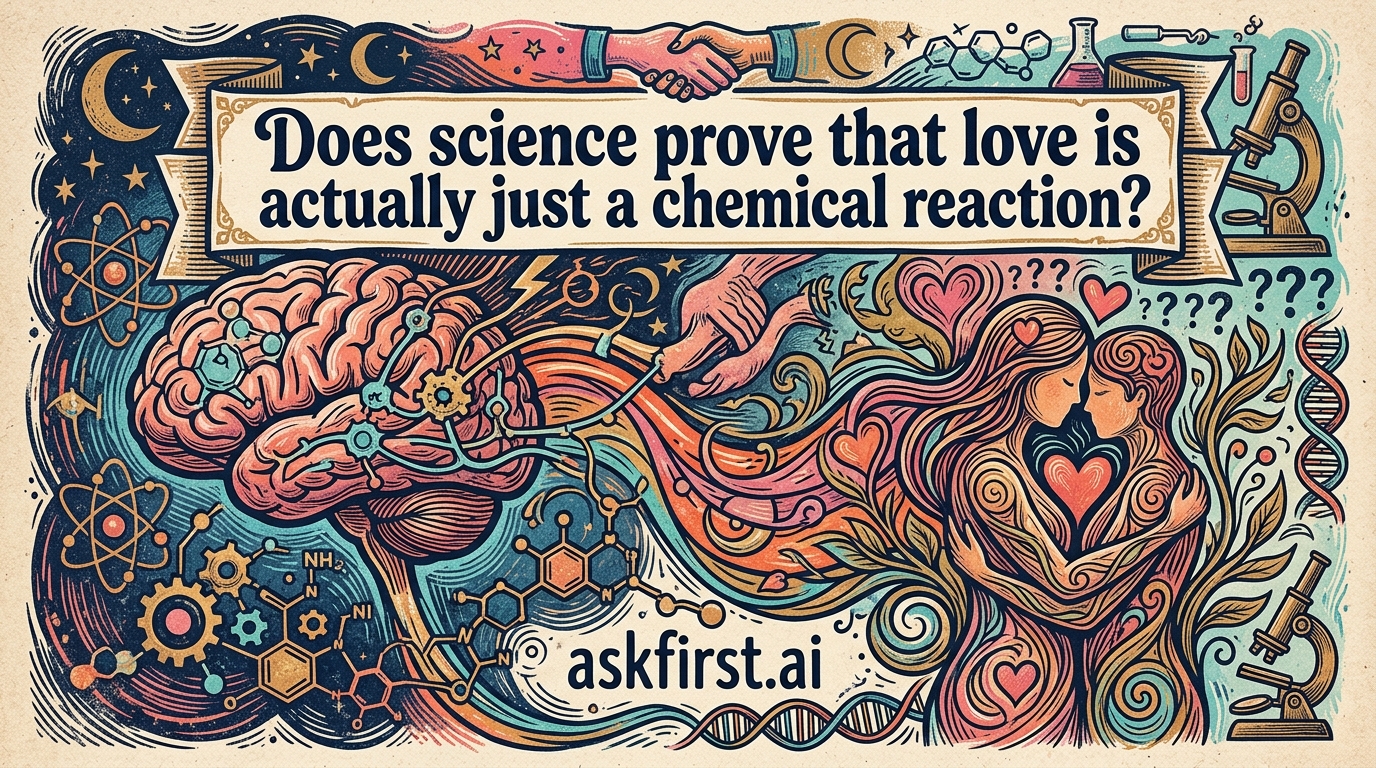
At the intersection of poetry and physiology, the debate persists: is love a divine mystery or a programmed biological response? While modern neuroscience has mapped the neural pathways of affection, labeling love as "just" a chemical reaction risks reductionism. Science describes the mechanism of love, but it does not diminish the experience of it.
The Neurochemical Cocktail
Love is mediated by a complex interplay of neurotransmitters and hormones that govern social bonding and reproduction. The process is often broken down into three stages, each with specific chemical markers:
- Lust: Driven by testosterone and estrogen, this stage is designed to promote mating behaviors.
- Attraction: This is the "reward" phase. It involves dopamine, norepinephrine, and serotonin. Dopamine creates the euphoric, hyper-focused state associated with new love, while norepinephrine contributes to the racing heart and excitement.
- Attachment: To sustain long-term commitment, the brain releases oxytocin and vasopressin. Often called the "cuddle hormone," oxytocin facilitates trust and social bonding, effectively sealing the attachment between partners.
Beyond Reductionism
While these chemicals are undeniably present, equating love solely to a reaction is akin to saying a symphony is "just" vibrating air molecules. The physics of sound explains the vibration, but it fails to capture the emotional resonance, the cultural context, or the artistic intent of the composer. Similarly, neurobiology explains the biological hardware—how the brain processes and sustains affection—but it does not fully encapsulate the subjective human narrative of love.
Love is an emergent property. Just as wetness is not a property of a single water molecule but emerges when many molecules interact, the human experience of love emerges from the interplay between these neurochemical signals, social experiences, personal histories, and cognitive appraisal.
The Role of Cognitive Appraisal
Psychological research, such as the work by Sternberg in his Triangular Theory of Love, highlights that intimacy, passion, and commitment are not solely biological. They require cognitive processing. Humans choose to invest in relationships, regulate their emotions, and prioritize their partners despite fluctuating hormone levels. This capacity for conscious choice elevates love from a passive chemical reaction to an active, intentional state of being.
Conclusion
Science does not "prove" that love is only a chemical reaction. Instead, it illuminates the biological foundation that makes the capacity for love possible. The chemicals are the tools of the trade, allowing the human brain to form deep, meaningful connections that transcend simple biology. To fully understand love, one must appreciate both the intricate neurobiology within and the profound emotional depth of the human experience.