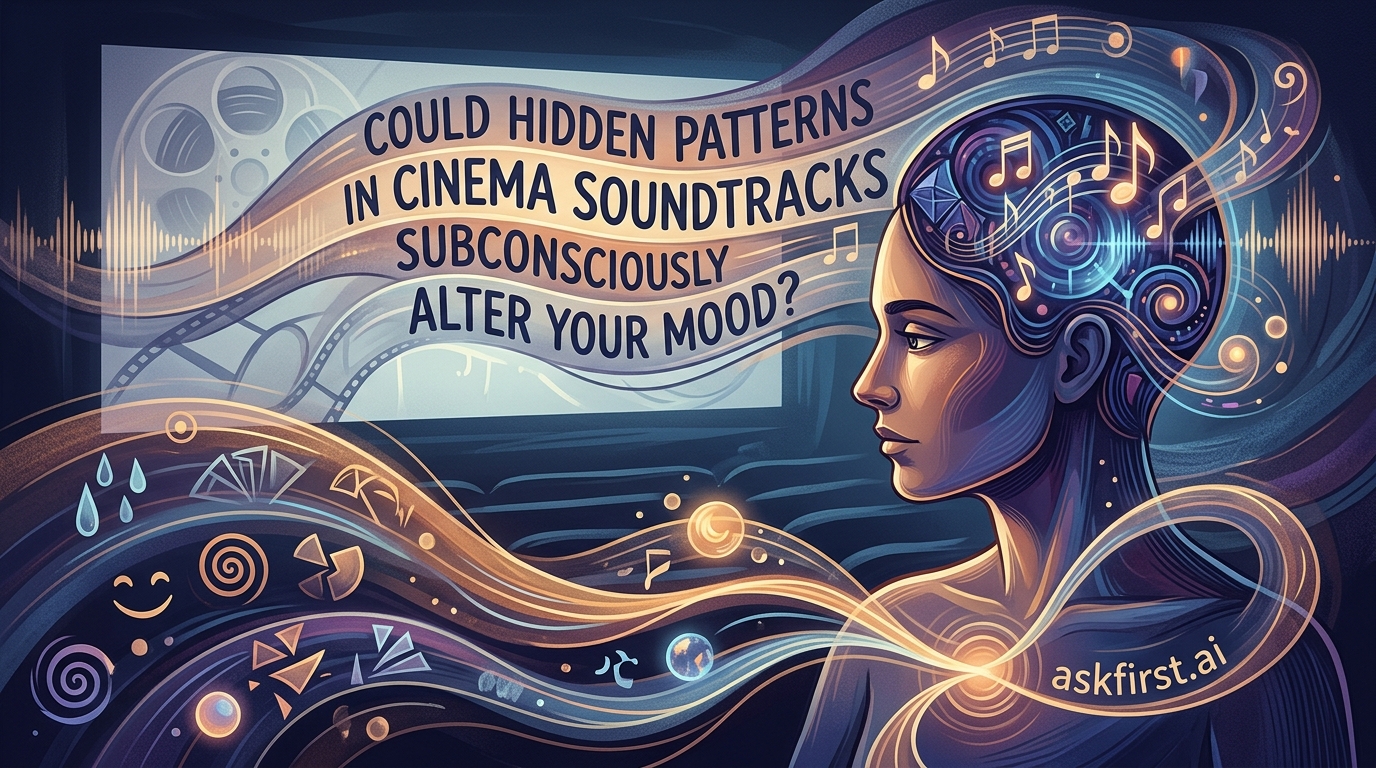
The Sonic Shadow: How Hidden Cinema Soundscapes Hijack Human Emotion
Soundtrack designers have long understood that music functions as an invisible bridge between a film's narrative and the spectator’s internal landscape. Beneath the conscious awareness of a theater audience, complex psychoacoustic patterns are employed to manipulate neurological responses, effectively altering emotional states without the viewer ever realizing the source of their sudden tension or joy.
The Psychoacoustics of Subliminal Sound
At the core of this manipulation are psychoacoustic principles such as the use of infrasound and dissonance. Infrasound—frequencies below the threshold of human hearing (typically under 20 Hz)—can trigger visceral physiological reactions, including anxiety and a heightened sense of unease. Film composers often integrate these low-frequency oscillations to ground the audience in a state of primal alertness. When paired with the "Shepard tone," an auditory illusion of a pitch that continually ascends without ever reaching a higher note, the human brain enters a state of cognitive dissonance. This unresolved tension forces the listener to remain in a heightened state of suspense, mirroring the uncertainty on the screen.
Melodic Priming and Emotional Conditioning
Beyond raw frequency, soundtracks utilize leitmotifs and harmonic structures that serve as emotional shortcuts. Through a process called associative conditioning, audiences are trained to link specific musical textures to character archetypes or plot developments. For example:
- Major Keys and Consonance: Frequently used to establish safety, optimism, and heroic virtues.
- Minor Keys and Dissonance: Employed to signal danger, moral ambiguity, or imminent tragedy.
- Rhythmic Entrainment: Fast-paced, percussive elements synchronize with the audience’s heart rate, artificially inflating or suppressing arousal levels to match the onscreen pacing.
The Biological Response Mechanism
The human amygdala, the brain's emotional processing center, reacts to these musical cues with remarkable speed. Research into the neurobiology of music suggests that auditory signals reach the limbic system faster than visual data. Consequently, a subtle change in the musical bed can shift an audience member’s mood before the visual evidence of a plot twist even registers. This "sound-first" psychological priming bypasses critical thinking, ensuring that when the visual climax arrives, the emotional impact is amplified by a pre-loaded physiological state.
Conclusion: The Invisible Orchestrator
The influence of cinema music is not merely an aesthetic choice; it is a sophisticated application of behavioral psychology. By layering textures, managing harmonic resolution, and manipulating frequency ranges, composers serve as invisible orchestrators of human experience. Every time an audience enters a cinema, they unknowingly surrender their mood to the precise, hidden patterns embedded within the soundtrack, proving that what is heard is often more influential than what is seen.