The Violet Truth: Why Our Atmosphere Hides the Real Sky Color
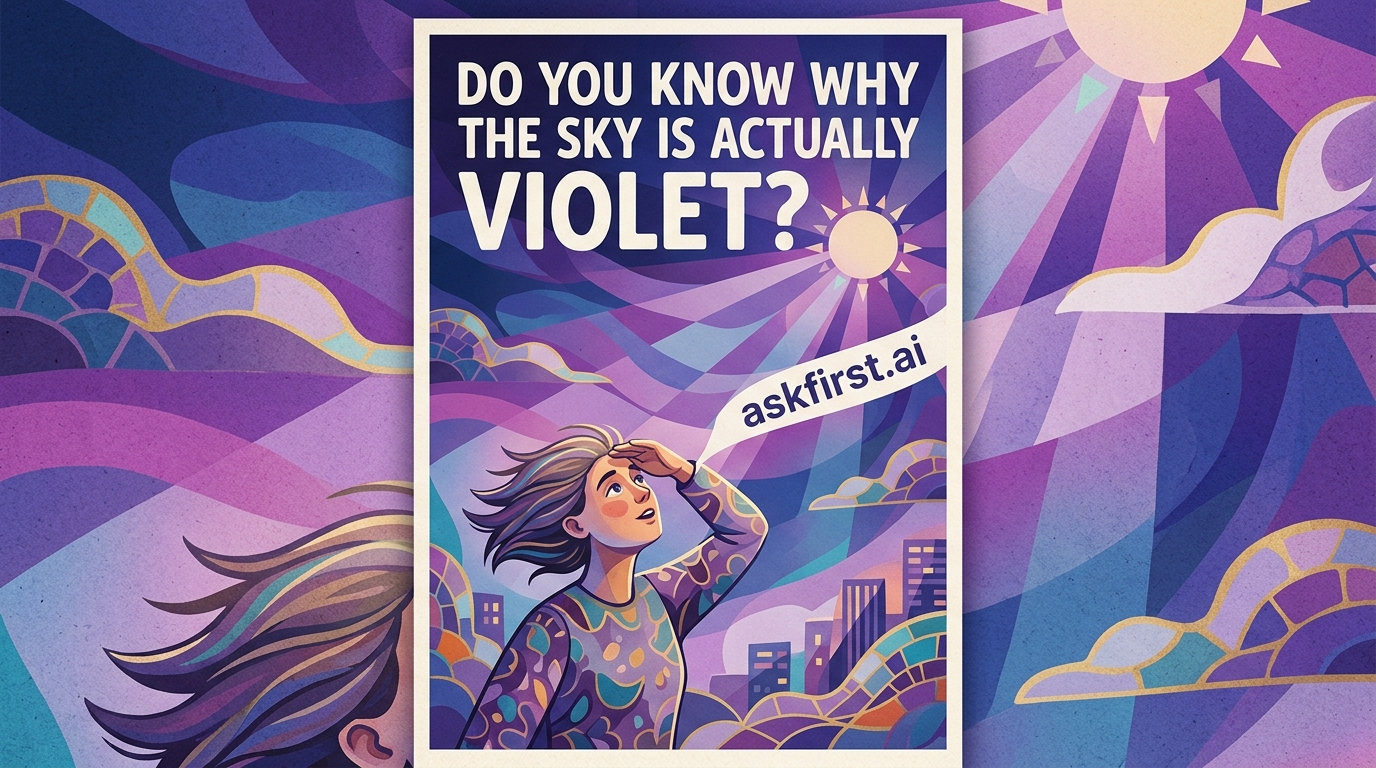
Many observers assume the sky is naturally blue, but the truth is far more complex and involves a fascinating interplay of physics known as Rayleigh scattering. While the human eye perceives the sky as azure during the day, the light emanating from the sun contains a full spectrum of wavelengths, including violet, which actually possesses a shorter wavelength and higher energy than blue light. The reason the sky is not permanently violet lies in a combination of atmospheric filtration and human biological limitations.
The Mechanism of Rayleigh Scattering
When sunlight enters Earth's atmosphere, it strikes molecules of nitrogen and oxygen. This interaction causes the light to scatter in all directions. According to Lord Rayleigh's discovery in the late 19th century, this scattering effect is inversely proportional to the fourth power of the wavelength. Consequently, shorter wavelengths—those at the violet and blue end of the visible spectrum—are scattered far more effectively than longer wavelengths like red or yellow.
Why Violet Loses the Battle
If violet light scatters even more strongly than blue light, why does the sky appear blue rather than violet to the human eye? There are two primary scientific reasons for this phenomenon:
- The Solar Spectrum Output: The Sun emits significantly more light energy in the blue spectrum than in the violet spectrum. Because there is simply more blue light available for the atmosphere to scatter, the blue portion of the spectrum dominates the visual profile of the sky.
- Human Ocular Sensitivity: The human retina is biologically specialized. The three types of cone cells in our eyes—specifically designed to detect color—are far more sensitive to blue light than to violet light. Even if a significant amount of violet light is scattered, the human visual system is essentially "blind" to much of it. The brain interprets the mixture of scattered blue and minor violet light as a vibrant, bright blue.
Transitions at Twilight
During sunset or sunrise, the sun's position changes relative to the horizon, forcing sunlight to travel through a much thicker layer of the atmosphere. By the time this light reaches the observer, most of the blue and violet light has been scattered away, allowing the longer, warmer wavelengths like red, orange, and yellow to pass through. It is at this specific junction that the true "violet" nature of the atmosphere is sometimes hinted at. When the atmosphere is clear, the transition zone between the fading blue sky and the encroaching darkness of space can briefly display a deep indigo or violet hue. This brief moment is perhaps the only time the human eye can witness the true spectral reality that the atmosphere was holding all along.