The Accidental Revolution: Penicillin and Modern Surgery
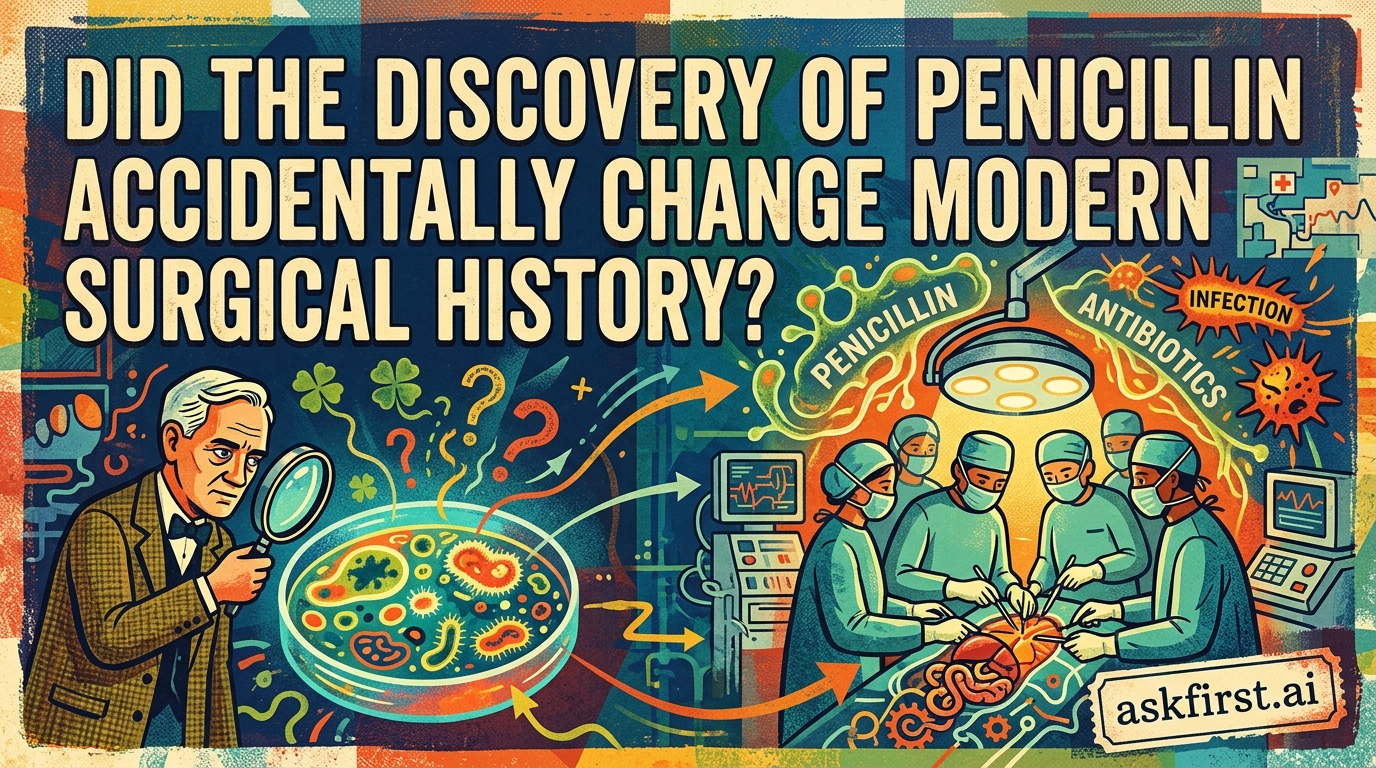
The discovery of penicillin by Alexander Fleming in 1928 is widely regarded as one of the most significant events in the history of medicine. While Fleming’s initial observation of Penicillium notatum mold inhibiting staphylococci growth was serendipitous, the subsequent mass production and clinical application of the antibiotic fundamentally altered the trajectory of modern surgery, transforming it from a high-risk, last-resort intervention into a routine, safe practice.
Historical Context: The Pre-Antibiotic Era
Before the mid-1940s, surgery was severely constrained by the omnipresent threat of postoperative sepsis. Even when surgeons mastered anatomical techniques, infections such as gangrene, peritonitis, and septicemia frequently claimed the lives of patients who had survived the initial procedure. Surgeons operated under the constant shadow of "hospitalism," where cross-contamination was rampant. Consequently, surgical procedures were limited in scope, duration, and complexity, as invasive exploration of the body cavity often invited lethal bacterial colonization.
The Penicillin Paradigm Shift
The industrialization of penicillin during World War II proved that systemic infection could be treated effectively. This breakthrough had three primary effects on surgical history:
- Expansion of Surgical Boundaries: With the "safety net" of antibiotics, surgeons began performing longer, more complex procedures. Operations involving the chest, heart, and brain became viable because the risk of fatal infection was significantly reduced.
- Prophylactic Protocols: The introduction of perioperative antibiotics—administering medication before, during, and after surgery—became the gold standard. This practice allowed surgeons to operate on non-sterile sites (such as the gastrointestinal tract) with minimal risk of peritonitis.
- Organ Transplantation and Implants: The field of transplant surgery and the use of prosthetic implants (like hip replacements or heart valves) would be impossible without antibiotics. These procedures introduce foreign materials into the body, which, in the absence of antibiotics, would almost certainly lead to biofilm formation and systemic infection.
Practical Application: A Modern Surgical Checklist
In modern clinical settings, the integration of antibiotics follows a rigorous, evidence-based protocol:
- Pre-operative Assessment: Evaluation of the patient’s risk profile and existing colonization (e.g., MRSA screening).
- Timing: Administration of the first dose of prophylactic antibiotics within 60 minutes prior to the surgical incision to ensure peak serum concentrations.
- Selection: Choosing narrow-spectrum agents that target the most likely pathogens involved in the specific surgical site.
- Duration: Limiting post-operative antibiotic use to prevent the selection of resistant strains.
Statistics and Impact
The impact of this discovery is quantifiable. Studies suggest that the mortality rate for major surgeries dropped by over 80% following the widespread adoption of antibiotics. Furthermore, the average duration of surgical procedures increased as surgeons were no longer forced to operate under the "speed-above-all" mandate that characterized the pre-antibiotic era.
Pros, Cons, and Future Trends
Pros:
- Drastic reduction in surgical site infections (SSIs).
- Enabling of life-saving complex procedures (e.g., cardiac bypass).
- Increased patient survival and recovery rates.
Cons:
- Antimicrobial Resistance (AMR): The overuse of prophylactic antibiotics has led to the emergence of "superbugs," which now threaten to return surgery to a pre-antibiotic state of danger.
Future Trends: The surgical community is moving toward "Antibiotic Stewardship," focusing on precision medicine to minimize antibiotic exposure while maximizing patient outcomes. Future developments include the use of bacteriophage therapy and antimicrobial coatings on surgical implants to circumvent the rising threat of antibiotic-resistant bacteria.