The Biology of the Swallow: Why Your Brain Stumbles
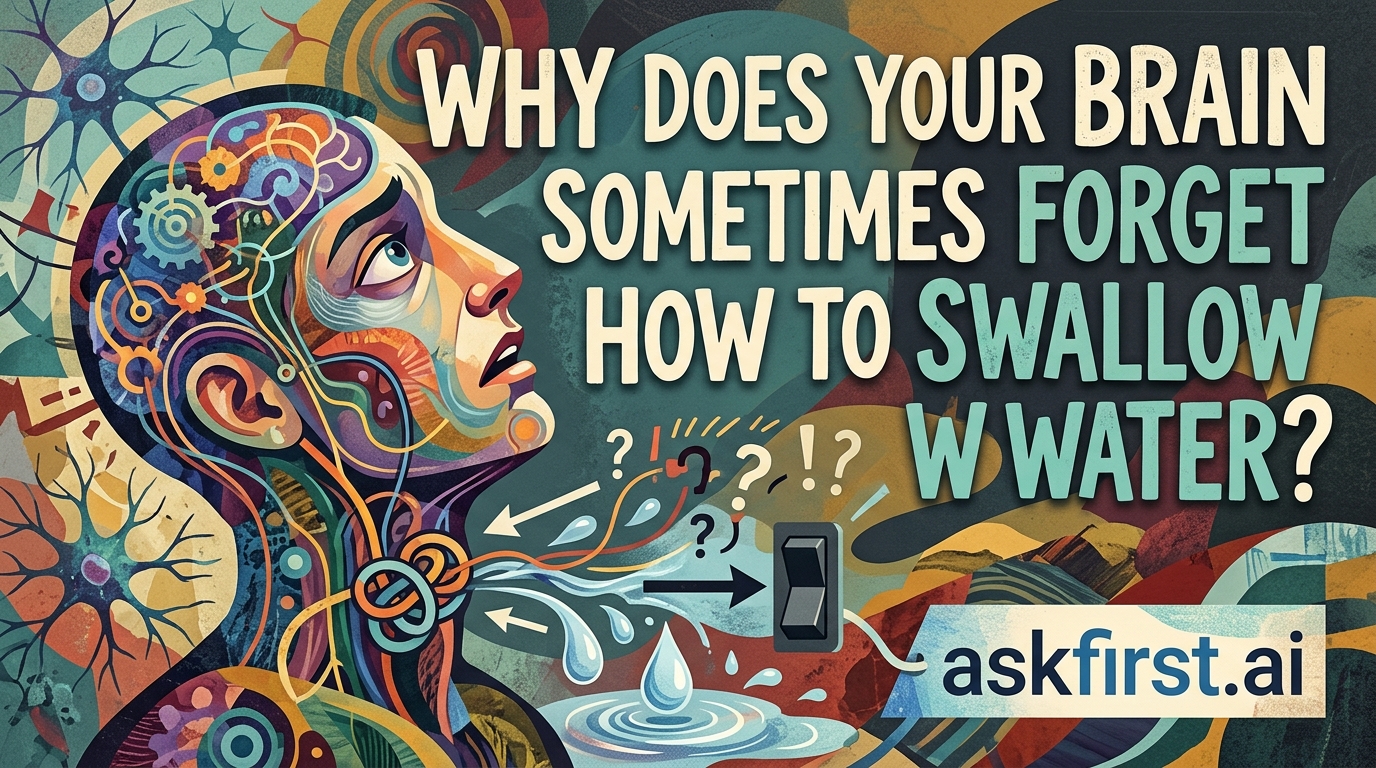
Swallowing, or deglutition, is a complex, high-precision neuromuscular feat that the human body performs hundreds of times a day. While it is usually an unconscious, autonomous process, it is actually a highly orchestrated dance involving over 30 nerves and muscles. When the brain "forgets" how to swallow, it is not a lapse in memory, but a temporary glitch in this sophisticated, multi-stage reflex arc.
The Three Stages of Swallowing
To understand why a swallow fails, one must view the process as a three-stage mechanical sequence:
- The Oral Phase: This is the only voluntary stage. The tongue maneuvers the liquid into position, and the soft palate seals off the nasal cavity.
- The Pharyngeal Phase: This stage is entirely involuntary. As the liquid hits the back of the throat, sensors send a rapid-fire signal to the brainstem. The epiglottis snaps down over the airway like a trapdoor, and the vocal cords tighten.
- The Esophageal Phase: The upper esophageal sphincter relaxes, allowing liquid to enter the esophagus, where wave-like muscular contractions (peristalsis) carry it to the stomach.
Why the Glitch Happens
When a person experiences that sudden, frustrating inability to swallow, it is frequently due to a disruption in the swallow reflex arc. The brain requires a specific sensory trigger—pressure, temperature, or bolus consistency—at the back of the throat to initiate the involuntary stage.
If the brain is distracted by complex cognitive tasks, or if the initial sensory input is weak, the connection between the oral and pharyngeal phases can momentarily fray. This results in "motor confusion" where the muscles involved in breathing and swallowing attempt to fire simultaneously. Because breathing takes biological precedence, the brain often halts the swallow reflex entirely to prevent aspiration, leading to the sensation of "forgetting" how to swallow.
The Role of Anxiety and Focal Dystonia
Psychological factors play a significant role. When someone becomes hyper-aware of their own swallowing, the process moves from the unconscious brainstem control to the conscious cerebral cortex. This is known as "conscious interference." Much like walking becomes difficult when one obsessively focuses on every individual muscle movement, swallowing becomes stilted and awkward when monitored by the conscious mind.
Furthermore, conditions like globus sensation can exacerbate this. It is a feeling of a lump in the throat caused by tension in the cricopharyngeal muscle. This tension creates physical resistance, confusing the neuromuscular feedback loop and making the subsequent swallow feel unnatural or blocked. In essence, the brain is receiving contradictory signals: the muscle is ready to contract, but it encounters physical resistance, leading to a temporary stalling of the entire mechanical chain.