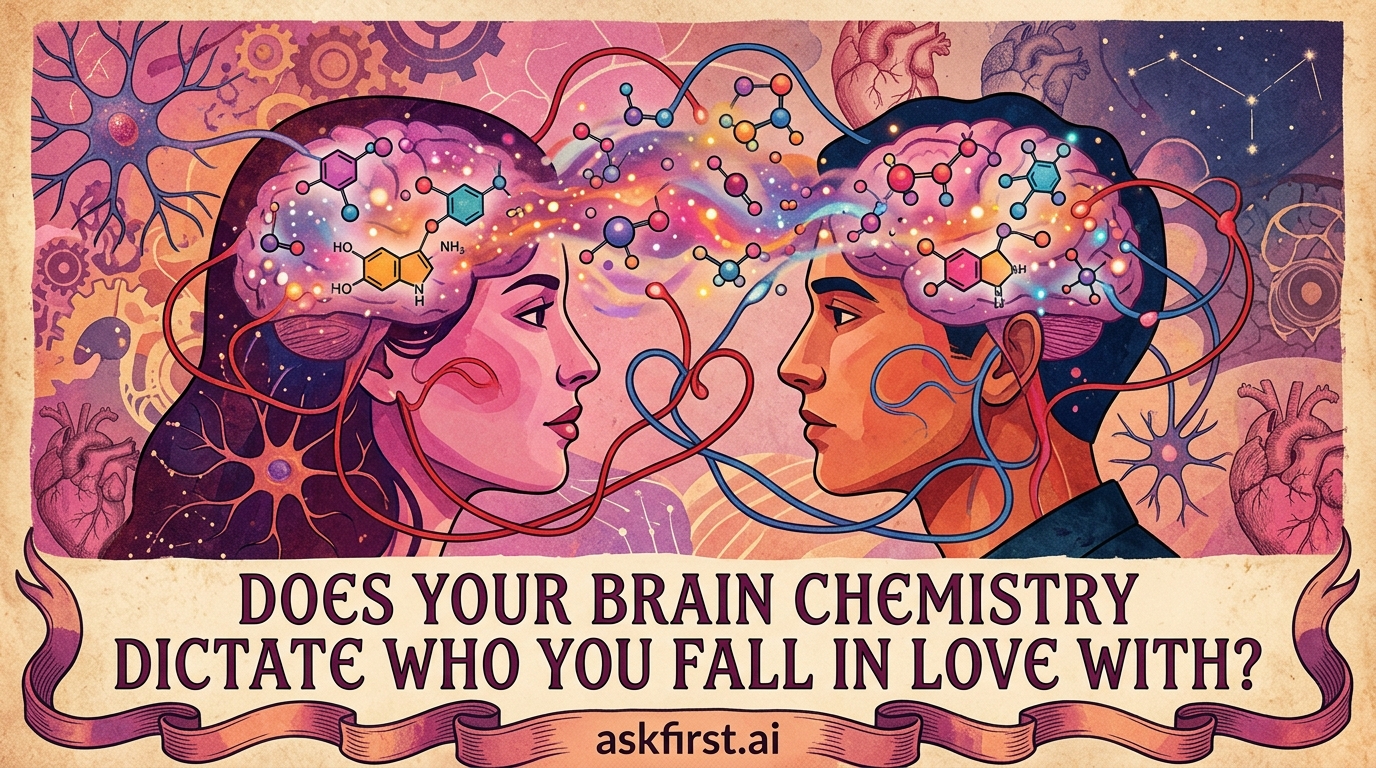
The Molecular Blueprint of Romance: Does Chemistry Dictate Love?
Love is often romanticized as a mystical connection of the soul, yet modern neuroscience suggests that the heart of attraction beats in the chemistry of the brain. While the subjective experience of love is profoundly personal, the biological underpinnings are surprisingly predictable, driven by a complex interplay of hormones and neurotransmitters that essentially "dictate" the path of our romantic lives.
The Neurochemical Cocktail of Attraction
Falling in love is not a single event but a multi-stage process governed by specific chemical shifts. When an individual feels a spark of attraction, the brain initiates a cascade of neurobiological changes:
- Dopamine: Often cited as the primary reward chemical, dopamine floods the brain during the early stages of romantic interest. It creates a sense of euphoria, focus, and intense desire, effectively making the partner a "goal" the brain is driven to pursue.
- Norepinephrine: This chemical is responsible for the physical symptoms of falling in love—the racing heart, sweaty palms, and sleepless nights. It creates the state of high arousal and alertness associated with a new crush.
- Serotonin: Interestingly, serotonin levels often drop during early romantic attraction. This decline is linked to obsessive thinking and intrusive thoughts about the object of affection, a phenomenon often described as "puppy love."
The Role of Evolutionary Biology and MHC
Beyond immediate neurotransmitters, the brain performs an subconscious audit of potential partners through the Major Histocompatibility Complex (MHC). These are a group of genes that play a vital role in the immune system. Research suggests that humans are unconsciously drawn to the scent of individuals whose MHC genes differ from their own. From an evolutionary perspective, this provides offspring with a more robust and diverse immune system. Thus, what the conscious mind interprets as "magnetic chemistry" may actually be the brain analyzing genetic compatibility.
Attachment and Long-Term Bonding
Once the initial "limerence" or obsession phase fades, the brain transitions to a deeper form of attachment. This stage is dominated by oxytocin (the "cuddle hormone") and vasopressin. These chemicals foster feelings of calmness, emotional security, and social bonding. While dopamine provides the hunger, oxytocin provides the satiation and long-term stability that maintains a partnership over time.
Is Choice an Illusion?
If brain chemistry and genetics are performing such heavy lifting, does individual choice matter? Neuroscience argues for a nuanced view: while biology provides the baseline "attraction landscape," environmental factors, upbringing, and cognitive choices play significant roles in how those urges are acted upon. Chemistry sets the stage for who feels "right," but the maintenance of love remains a deliberate, conscious endeavor. By understanding these biological levers, individuals can gain better insight into their emotional cycles and the patterns that shape their intimate connections.