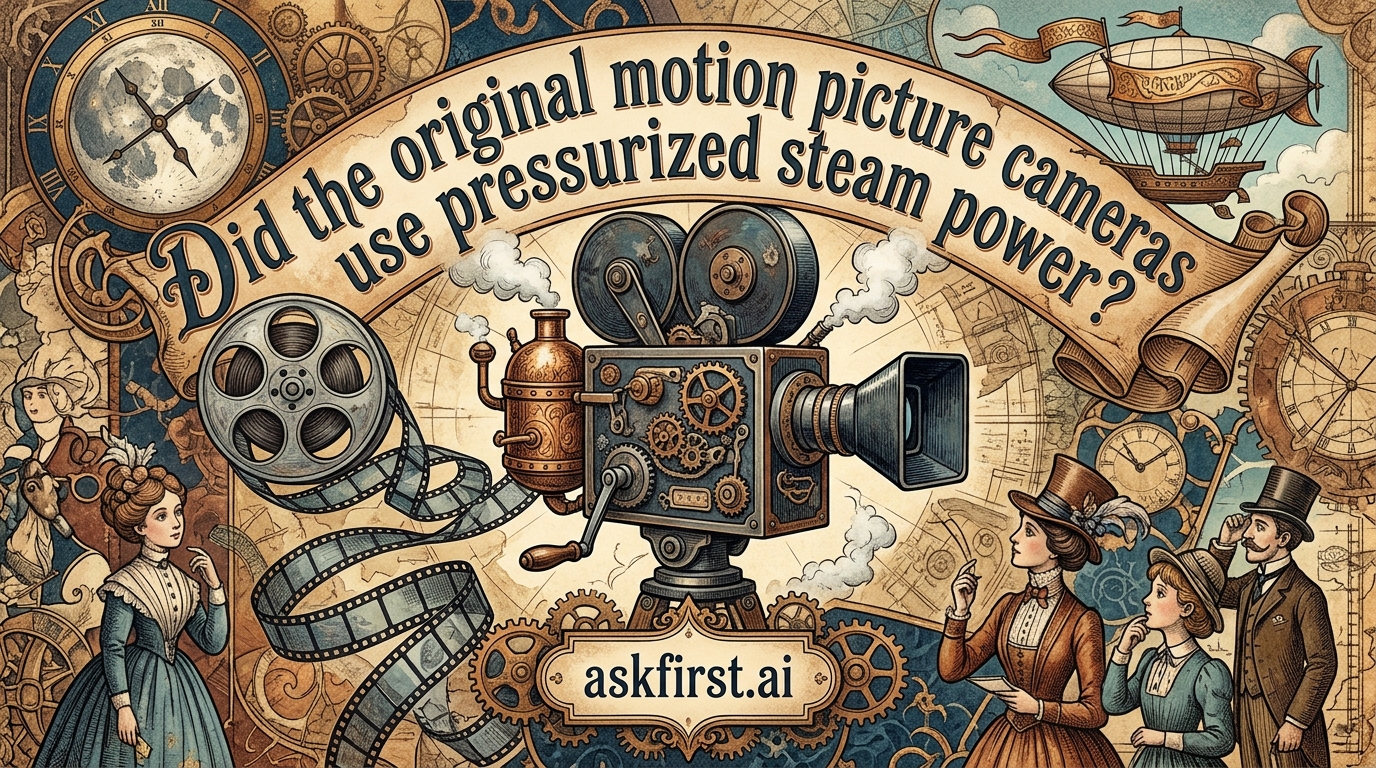
Unveiling the Cinematic Origins: The Myth of Steam-Powered Cameras
There exists a popular but erroneous belief that the infancy of motion picture technology was fueled by the same steam-driven industrial revolution that powered locomotives and factories. To clarify this historical mystery: No, original motion picture cameras never utilized pressurized steam power. The complexity of fluid dynamics, combined with the volatility of high-pressure boilers, would have made the precision required for intermittent film movement entirely impossible for early portable devices.
The Mechanics of Motion Picture Evolution
The fundamental challenge of early cinematography was not raw power, but the synchronization of mechanical parts. To create the illusion of movement, a camera requires an "intermittent mechanism." This is a precise series of events: the film is pulled into position, held steady behind a shutter, exposed to light, and then moved to the next frame. This cycle occurred roughly 16 times per second in early systems like those designed by Louis and Auguste Lumière. Steam engines, which rely on the continuous expansion of gas and complex valve timing, cannot achieve the rhythmic, micro-second precision necessary for such tasks without an immense, impractical support system.
Hand-Cranking: The True Manual Motor
Instead of steam, early pioneers relied exclusively on manual power. The cinematograph and the Kinetoscope were operated via hand-cranking. Cinematographers of the 1890s and early 1900s were skilled technicians who had to maintain a perfectly consistent rotation speed of the crank. If the operator turned too quickly, the motion on screen would appear unnaturally accelerated; if they turned too slowly, the action would drag. This manual interface served as the "heartbeat" of the camera, directly linking the operator's physical rhythm to the flow of time within the frame. It was a craft that demanded deep focus and physical stamina.
The Transition to Electricity and Springs
As the industry moved beyond the experimental phase, steam remained entirely absent from the design philosophy. The next leap forward was the integration of clockwork spring motors. Inventors like the Pathé brothers incorporated wound springs that provided a consistent, regulated speed for short bursts of filming. Eventually, the arrival of electric motors marked the true revolution in cinematography. By the 1920s, electric synchronization became the gold standard, allowing for much longer takes and the development of sound-on-film recording.
Historical Significance
It is fascinating to ponder why the steam myth persists. Perhaps it stems from a confusion between early cinematographic inventions and the industrial machinery of the Victorian era. Regardless of its origin, recognizing the true manual and later electrical nature of these cameras highlights the ingenuity of early inventors who mastered precision engineering without relying on the crude, high-pressure industrial systems of the previous generation. Early cinema was a triumph of fine mechanics and human skill, not of steam or heavy industry.